
Broad-nosed grain weevil
Caulophilus latinasus
Description
How to identify
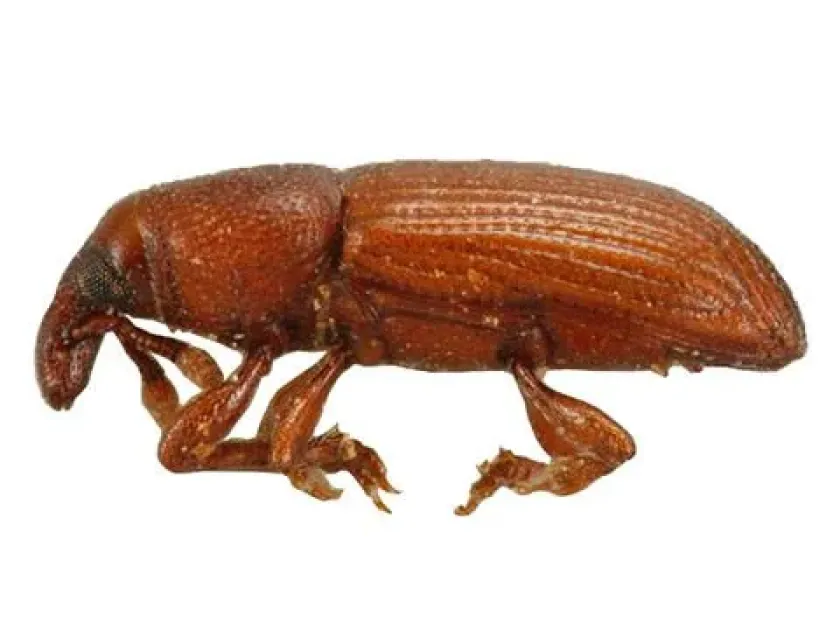
The broad-nosed grain weevil (Caulophilus latinasus) is a small beetle belonging to the family Curculionidae. These pests are typically around 2.5 to 3.5 mm in length, characterized by their dark brown to black coloration and a relatively short, broad snout.
The adult weevils have a pitted appearance on their elytra, arranged in longitudinal rows. Their morphology allows them to easily hide within the crevices of grains and storage equipment, making detection difficult during early infestation stages.
Larvae are legless, white or creamy in color with a brown head capsule. They develop exclusively inside the seed kernels, feeding on the endosperm. This cryptic behavior is the primary reason why infestations are often discovered too late.
The life cycle is heavily influenced by environmental factors. In warm environments, such as heated warehouses or grain silos with poor ventilation, the insect can complete its development from egg to adult in about 30 to 40 days.
Females bore small holes into the grain, deposit a single egg inside, and seal the opening. This protective seal ensures high survival rates for the offspring, enabling rapid population growth in favorable conditions.
What it damages
This weevil primarily targets whole grain kernels including wheat, corn, barley, and oats. It is also known to infest various dried seeds, legumes, and even processed grain products stored in warehouses or pantries.
The damage is caused by both adults and larvae. Adults create surface feeding marks, while larvae tunnel deep into the kernel, hollowing it out. In cases of heavy infestation, the grain becomes nothing more than a shell filled with frass and dust.
Quality degradation is significant. The grain loses its germination potential and nutritional value. Moreover, the presence of these insects renders the grain unsuitable for human consumption due to contamination with insect waste.
Infestations often lead to grain heating. The metabolic activity of a large weevil population increases the temperature and moisture content of the grain mass, which encourages the growth of molds and fungi.
In addition to economic losses in the food industry, this pest can cause damage to seed stocks held for planting, resulting in poor stand establishment in agricultural fields.
Signs of infestation
The most visible sign of infestation is the presence of small, round exit holes on the grain surface where adults have emerged. These holes are clear indicators that a generation has successfully completed its cycle.
Adult weevils themselves are a primary sign. They are often found crawling on the surface of grain piles, especially during nighttime or when the grain temperature is disturbed by human activity.
The accumulation of grain dust and fine powder at the bottom of bins or near storage areas is a common symptom of larval feeding activity. This dust is a mixture of fragmented grain and insect excrement.
Temperature monitoring systems in silos often trigger alerts when an infestation causes localized heating. This "hot spot" is a classic warning sign of active biological processes inside the grain mass.
Sifting grain samples through appropriate mesh screens will reveal the presence of adult insects and debris. Laboratory analysis is necessary to detect eggs or early-stage larvae hidden deep within the kernels.
Control measures
Sanitation is the cornerstone of pest management. Keeping warehouses clean by removing spilled grain, dust, and debris significantly reduces the chances of weevil outbreaks and provides fewer hiding places.
Maintaining low grain moisture (below 13%) and cool storage temperatures are highly effective preventive measures. These conditions slow down the beetle's metabolic processes and drastically reduce its reproduction rate.
Chemical fumigation remains the most effective way to eliminate existing infestations in stored grain. This process must be carried out by certified professionals using approved fumigants that can penetrate the grain mass.
Using pheromone traps and light traps is recommended for early detection. Monitoring allows for proactive intervention before the weevil population reaches destructive levels in large grain stores.
- Cleanliness of warehouse facilities and storage bins before the arrival of new grain.
- Strict control of moisture levels and grain aeration.
- Periodic inspections and laboratory testing of grain samples for hidden infestation markers.
Taxonomy
- Latin name
- Caulophilus latinasus
- Order
- Coleoptera (beetles)
- Family
- Curculionidae
- EPPO code
- CASSOR
Discussion
No discussions yet — be the first.