
Dried fruit mite
Carpoglyphus lactis
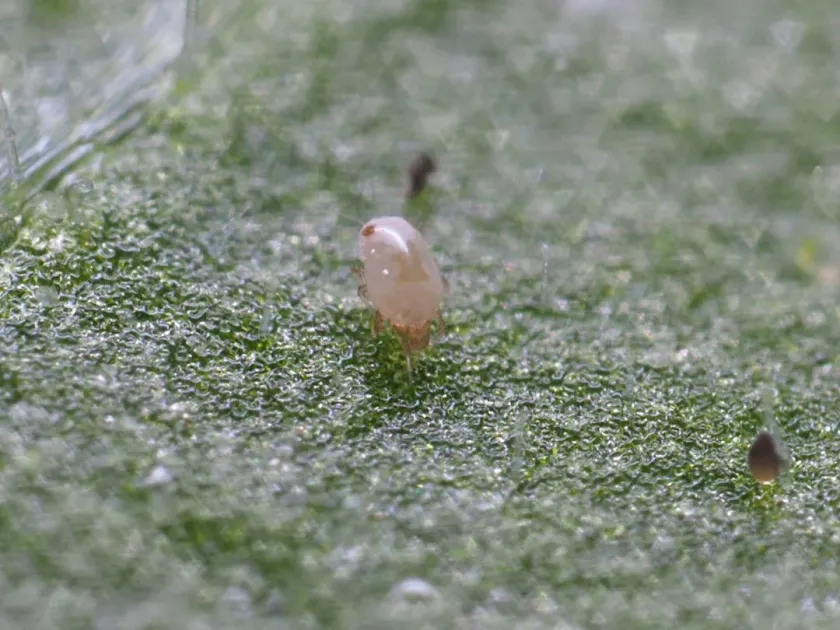
Description
How to identify
The dried fruit mite (Carpoglyphus lactis) is a microscopic pest belonging to the order Acariformes and the family Carpoglyphidae.
These mites are oval in shape and typically yellowish-white in color, measuring roughly 0.3 to 0.4 mm, making them extremely difficult to see without magnification.
They possess specialized mouthparts that allow them to feed efficiently on organic matter, yeasts, and sugar-rich environments found in stored food.
Carpoglyphus lactis is known for its ability to thrive in various moisture conditions, though it prefers moderate to high humidity for rapid reproduction.
Their life cycle is relatively short, allowing populations to explode within weeks if temperature and hygiene conditions at the storage facility are compromised.
What it damages
This mite primarily attacks high-sugar items, including raisins, dried apricots, prunes, dates, honey, and various dried fruit varieties.
The pest causes significant damage not only by consuming the stored products but also by introducing fungal spores that accelerate rot.
Colonies of these mites contaminate food with their fecal matter, cast-off exoskeletons from molting, and deceased individuals.
Infested goods quickly lose their market value, become sticky, and develop unpleasant odors due to rapid fermentation caused by the mites.
Large-scale infestations can result in the complete destruction of warehouse stocks, leading to substantial economic losses for producers and traders.
Signs of infestation
One of the earliest signs of infestation is the presence of a "dusty" appearance on the product surface, which reveals movement upon closer inspection.
A characteristic sweet, fermented, or musty smell is a strong indicator that a mite population has established itself in the stored fruit.
The fruit surface may show small pits or erosion marks where the mites have been feeding, often accompanied by patches of visible fungal growth.
Affected products may start to clump together as the mites create a web of debris and moisture, making the storage mass compact and heavy.
In cases of severe infestation, the surface of the fruit may appear coated in a layer of fine, grayish-white dust that constantly shifts and moves.
Control measures
Maintaining strict sanitation standards, including thorough cleaning of storage areas and removal of food residue, is the most effective preventative measure.
Regulating warehouse moisture levels is essential, as keeping products dry significantly restricts the mite's ability to reproduce and spread.
Thermal treatment, such as heating products to temperatures above 50°C, is a highly effective way to eliminate infestations without using chemical residues.
Professional fumigation may be required in severe cases, using approved insecticides and acaricides applied by qualified personnel to ensure safety.
Proper storage using hermetically sealed packaging is crucial for preventing cross-contamination and protecting clean stock from invading mites.
Taxonomy
- Latin name
- Carpoglyphus lactis
- Order
- Mites
- Family
- Carpoglyphidae
- EPPO code
- CARGLA
Discussion
No discussions yet — be the first.