
Dried fruit mite
Carpoglyphus
Description
How to identify
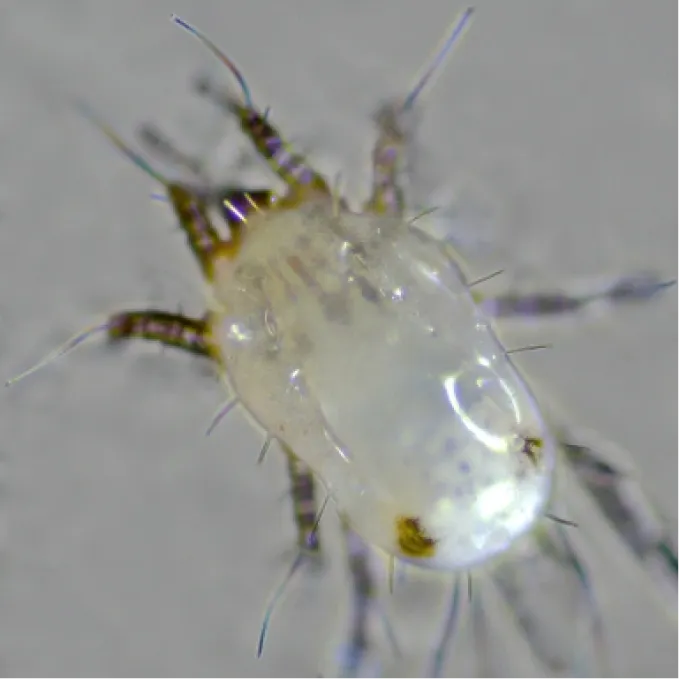
The dried fruit mite belongs to the Carpoglyphidae family, order Acariformes. It is a tiny arthropod with an oval, yellowish-white body, typically measuring about 0.3–0.4 mm in length.
The biology of this mite is closely linked to sugary substances and high humidity levels. In optimal temperatures of +20°C to +25°C, the lifecycle can be completed in just two weeks.
Females lay eggs directly on the food source, ensuring larvae have immediate access to nutrients upon hatching. The mite can enter a dormant phase called hypopus to survive harsh conditions.
These mites spread passively through contaminated products, infested packaging materials, or equipment. They are a common nuisance in facilities where food is stored.
Rapid population growth occurs in environments where moisture levels are not carefully monitored, leading to massive infestations of stored inventory within short periods.
What it damages
These mites primarily infest dried fruits, vegetables, honey, wine, cheese, and sometimes grain products. They are commonly known as sugar mites due to their diet.
Infested goods undergo significant deterioration, resulting in the loss of aesthetic appeal, nutritional value, and flavor, making the products unsuitable for consumption.
Signs of infestation
One of the main indicators of infestation is a distinct, sweet honey-like odor emanating from the storage area, caused by the mites' metabolic activities.
The presence of a fine, dusty layer on the surface of the product, consisting of mite feces, shed skins, and live individuals, is a clear sign of severe contamination.
Control measures
Strict environmental control in warehouses, specifically keeping relative humidity below 60%, is the most effective way to prevent mite population explosions.
Regular sanitation of storage facilities, including the removal of dust and old crop residues, helps eliminate potential breeding sites for the mites.
Chemical control measures, such as fumigation of empty storage units, must be conducted using authorized substances following local safety regulations.
The use of airtight containers or vacuum packaging is highly recommended to protect finished goods from potential infestation by migrating mite populations.
Periodic monitoring and laboratory testing of stored samples allow for early detection, enabling managers to take action before damage becomes economically critical.
Taxonomy
- Latin name
- Carpoglyphus
- Order
- Mites
- Family
- Carpoglyphidae
- EPPO code
- CARGSP
Discussion
No discussions yet — be the first.