

Description
How to identify
Caradrina is a genus of moths belonging to the Noctuidae family of the order Lepidoptera. The most common species causing agricultural concern is Caradrina ambigua.
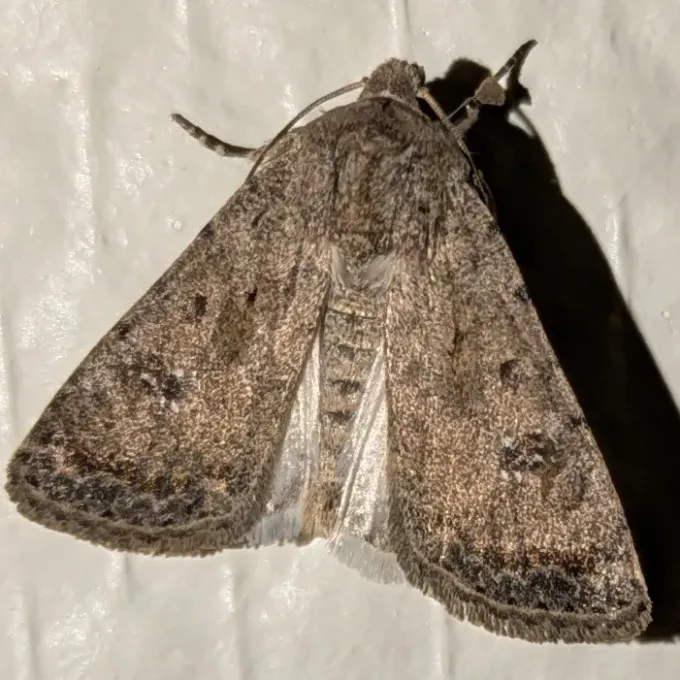
Adult moths have a wingspan ranging from 25 to 30 mm. Their forewings are usually brownish-gray, featuring distinct transverse lines and dark spots.
The larvae, or caterpillars, are polymorphic, showing colors ranging from pale green to dark brown, often with small dark spots across their bodies.
Pupation occurs within the soil, typically at a depth of up to 10 cm. The pupae are glossy and dark brown, which helps them survive through harsh conditions.
The life cycle undergoes complete metamorphosis, including egg, larva, pupa, and adult stages. Depending on the climate, there can be multiple generations per year.
What it damages
Caradrina is a polyphagous pest, meaning it feeds on a wide variety of plants, which makes it a significant threat to agricultural stability in many regions.
It heavily infests vegetable crops such as tomatoes, peppers, and eggplants, as well as industrial crops like sugar beets, sunflower, and maize.
Young larvae initially graze on the underside of leaves, causing skeletonization by consuming leaf tissue while leaving the veins intact.
Older caterpillars are far more destructive, consuming entire leaves and damaging flowers, buds, and fruits, which leads to reduced yields and lower quality produce.
The feeding damage creates entry points for various bacterial and fungal pathogens, potentially causing severe rot and total loss of marketable fruit.
When it appears
The flight period for adult moths typically begins in late spring or early summer, following the increase in seasonal temperatures.
Females lay eggs in small clusters on the underside of host plant leaves. These clusters are often camouflaged with scales, making them difficult to spot.
Peak larval activity generally occurs during the mid-to-late summer months, coinciding with the rapid vegetative growth of many field crops.
Monitoring the flight of adults using pheromone traps is standard practice to predict the start of the egg-laying season and plan interventions.
The species survives winter primarily in the pupal stage within the soil, waiting for the return of warmer conditions to initiate the new season.
Signs of infestation
The earliest signs of infestation are the skeletonized patches on leaves, which appear as thin, papery areas where tissue has been consumed.
The presence of caterpillar droppings (frass) on the leaves and soil surface is a clear indicator that the larvae are currently active and feeding.
Wilting of foliage or irregular holes in the developing fruits are major indicators that larvae have reached the later stages of their development.
During night inspections, one can often spot the caterpillars feeding openly on the plants, as they are primarily nocturnal creatures.
- Skeletonized leaf tissue;
- Visible holes in fruits and buds;
- Accumulation of larval excrement;
- General decline in plant vigor.
Control measures
Cultural practices, such as deep autumn plowing, are highly effective as they expose soil-dwelling pupae to predators and environmental extremes.
Effective weed management is crucial, as weeds often act as a secondary host for the pest during the early stages of the growing season.
Biological control using microbial insecticides based on Bacillus thuringiensis can be very effective against young larvae while preserving beneficial insects.
Chemical control measures should be initiated when pest populations exceed the economic injury level. Timing the application to coincide with early larval hatching is essential.
It is recommended to rotate insecticides with different modes of action to mitigate the risk of the population developing resistance to commonly used compounds.
Content graph
Connections · Caradrina
Most often together:
Marketplace
Products · 3


Biology
Taxonomy
- Latin name
- Caradrina
- Order
- Lepidoptera (butterflies)
- Family
- Noctuidae
- EPPO code
- CRADSP
Community
Discussion
No discussions yet — be the first.