
Capnia bifrons
Capnia bifrons
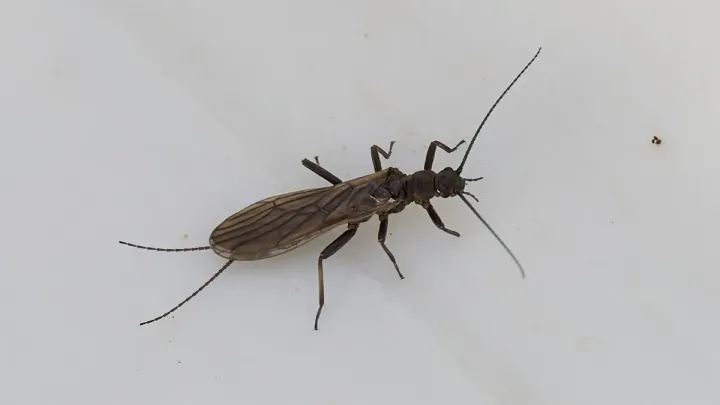
Description
How to identify
Capnia bifrons belongs to the Capniidae family within the Plecoptera order. These insects are commonly known as stoneflies and are vital components of riparian ecosystems.
Adult stoneflies are relatively small, measuring about 5 to 8 mm. Their bodies are typically dark brown or black, which aids in camouflage against the rocks and tree bark found along stream banks.
The larvae are aquatic and possess a flattened body structure with strong legs adapted for climbing and staying attached to stones in moving water to prevent being washed away.
One of the distinctive features of the adults is the presence of two long cerci at the end of the abdomen and wings that lie flat against the back when at rest.
Entomologists identify this species through specific genital morphology in males and unique wing venation patterns that distinguish it from other Capnia members.
When it appears
The life cycle of Capnia bifrons is highly specialized for cold temperatures. Unlike many insects, they are most active during the late winter and early spring months.
Adult emergence typically occurs from February to April. It is common to see these insects active even in near-freezing temperatures or on top of melting snow banks.
The larval stage is strictly aquatic and requires oxygen-rich, clean water to develop. The nymphs go through multiple molts before reaching the adult stage.
Upon emerging from the water, adults spend their short lives focused on mating and egg-laying. The females return to the water surface to deposit eggs for the next generation.
The temporal appearance of these insects is a clear biological marker for the transition between winter and spring in temperate climate zones.
Control measures
Capnia bifrons is not an agricultural pest. It does not feed on cultivated crops, fruits, or vegetables and poses no threat to farming operations or yield production.
In fact, these insects serve as bio-indicators of high water quality. Their presence indicates that the nearby streams are free from severe chemical pollution.
There are no control measures required for this species. Using insecticides near habitats occupied by stoneflies is discouraged, as it can disrupt the aquatic food web.
Maintaining riparian buffers—strips of native vegetation along waterways—is the best practice for farmers to support beneficial insect populations and water health.
No interventions are needed to manage or eliminate these insects. They play a neutral or positive role in the local environment, and their protection contributes to biodiversity.
Taxonomy
- Latin name
- Capnia bifrons
- Family
- Capniidae
- EPPO code
- CPNIBI
Discussion
No discussions yet — be the first.