
Capnia
Capnia
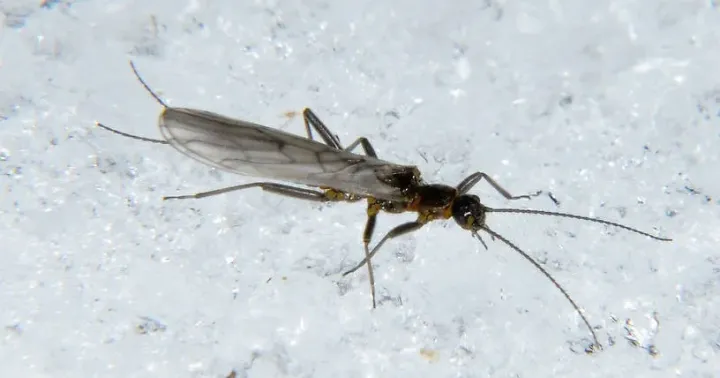
Description
How to identify
Capnia is a genus of insects belonging to the order Plecoptera (stoneflies) and the family Capniidae. Adult insects are typically small, slender, and range in color from brown to black.
They are characterized by wings that lie flat against their body when at rest and well-developed cerci extending from the end of their abdomen.
The larvae are aquatic and inhabit various freshwater systems, playing a significant role in the aquatic ecosystem before emerging as adults.
Identifying species within the genus often requires expert knowledge of genitalia structures, as external morphological similarities are common across the group.
Their sensitivity to water quality and environmental changes makes them useful bioindicators, although their presence near farmland can occasionally become a nuisance.
What it damages
While stoneflies are primarily aquatic, members of this genus can cause localized damage to agricultural crops when they emerge in large numbers near fields.
The primary damage occurs during the adult stage, where insects may feed on the tender tissues of young seedlings, particularly in moist environments.
Feeding often results in jagged holes in leaves and stems, which can weaken the plant and make it susceptible to secondary fungal or bacterial pathogens.
Crops located in low-lying or poorly drained fields adjacent to streams are at the highest risk, as these areas provide ideal conditions for the insects.
In severe cases of infestation, the combined effect of feeding and the introduction of pathogens can lead to reduced plant vigor and crop loss.
When it appears
The lifecycle of Capnia is deeply influenced by water temperature and the seasonal shifts that dictate the timing of adult emergence.
Adults typically emerge early in the spring, often coinciding with the early growth stages of winter crops or the sowing of spring grain varieties.
The emergence period is relatively short but intense, creating a narrow window of opportunity for the pest to impact sensitive plant stages.
After mating, females lay eggs back into aquatic habitats, where the larval development proceeds over several months or even a year.
Understanding these seasonal patterns allows farmers to schedule preventive measures effectively before the emergence of the adult population occurs.
Signs of infestation
Signs of infestation include irregular feeding patterns on leaves, especially on plants closest to field margins near water sources.
Physical evidence of the pest includes the presence of adults resting in shaded, humid areas of the crop canopy or near the soil surface.
Exuviae, or discarded larval skins, found near the field edge near water indicate recent emergence and potential presence of adults in the vicinity.
Local wilting or chlorosis of leaves at the edge of the field, often mistaken for nutrient deficiencies, can be a symptom of intensive pest feeding.
Small fecal deposits observed on the leaf surface or on the ground at the base of plants serve as a confirmed indicator of recent insect activity.
Control measures
Effective management of Capnia requires a focus on reducing the conditions that favor their presence and protecting crops during the vulnerable seedling stage.
- Managing field drainage to reduce excess soil moisture that attracts emerging adults.
- Implementing buffer zones with non-host vegetation between crop fields and water sources.
- Using row covers or physical barriers during the peak emergence window to protect sensitive seedlings.
- Applying targeted insecticides to field perimeters if infestation thresholds are consistently exceeded.
- Monitoring emergence patterns using pheromone or light traps to determine the exact time for protective measures.
Taxonomy
- Latin name
- Capnia
- Family
- Capniidae
- EPPO code
- CPNISP
Discussion
No discussions yet — be the first.