
Camptomyia
Camptomyia
Description
How to identify
Camptomyia is a genus of insects belonging to the family Cecidomyiidae, commonly known as gall midges. These are minute, often cryptic insects that frequently go unnoticed until significant damage to the plant becomes apparent.
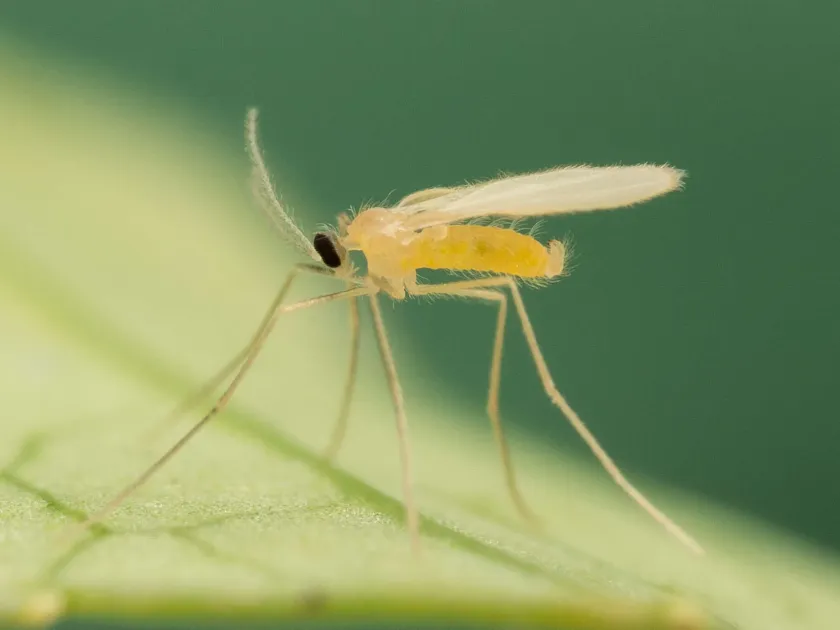
Adults are tiny, fragile-looking flies with long antennae and slender legs. Their life cycle is deeply intertwined with high-humidity environments, decaying organic matter, or weakened plant tissues.
The larvae are distinctively legless, maggot-like, and typically whitish or yellowish. Because they develop deep within plant substrates, identifying the infestation early is inherently difficult.
Accurate species identification often requires microscopic examination of the adults, as larval morphology can be quite similar among various members of the Porricondylinae subfamily.
Systematically, the genus contains numerous species with varying degrees of host specialization, marking them as either primary or secondary pests of forestry and ornamental plants.
What it damages
Members of this genus primarily target woody plants and shrubs. In agricultural and forestry contexts, they are frequently found in nurseries, where they damage seedlings of both coniferous and deciduous species.
Larvae are often found beneath the bark, within the cambial layer, or inside injured sections of stems and branches. They feed on plant sap or the fungal mycelium growing within decaying wood.
In some cases, the pest attacks bulbs and rhizomes, especially if the plants have sustained prior mechanical injury or are suffering from localized rot, making them a threat to greenhouse flower crops.
Camptomyia poses a particular threat to young plants with weakened immune systems, as mass colonization by larvae disrupts tissue function and nutrient transport.
Secondary damage occurs when the galleries excavated by the larvae serve as entry points for various pathogenic fungi and bacteria, leading to necrosis and extensive wood decay.
When it appears
The period of activity is highly dependent on regional climatic conditions and ambient temperature. Adult emergence generally occurs during the spring and summer, coinciding with active sap flow.
In greenhouse or indoor cultivation environments, Camptomyia can reproduce almost year-round, provided that moisture levels are high and a suitable food source is available.
The development cycle includes multiple generations per season. The first generation typically appears in late spring, followed by subsequent generations at intervals throughout the warmer months.
Larvae reach their peak activity in the second half of summer when the humidity of the substrate or bark provides optimal conditions for their development. They typically overwinter as larvae in cocoons within the soil or under bark remnants.
Weather patterns, such as prolonged heavy rainfall or over-irrigation, facilitate outbreaks of this pest, as moisture is essential for the development of gall midge larvae.
Signs of infestation
The first visual sign of infestation is often localized darkening or necrosis of the bark on saplings. Removing the dead layer will reveal colonies of small larvae underneath.
Galleries within the wood are often accompanied by exudate or resin flow (in conifers), which represents the plant's defense response to larval damage.
Stunted growth, yellowing, and premature leaf drop in young saplings are often indicators of hidden damage to the root collar or stem caused by Camptomyia.
- Presence of rot patches in areas infested by larvae.
- Specific chew marks under the bark or in the root system.
- Shoot deformation caused by damage to cambium tissues.
In cases of severe infestation, general plant depression is observed, which, if left untreated, inevitably leads to plant death caused by secondary infections.
Control measures
The primary approach to controlling Camptomyia relies on sound agrotechnical practices. It is crucial to maintain high plant vigor and promptly remove any deadwood or infected specimens.
Mechanical damage to stems and roots during maintenance must be avoided, as these wounds provide perfect sites for the pest to lay its eggs.
Proper irrigation management is vital. Excessive moisture in the root zone creates favorable conditions for gall midges, so ensuring adequate soil drainage is a priority.
Chemical control involves the use of systemic insecticides capable of penetrating the plant tissues where the larvae feed. Applications should be timed to coincide with adult flight periods to prevent egg-laying.
When infestations are detected in nurseries, sanitary pruning or localized treatment of affected areas with appropriate pesticides, followed by sealing wounds with antiseptic compounds, is highly recommended.
Taxonomy
- Latin name
- Camptomyia
- Order
- Diptera (flies)
- Family
- Cecidomyiidae
- EPPO code
- CAMTSP
Discussion
No discussions yet — be the first.