
Peruvian peppertree psyllid
Calophya schini
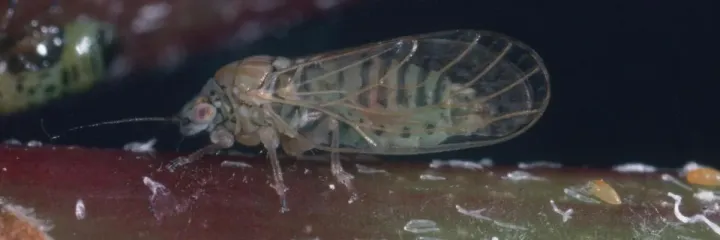
Description
How to identify
Calophya schini is a species of psyllid belonging to the family Calophyidae, within the order Hemiptera. These are small, jumping plant lice specialized in colonizing specific host plants.
Adults are small, winged insects that are highly mobile, allowing them to disperse throughout the canopy of host trees to lay eggs.
Nymphs are primarily sedentary and induce the formation of galls on the foliage, which serve as both a food source and a protective environment.
The morphology of these insects is adapted for piercing and sucking plant sap, which is the primary source of nutrition during their life cycle.
Identification often relies on the specific shape and structure of the leaf galls, which are a hallmark of Calophya schini infestations on pepper trees.
What it damages
The primary host for this pest is the Peruvian peppertree (Schinus molle), a popular ornamental tree in various parts of the world.
Feeding occurs on young, expanding leaves and shoots, which are the most nutrient-rich parts of the plant during the growing season.
While the tree can often survive the infestation, heavy galling can lead to a significant decline in the tree's ornamental value and overall vigor.
The accumulation of honeydew secreted by the nymphs can lead to the development of sooty mold, further damaging the foliage and shading the plant.
In urban landscapes, high populations of this psyllid can become a nuisance due to the cosmetic damage and secondary fungal growth on the trees.
When it appears
Calophya schini activity is closely tied to the flushing periods of its host plant, with high numbers occurring when new growth is available.
In favorable climates, the psyllid can produce multiple overlapping generations per year, leading to persistent pressure on the tree canopy.
The population peaks typically align with the warmest months of the year, which facilitate faster egg-to-adult development cycles.
Environmental factors such as humidity and rainfall play a role in the survival rate of nymphs and the overall spread of the infestation within a population.
As temperatures drop, the activity level decreases, and the insects may enter a period of reduced metabolism until the next growth cycle begins.
Signs of infestation
The most distinctive sign of a Calophya schini infestation is the presence of numerous small galls on the leaf surfaces of the host tree.
- Chlorotic or yellowing leaves caused by continuous sap withdrawal by the nymphs.
- Leaf distortion and curling as a direct result of gall development.
- Stunted shoot growth in heavily infested portions of the tree canopy.
- Presence of a sticky, sugary honeydew substance on the leaves and branches beneath the infestation.
Sooty mold colonization, which appears as a black dusty coating on the foliage, often follows the production of honeydew by the psyllid nymphs.
Control measures
Management of the Peruvian peppertree psyllid often involves a combination of cultural practices and, when necessary, chemical interventions.
Regular pruning of heavily infested twigs and branches can help reduce the localized population and improve the aesthetic appearance of the tree.
Systemic insecticides, applied either via soil drench or trunk injection, are highly effective because they target the nymphs feeding within the leaf tissues.
Biological control, utilizing natural enemies like predatory mites, lacewings, and parasitic wasps, can provide long-term suppression of the pest.
Ensuring the tree is well-watered and receiving adequate nutrients is essential for maintaining the tree's natural resilience against psyllid colonization.
Taxonomy
- Latin name
- Calophya schini
- Order
- Hemiptera (bugs, aphids, leafhoppers)
- Family
- Calophyidae
- EPPO code
- CAOYSC
Discussion
No discussions yet — be the first.