
Calophya jumping plant lice
Calophya
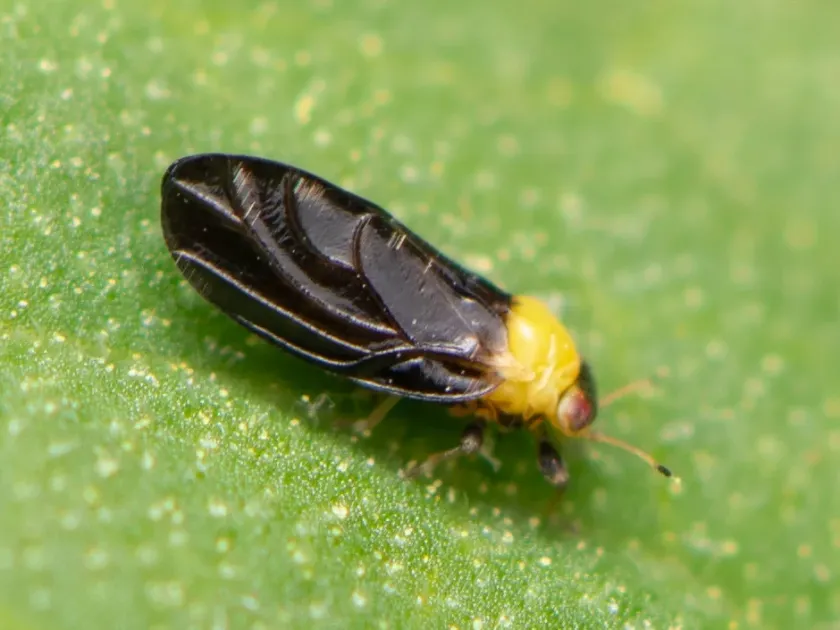
Description
How to identify
The genus Calophya comprises small insects belonging to the order Hemiptera and the family Psyllidae, commonly known as jumping plant lice.
Adults are characterized by their strong hind legs adapted for jumping and well-developed wings for flight, enabling them to infest new hosts efficiently.
They are generally very small, ranging from 2 to 3 mm in length, and their coloration is often cryptic, blending into the bark and foliage of their host plants.
The nymphs are usually flattened and often live inside specialized leaf structures or galls, which protects them from predators and environmental stressors.
Accurate identification of specific Calophya species requires specialized entomological expertise, focusing on the microscopic morphology of the male genitalia and wing venation.
What it damages
Species of Calophya are highly host-specific, primarily attacking plants within the Anacardiaceae family, with a strong preference for the genus Rhus (Sumac).
The pest feeds on plant sap, injecting saliva during the process that induces the formation of galls and disrupts normal plant tissue development.
Heavy infestations can lead to significant foliage deformity, curled leaves, and inhibited growth of terminal shoots, which damages the overall aesthetic of ornamental plants.
The feeding activity depletes the plant's resources, causing chlorosis, reduced vigor, and increased susceptibility to other biotic and abiotic stressors.
In nursery settings, damage caused by these psyllids can reduce the market value of the plants due to the unattractive appearance of galled leaves and stunted growth.
When it appears
The lifecycle of Calophya psyllids is strictly linked to the phenology of their host plants, with peak activity occurring during the spring growth flush.
Females lay eggs in the buds or young tissues, ensuring that the emerging nymphs have immediate access to high-quality nutrition.
Multiple generations can occur throughout the growing season, particularly in warmer climates, leading to a persistent presence of the pest from spring until autumn.
Overwintering usually takes place in the adult or egg stage, sheltered within bark crevices or near bud scales to survive colder temperatures.
Dry and warm spring weather conditions are often associated with population spikes, as they provide optimal temperatures for rapid nymphal development.
Signs of infestation
The most distinctive signs of infestation are the presence of leaf galls — abnormal growths or swellings triggered by the insect's feeding.
Leaves affected by the feeding appear curled, twisted, and often develop a yellow or reddish hue, indicating a failure of the photosynthesis process.
Sticky honeydew secretions found on the undersides of leaves or nearby branches promote the growth of sooty mold, which creates a black, unsightly layer.
Stunted and deformed terminal growth is a common observation in chronically infested plants, leading to a general loss of plant form.
Closer inspection with a magnifying lens reveals small, stationary nymphs often covered in waxy or flocculent material on the surface of affected foliage.
Control measures
Effective management begins with regular monitoring and the removal and destruction of infested foliage or branches to reduce the pest population.
Systemic insecticides are the preferred chemical control method, as they are absorbed by the plant and target the nymphs residing within the galls or tissues.
Timing the insecticide applications to coincide with the early stages of nymph emergence provides the most effective protection for the growing season.
Encouraging natural predators such as lady beetles, lacewings, and parasitic wasps can significantly help in keeping the psyllid population under control.
Maintaining plant health through adequate fertilization and irrigation helps the host withstand the physiological pressure caused by the pest infestation.
Taxonomy
- Latin name
- Calophya
- Order
- Hemiptera (bugs, aphids, leafhoppers)
- Family
- Calophyidae
- EPPO code
- CAOYSP
Discussion
No discussions yet — be the first.