
Juniper gall midge
Byakushincecis eppoi
Description
How to identify
The juniper gall midge Byakushincecis eppoi is a species of dipteran insect belonging to the family Cecidomyiidae. These tiny insects are notorious for creating galls on the tips of juniper branches.
Adult midges are small and difficult to detect, as they possess a very short lifespan dedicated primarily to mating and laying eggs on susceptible plant tissues.
The life cycle of this pest is highly specialized. The larvae inject specific substances into the plant tissue, which trigger the formation of abnormal, swollen growths known as galls.
The gall acts as both a source of food and a protective chamber for the larva, shielding it from external environmental conditions and many natural predators.
By studying the taxonomy and specific habits of Byakushincecis eppoi, agronomists can effectively identify the presence of this midge by the unique shape of the galls produced.
What it damages
This pest exclusively targets juniper species. Young, actively growing junipers are the most vulnerable, especially those experiencing stress from poor soil or drought.
Damage is concentrated on the tender tips of new shoots, where the midge larvae feed. This disrupts the vascular system of the shoot and restricts the flow of essential nutrients.
The primary concern is the reduction in aesthetic value and growth rate. Heavy infestations cause the shoot tips to become deformed and stunted, ruining the natural shape of the shrub.
Prolonged presence of these larvae weakens the plant's structural integrity and overall vigor, making it susceptible to secondary infections and opportunistic pests.
In ornamental gardens and nurseries, the damage caused by these insects can render high-value juniper specimens unfit for sale or landscaping purposes.
When it appears
The seasonal activity of the juniper gall midge is synchronized with the vegetative growth cycle of its host plant, beginning in the late spring months.
Adult midges emerge during the period of new needle and shoot development to lay eggs in the soft tissue, ensuring that larvae have immediate access to food.
Development throughout the summer season occurs entirely within the galls. During this time, the larvae grow and mature, causing visible distortion to the plant tissue.
By early autumn, the larvae are fully developed. They either hibernate inside the galls or move into the soil beneath the juniper canopy to overwinter safely.
Monitoring efforts should be focused on the peak growth phase in the spring to catch the adults before they establish the next generation of larvae.
Signs of infestation
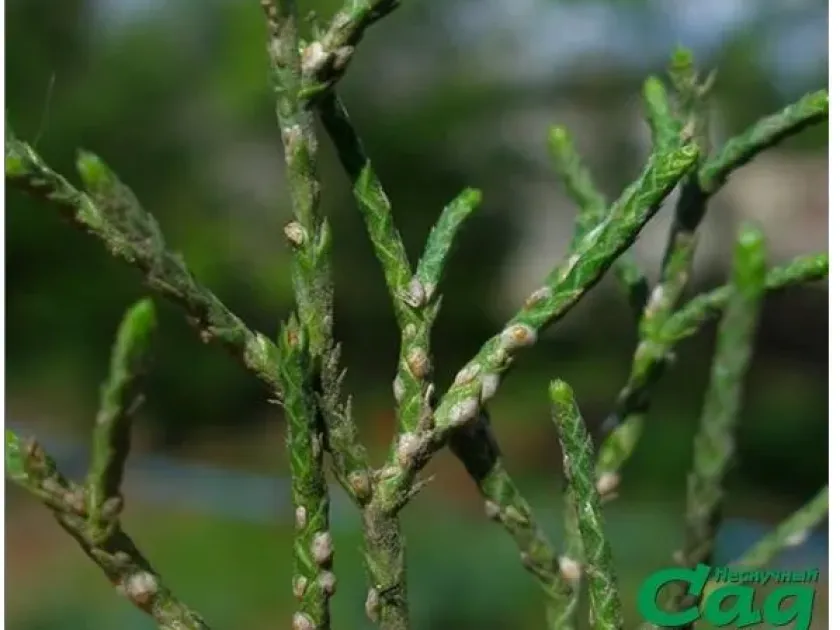
The most reliable sign of a juniper gall midge infestation is the presence of swelling or galls on the terminal ends of the juniper branches.
- Visible gall-like growths on the tips of new shoots.
- Discoloration of the needles, which may turn pale, yellow, or brown as the gall matures.
- Growth cessation of the terminal shoots and overall stunted branch development.
- Small, distinct exit holes on the gall surface, indicating the departure of adult insects.
- General foliage decline and the loss of the plant's characteristic dense, healthy appearance.
Inspect the new growth of your juniper plants closely. Because initial galls can be small, early detection is key to preventing a widespread infestation across the plant.
Be aware that these signs might be confused with other diseases; however, the presence of an actual larval chamber inside the gall confirms the midge's presence.
Control measures
The most effective physical control method is the pruning and destruction of infested shoot tips. This must be done before the adults emerge from the galls.
Chemical control involving systemic insecticides is generally successful only if applied during the adult flight phase, effectively targeting the pest before eggs are laid.
Improving plant vigor through balanced fertilization and proper irrigation is essential. A robust juniper plant is significantly more resistant to gall midge attacks.
Biological control, including the encouragement of natural predators or the application of specialized biological agents, can help maintain lower pest population levels.
Quarantine measures and strict inspections of incoming nursery stock are essential to avoid introducing Byakushincecis eppoi into healthy, midge-free plantations.
Taxonomy
- Latin name
- Byakushincecis eppoi
- Order
- Diptera (flies)
- Family
- Cecidomyiidae
- EPPO code
- ASCXEP
Discussion
No discussions yet — be the first.