
Brahmaea
Brahmaea
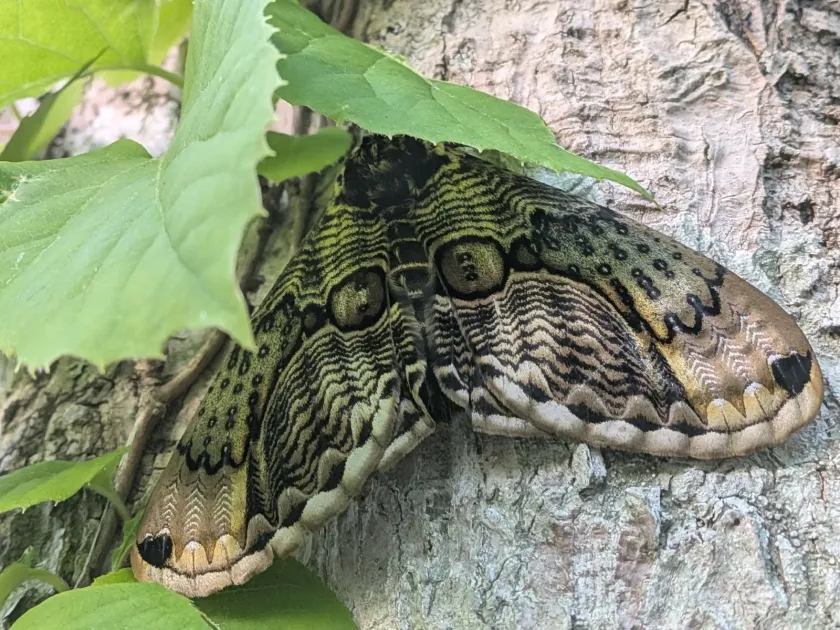
Description
How to identify
Brahmaea is a family of large moths (Brahmaeidae), whose larvae can cause significant damage to ornamental and forest plants. The adult moths are notable for their large size and complex wing patterns, which serve as excellent camouflage against tree bark.
Brahmaea caterpillars undergo several developmental stages, during which their appearance changes drastically. In their early instars, they may exhibit bright warning colors, while in later stages, they become robust, often featuring prominent humps or protrusions that aid in mimicry.
Systematically, these insects belong to the order Lepidoptera. In agricultural contexts, they are classified as pests due to their intense feeding habits on foliage, which can severely weaken host plants if left unchecked.
Their life cycle includes complete metamorphosis: egg, larva (caterpillar), pupa, and adult (moth). The duration of each phase is highly dependent on regional climatic conditions and the specific species of the insect.
Accurate identification of the species requires examining morphological features and larval feeding host preferences, as some Brahmaeidae are specialist oligophages tied to specific tree genera.
What it damages
These pests primarily target woody trees and shrubs. Depending on their geographical distribution, the larval diet often includes members of the Oleaceae and various ornamental fruit tree families.
The primary damage occurs during the larval stage, which is characterized by voracious feeding. Massive outbreaks of these caterpillars can lead to total defoliation of individual branches or entire trees, compromising the plant's overall vitality.
Damage to the leaf surface limits the plant's photosynthetic capacity. This leads to stunted growth of new shoots, reduced winter hardiness, and increased susceptibility to secondary infections or boring pests.
Localized population outbreaks are particularly dangerous. At high densities, caterpillars can destroy a significant amount of green biomass in a very short period, which is critical for young nursery saplings.
While adult moths do not feed, their mass emergence and subsequent egg-laying activities serve as a direct indicator of a looming threat, necessitating immediate scouting and monitoring of the affected areas.
When it appears
The seasonal activity of Brahmaea is closely linked to the phenological stages of their host plants. Adult moth flights usually occur during warm periods, when mating and egg-laying on tree bark or foliage take place.
Caterpillar development coincides with the period of active plant vegetation. This is when the pest is most visible, as larvae are actively building biomass by consuming fresh foliage, making them vulnerable to control measures.
Most species in this family overwinter in the pupal stage. The pupae typically reside within the soil or in leaf litter under host trees, providing them with protection against extreme temperatures and environmental stress.
Adult emergence is synchronized with bud burst or the appearance of young leaves, ensuring a steady food supply for the next generation of larvae immediately upon hatching from the eggs.
Monitoring should begin as soon as buds start to swell. The use of light traps to count adult activity allows growers to forecast the potential infestation level for the current growing season.
Signs of infestation
The primary sign of infestation is the presence of irregular leaf margins. In early stages, larvae skeletonize the leaves, leaving only the central veins, which is easily detected during a close visual inspection of the canopy.
Caterpillar frass, which accumulates under feeding sites, is another critical indicator of the pest's presence. Large quantities of droppings suggest a high level of activity by older instar larvae.
Rolled leaves or areas webbed with silk may indicate daytime hiding spots for the caterpillars. Brahmaea species often construct these shelters to protect themselves from natural enemies and intense sunlight.
Finding the caterpillars themselves during branch inspection is the most reliable confirmation of infestation. They often masterfully mimic the texture and color of the twigs, so observers must be attentive.
Gradual drying of terminal shoots and premature leaf drop during mid-summer are indirect signs of serious plant stress, indicating that an infestation is well-established and requires immediate intervention.
Control measures
Mechanical control involves the manual removal and destruction of egg masses and caterpillars, which is effective for small-scale plantings. This is the most environmentally friendly approach to managing the population.
Biological control relies on the use of preparations based on entomopathogenic bacteria (e.g., Bacillus thuringiensis). These products are highly effective against younger larvae while remaining safe for beneficial insects.
Chemical protection includes the application of systemic or contact insecticides during peak caterpillar hatching. It is vital to strictly adhere to label rates and timing to ensure efficacy and minimize environmental impact.
Cultural practices, such as autumn soil cultivation beneath trees, disrupt pupation sites and destroy overwintering pupae, significantly reducing the initial pest pressure for the following spring.
Integrated Pest Management (IPM) encourages the support of natural enemies, including birds and predatory insects. Creating a favorable habitat for these predators helps naturally suppress Brahmaea populations below economic thresholds.
Taxonomy
- Latin name
- Brahmaea
- Order
- Lepidoptera (butterflies)
- Family
- Brahmaeidae
- EPPO code
- BRHMSP
Discussion
No discussions yet — be the first.