
Brahmid moth
Acanthobrahmaea europaea
Description
How to identify
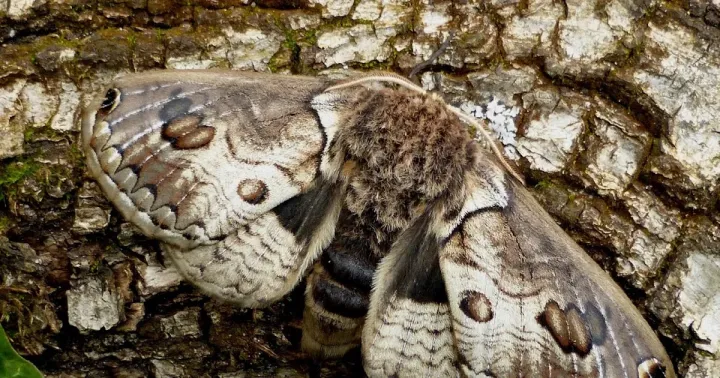
The Brahmid moth (Acanthobrahmaea europaea) belongs to the Brahmaeidae family within the order Lepidoptera. It is a rare moth species known for its intricate wing patterns, which serve as highly effective camouflage against tree bark.
Adult moths have a wingspan reaching 70 to 80 millimeters. Their coloration consists of various shades of gray and brown, blending perfectly into the environment where they rest during the daylight hours.
The larvae (caterpillars) undergo significant changes in appearance through several instars. Mature caterpillars are large and often display warning colors, which helps deter potential predators.
The life cycle of the species is deeply linked to specific climatic zones and host plants. Due to its narrow ecological niche, its geographical distribution is strictly limited to certain European regions.
The pupal stage occurs within the soil or forest litter, where the insect remains dormant for an extended period, waiting for the right environmental cues to emerge in the spring.
What it damages
The primary food source for the Brahmid moth larvae is the foliage of ash trees, specifically the European ash. The larvae show a strong preference for young saplings, where intensive feeding can be devastating.
During outbreaks, the caterpillars can cause complete defoliation of trees across large areas. This significantly weakens the plants, making them susceptible to secondary pests and various pathogens.
In forestry and landscape management, this damage results in the loss of aesthetic value and a substantial reduction in wood growth rate. Repeated defoliation over several consecutive years can eventually lead to tree mortality.
While the species is protected in several European countries due to its rarity, its feeding activity in nurseries or plantations may require active management to maintain tree health.
The economic impact is most pronounced in zones where ash is a major forestry or ornamental component, as the preservation of the leaf canopy is vital for the tree's development.
When it appears
Adult Brahmid moths typically emerge in the spring, usually between March and April, which is synchronized with the natural awakening of the vegetation in their native habitat.
The active feeding phase of the caterpillars occurs during late spring and early summer. During this time, they consume large quantities of foliage to store energy for metamorphosis.
After the feeding phase concludes in mid-summer, the larvae descend to the ground to pupate. The pupal stage is the longest part of the moth's entire life cycle.
The insect spends the fall and winter months as a pupa, protected by the soil or leaf litter, ensuring survival through adverse weather conditions.
Climate fluctuations, particularly unseasonably cold springs or heatwaves, can shift the timing of moth emergence and affect the overall synchronization of the pest's population dynamics.
Signs of infestation
The most visible indicator of Brahmid moth presence is the characteristic damage to ash leaves. Larvae often skeletonize leaves, leaving only the main veins, which makes the canopy appear sparse.
- Presence of large caterpillars on the underside of leaves.
- Accumulation of frass (caterpillar droppings) beneath infested trees.
- Noticeable thinning of the tree crown during May and June.
- Discovery of pupae in the topsoil layer during routine soil management.
Since female moths often lay their eggs in clusters, the damage is typically patchy, allowing for focused monitoring and localized control efforts.
Control measures
Primary control measures focus on maintaining the health of ash plantations through proper silvicultural practices, including irrigation and fertilization, to boost tree immunity against stressors.
Biological control is the most sustainable approach, relying on natural predators and parasitoids that exist in the ecosystem to keep the moth population in check.
In nursery or plantation settings, biological insecticides containing specific bacteria (such as Bacillus thuringiensis) can be used to target caterpillars while sparing beneficial insects.
Chemical intervention should be considered only as a last resort in cases of severe infestation, as broad-spectrum insecticides can disrupt the balance of the ecosystem and harm pollinators.
Effective monitoring, utilizing pheromone or light traps, allows for the early detection of population increases, enabling management actions before significant damage occurs.
Taxonomy
- Latin name
- Acanthobrahmaea europaea
- Order
- Lepidoptera (butterflies)
- Family
- Brahmaeidae
- EPPO code
- ABRHEU
Discussion
No discussions yet — be the first.