
Rape blossom beetle
Brachypterus
Description
How to identify
The rape blossom beetle (genus Brachypterus) is a small beetle belonging to the family Nitidulidae. These insects are well-known pests that can cause significant damage to brassica crops.
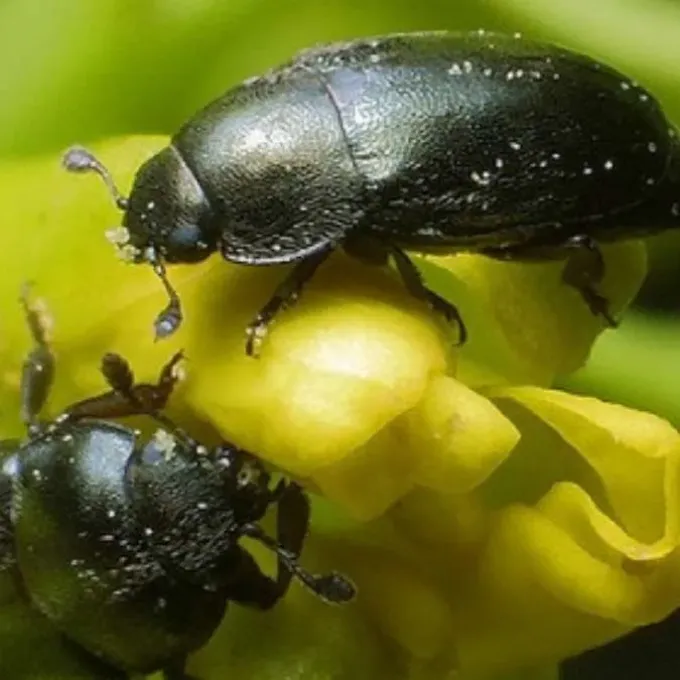
Adult beetles are typically 2–3 mm long with an oval-shaped body. Their appearance is generally dark brown or black, often displaying a shiny or slightly metallic finish that distinguishes them from other local beetle species.
The larvae are small, worm-like, and typically off-white to yellowish in color. They possess a chitinized head and strong mandibles adapted for feeding on the delicate floral parts of host plants.
These insects are highly mobile and are known to fly over significant distances in search of blooming host plants. This capability makes them a persistent threat to agricultural fields.
The life cycle involves overwintering as adults in the soil or under debris, emerging in early spring when temperatures allow for the resumption of activity and the search for food.
What it damages
Rape blossom beetles primarily target plants within the Brassicaceae family. Canola and oilseed rape are the most frequently affected crops, especially during the crucial stages of budding and early flowering.
Other host plants include wild mustard, wild radish, and various weeds that act as secondary feeding sites during the early parts of the growing season.
Damage is caused when both the adult beetles and their larvae feed on the pollen and reproductive tissues of the flowers. They pierce through the petals to reach the anthers inside the buds.
This feeding behavior leads to the destruction of the reproductive organs, which prevents pod formation and causes the bud to wither, turn yellow, and fall off the plant prematurely.
In cases of heavy infestation, the cumulative loss of buds can significantly reduce the overall yield of the crop, sometimes resulting in substantial economic losses for farmers.
When it appears
The emergence of the beetles from their overwintering sites typically occurs as soon as soil temperatures reach approximately 10–12°C. This timing often aligns with the early growth stages of spring rape.
Peak activity coincides with the onset of the budding phase of the host crop. This is the period when agricultural fields are most at risk and require intensive monitoring for pest density.
The beetles are diurnal, meaning they are most active during warm, sunny days. During inclement weather, they tend to hide within the buds or at the base of the plant to seek shelter.
There is typically one generation per year. After the larvae complete their feeding cycle, they drop to the ground to pupate in the soil, emerging as the next generation of adults.
Late-season adults feed on the foliage of host plants to build up the necessary energy reserves to survive the coming winter months in a state of diapause.
Signs of infestation
One of the primary indicators of a rape blossom beetle infestation is the appearance of damaged, yellowed, or empty buds on the tips of the flowering shoots.
Careful inspection of the crop will reveal small entrance holes in the flower buds. If a bud is opened, one may often find the beetle itself or its larvae residing within the structure.
Extensive damage leads to uneven development of the crop, where plants appear stunted or have significantly fewer pods compared to healthy, uninfested regions of the field.
Secondary symptoms may include weakened stems and a general reduction in the density of the floral clusters, which is easily visible when assessing the field's health.
- Premature yellowing of buds.
- Presence of exit/entrance holes in buds.
- Reduction in pod count.
- Clusters of damaged, falling flowers.
Control measures
Effective management begins with sound agronomic practices, including crop rotation and ensuring sufficient distance from fields that were planted with brassica crops the previous year.
Controlling weeds within the Brassicaceae family along the field edges is crucial, as these plants serve as important reservoirs for the beetle population before they migrate to the main crop.
Chemical control should be implemented based on established economic threshold levels. Farmers are advised to use selective insecticides to manage pest populations while minimizing harm to non-target species.
When applying pesticides, timing is essential to avoid harming beneficial pollinators like honeybees, which are active during the flowering phase of the crop.
The use of monitoring tools such as yellow sticky traps helps in tracking beetle migration and density, allowing for timely and targeted interventions before damage becomes widespread.
Taxonomy
- Latin name
- Brachypterus
- Order
- Coleoptera (beetles)
- Family
- Kateretidae
- EPPO code
- BRAKSP
Discussion
No discussions yet — be the first.