
Brachypterolus
Brachypterolus
Description
How to identify
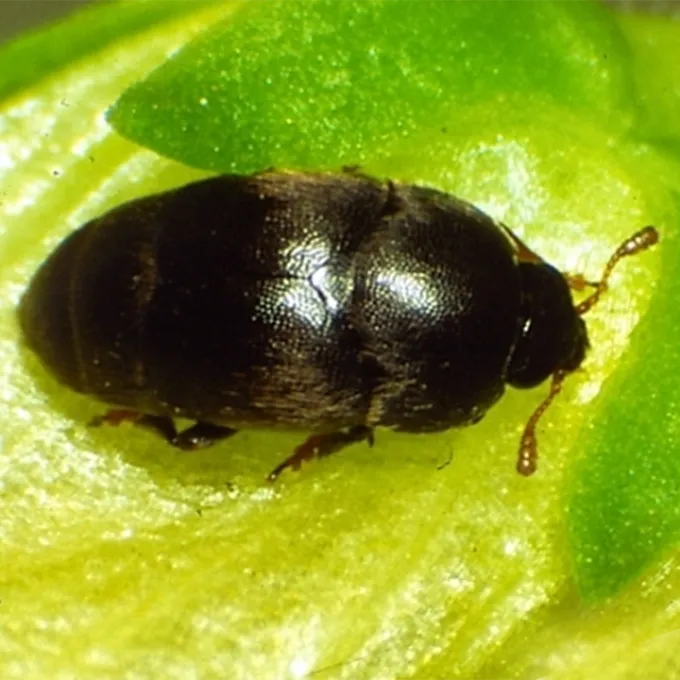
Brachypterolus is a genus of beetles belonging to the family Nitidulidae (sap beetles). These insects are small, typically measuring between 2 to 3 mm in length, with an oval and slightly convex body shape.
The coloration of these beetles is usually dark brown to black, often exhibiting a subtle metallic sheen. The surface of the elytra is covered with fine punctures, which are characteristic of this taxonomic group.
The larvae are typically whitish or yellowish with a dark head capsule. They undergo a complete metamorphosis, passing through egg, larval, pupal, and adult stages within their life cycle.
Adult beetles are capable fliers, allowing them to rapidly colonize new areas in search of host plants. They are most active during warm, sunny weather conditions typical of the summer season.
Due to their small size, identifying these beetles in the field requires close inspection of flower buds or the use of sweep nets to capture adult specimens for laboratory verification.
What it damages
Brachypterolus species are primarily associated with plants in the Plantaginaceae family, most notably the genus Linaria (toadflax). The larvae and adults act as specialist flower feeders.
The beetles feed on the internal tissues of developing flower buds. This feeding behavior destroys the reproductive organs, preventing the plant from successfully producing seeds.
In agricultural settings, particularly in seed production, this damage can lead to significant economic losses by reducing both the quantity and quality of the harvested seed.
Affected flower buds frequently wither and abscise prematurely, leading to sparse or deformed inflorescences. This significantly reduces the reproductive fitness of the host plant.
Furthermore, feeding damage creates entry points for secondary pathogens, such as fungi or bacteria, which can cause further tissue decay and weaken the entire plant structure.
When it appears
The life cycle of Brachypterolus is tightly linked to the phenology of its host plants. Adults typically emerge from overwintering sites in late spring when temperatures rise sufficiently.
The period of active infestation coincides with the budding and flowering phase of the host. During this time, females lay their eggs directly into the developing buds.
Larval development takes several weeks, during which the larvae feed hidden inside the bud, protecting them from many environmental stressors and some predators.
Once mature, the larvae leave the buds and enter the soil or plant debris to pupate. Depending on local climatic conditions, one or more generations may occur throughout the season.
As autumn approaches, adult beetles seek protected overwintering sites, such as the soil surface, leaf litter, or crevices in plant stalks, to survive the winter months.
Signs of infestation
The first signs of infestation are often small, pinprick-sized holes on the surface of unopened flower buds. These may be accompanied by slight wilting or tissue discoloration.
Examining the interior of suspected buds often reveals the presence of larvae or adult beetles. This is the most reliable way to confirm the cause of the damage.
Deformed or asymmetrical flowers that fail to open properly are indicators of heavy infestation. In some cases, entire buds may turn brown or black and fall off the stem prematurely.
The presence of fine excrement near the buds or on the leaves beneath the inflorescence is another common sign of active feeding by these beetles.
Monitoring the plant during the early budding stage is crucial, as the severity of the infestation is often directly correlated with the number of eggs laid by the first generation of adults.
Control measures
Cultural control practices, such as removing wild host plants like Linaria from field margins, can significantly reduce the local population of the pest.
Deep cultivation of the soil in late autumn is effective in disrupting the overwintering habitat of the beetles, thereby reducing the number of adults that emerge in the spring.
Biological control, using naturally occurring predators or parasitic wasps that target Nitidulid larvae, can help keep populations below the economic threshold in sustainable systems.
Chemical control should be implemented only when necessary, using insecticides targeting the adult stage before egg-laying occurs. Application timing is critical for efficacy.
It is essential to select products that minimize impact on pollinators and beneficial insects, following integrated pest management (IPM) guidelines to ensure crop safety and ecological health.
Taxonomy
- Latin name
- Brachypterolus
- Order
- Coleoptera (beetles)
- Family
- Kateretidae
- EPPO code
- HETMSP
Discussion
No discussions yet — be the first.