
Flax flea beetle
Brachypterolus pulicarius
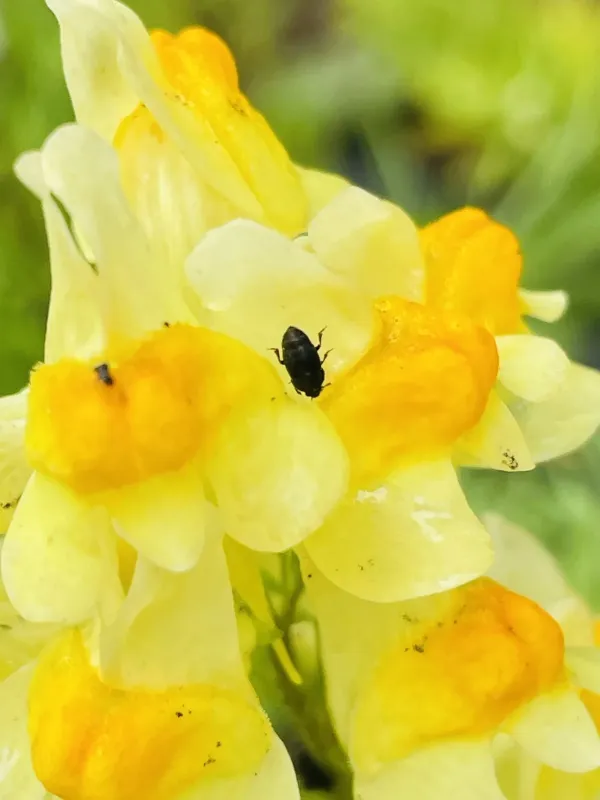
Description
How to identify
The flax flea beetle (Brachypterolus pulicarius) belongs to the Nitidulidae family within the order Coleoptera. The adult is a small beetle, typically measuring between 2 and 3 mm in length, characterized by a shiny black or dark-brown body.
The larvae are small, whitish creatures with a distinct dark head capsule. They develop exclusively within the reproductive parts of the flax plant, making them difficult to detect without careful inspection.
Adult beetles overwinter in the soil or under plant debris, emerging in the spring as temperatures rise. Their emergence is usually timed with the initial growth stages of flax crops.
The life cycle is tightly synchronized with the development of flax. The beetles prioritize fresh flower buds, which provide optimal nutrition for their development and the survival of the next generation.
This species is widely distributed across temperate regions where flax cultivation is prevalent, making it a persistent concern for farmers specializing in fiber or seed flax production.
What it damages
Both adults and larvae inflict damage by feeding on the reproductive organs of the flax plant. Adults chew holes into the flower buds, consuming essential floral parts like stamens and pistils.
Larval feeding inside the bud causes significant damage, often leading to the abscission or premature shedding of the buds. This prevents the formation of capsules, directly reducing seed yield.
High infestation levels lead to uneven maturation and a reduced number of healthy capsules per plant. This not only decreases yield but can also negatively affect the quality of the raw material.
Secondary infections often take hold in the damaged tissues of the buds or flowers, further weakening the plant and complicating the overall health of the flax crop.
The impact is most severe in years where unfavorable weather delays the blooming period, effectively extending the time window during which the beetles can feed on the buds.
Signs of infestation
The primary indicators of infestation are small, circular entry holes on the flower buds. These buds often turn yellow or dry up entirely before they have a chance to bloom.
During the budding stage, one can observe adult beetles on the plants. They are quite skittish and often drop to the ground or hide within the axils of the leaves when approached.
Presence of frass or waste material inside the buds or capsules is a clear sign that larvae have been feeding. Deformed flower stalks are another common symptom of infestation.
Uneven development within the field, where some plants fail to produce capsules or show stunted growth, indicates a significant presence of the pest population.
Monitoring using sweep nets is the standard practice for agronomists to determine the population density and assess the necessity of intervention during the budding phase.
Control measures
Effective crop rotation is the most critical preventative measure. Avoiding planting flax in the same field for at least four years significantly disrupts the beetle's life cycle.
Deep autumn tillage is recommended to bury overwintering adults and larvae, preventing them from emerging successfully when spring conditions arrive.
Selecting early-maturing flax varieties can allow the crop to pass through its most vulnerable budding stage before the peak population density of the flax flea beetle occurs.
When infestation levels exceed the economic threshold, the application of appropriate systemic or contact insecticides is necessary to protect the yield during critical developmental phases.
Maintaining clean fields by eliminating weeds that may serve as alternative hosts is vital for minimizing the initial population pressure on the main flax crop.
Taxonomy
- Latin name
- Brachypterolus pulicarius
- Order
- Coleoptera (beetles)
- Family
- Kateretidae
- EPPO code
- HETMPU
Discussion
No discussions yet — be the first.