
Brachycentrus subnubilus
Brachycentrus subnubilus
Description
How to identify
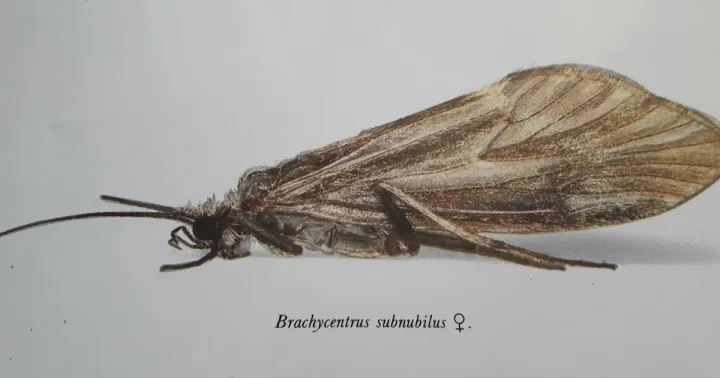
Brachycentrus subnubilus is a species of caddisfly belonging to the family Brachycentridae. Adult insects are characterized by hairy wings that are folded tent-like over the body when at rest.
The larvae are easily identifiable due to their unique, four-sided protective cases (caddis houses) made from plant fragments and debris, which they carry during their development.
Adults are generally small, brownish-grey in color, and are typically found in the vicinity of freshwater streams and rivers during their mating season.
The larvae possess strong mandibles adapted for scraping organic matter and vegetable tissues from submerged surfaces.
During the pupal stage, the larva seals its case with a silk lid before transforming into an adult, which then emerges to the surface to complete the life cycle.
What it damages
Damage occurs primarily during flooding events when larvae are distributed across agricultural fields near water bodies.
Larvae feed on the epidermis and leaves of flooded crops, potentially leading to weakened plants and stunted development in the early growing stages.
In water-logged fields or irrigated systems, they can cause significant mechanical damage to the root systems and stems of hydrophilic plants.
Mass infestations can lead to decreased plant density as young seedlings are heavily damaged or consumed by the larvae.
The secondary impact of their feeding includes opening wounds that act as entry points for bacterial and fungal pathogens, further harming crop health.
When it appears
The life cycle of this species is highly seasonal, with the adult emergence phase occurring in early spring, synchronized with rising water temperatures.
Larvae are active throughout the winter and autumn months, feeding and growing in the submerged environments adjacent to agricultural zones.
Peak activity of the adult phase coincides with early spring crop germination, posing a risk to early plantings in vulnerable flood-prone regions.
Environmental factors such as water current speed and oxygen levels directly influence the developmental rate of the larval stages.
Once the spring mating and egg-laying phase is complete, adult population numbers decline rapidly as they complete their short life span.
Signs of infestation
The most reliable sign of an infestation is the presence of the distinct four-sided larval cases scattered in the soil or attached to plant stems.
Visible feeding damage, such as skeletonized leaf margins or eaten stem tissues, suggests the presence of feeding larvae on submerged plant parts.
A high density of flying adults near the borders of fields indicates an active reproductive cycle, signifying potential egg-laying activity.
- Presence of discarded larval cases on fields after flood recession.
- Irregular holes in the leaves of submerged or semi-aquatic crops.
- Wilting or yellowing of seedlings due to root zone consumption.
Regular monitoring of water sources and edge vegetation helps in identifying potential hotspots of the pest before they reach crops.
Control measures
Effective management includes maintaining proper water control structures to limit the spread of larvae into cultivated land during spring floods.
Clearing irrigation canals and stream banks of excessive organic debris reduces the available food source and shelter for the larval stages.
Biological control agents that specifically target aquatic pests without harming beneficial fish populations can be used in integrated management plans.
Adjusting planting schedules to ensure plants are stronger and less vulnerable by the time of potential larval emergence is a key preventive strategy.
Post-flood soil cultivation helps to eliminate surviving larvae and disrupts their habitat, significantly reducing the impact on future crop cycles.
Taxonomy
- Latin name
- Brachycentrus subnubilus
- Family
- Brachycentridae
- EPPO code
- BRCSSU
Discussion
No discussions yet — be the first.