
Spotted caddisfly
Brachycentrus maculatus
Description
How to identify
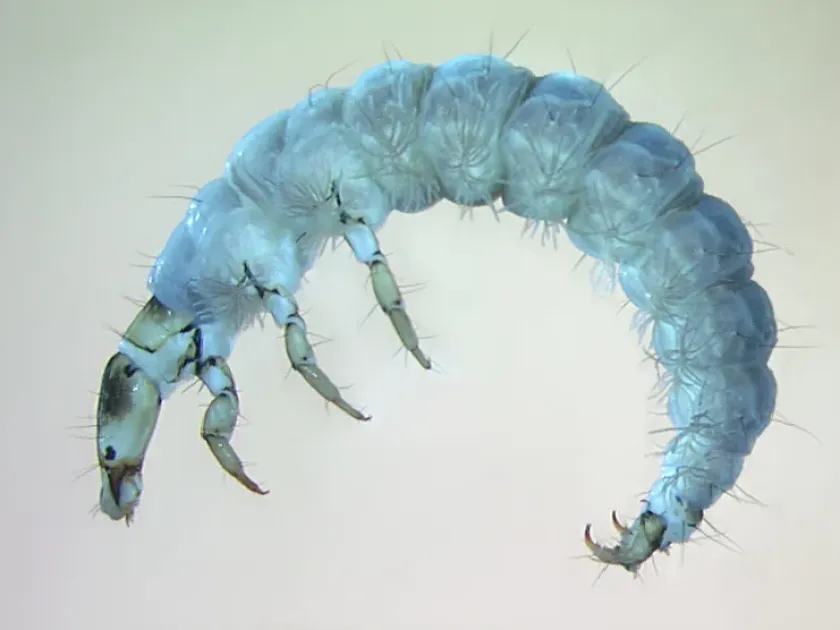
The spotted caddisfly (Brachycentrus maculatus) belongs to the order Trichoptera, family Brachycentridae. Adult insects are characterized by two pairs of hairy wings, which are typically folded roof-like over their bodies when at rest.
The larvae of this species are distinct for building four-sided cases made from plant fragments or sand particles bound together by silk, providing effective camouflage in aquatic environments.
Larvae appear in shades of grey to dark brown, allowing them to remain hidden among submerged vegetation or on the substrate of water bodies.
Adults possess long, thin antennae that significantly exceed the length of their bodies, along with intricate wing venation patterns that are vital for taxonomic classification.
The life cycle involves complete metamorphosis, consisting of egg, larva, pupa, and adult stages. Most of the development occurs underwater, where larvae pass through several instars.
What it damages
While caddisflies are primarily aquatic organisms, their high populations can pose a threat to shoreline crops and plants in irrigated agricultural systems.
Larvae can damage young shoots and leaves that are in contact with water or submerged during irrigation processes, such as in rice paddies or flooded fields.
Damage manifests as skeletonized leaf blades or shredded soft tissues on young plants, which stunts growth and delays normal development during the critical early stages.
Injured tissues become vulnerable entry points for secondary fungal and bacterial infections, potentially leading to localized rot in the affected plant stands.
The presence of large numbers of larvae can also cause physical clogging of irrigation channels and filters, reducing the overall efficiency of water management systems.
When it appears
Adult spotted caddisflies are most active during the spring and summer months, which is the primary window for mating and oviposition activities.
Larval stages are active in water throughout the growing season, starting from early spring when water temperatures rise sufficiently to trigger feeding and development.
Population spikes often correlate with the peak growth periods of aquatic and riparian vegetation, providing both food sources and platforms for egg-laying.
In regions with milder climates, larvae may maintain a level of activity throughout most of the year, slowing down only during brief periods of cold water temperatures.
The flight period of adults is often prolonged, ensuring the continuity of the life cycle and allowing the species to colonize new areas via interconnected waterways.
Signs of infestation
The most reliable sign of a spotted caddisfly infestation is the presence of their unique four-sided larval cases attached to submerged or floating plant stems.
Irregular holes or shredded edges on leaves, especially on plants near water, serve as a clear indicator of larval feeding activity.
A high number of adult insects clustering around artificial light sources at night near agricultural fields is a strong signal of a significant local population.
Visible debris and organic waste in irrigation channels, combined with the presence of larval cases, confirm the colonization of these water systems by the pest.
Close observation of the riparian zone often reveals the larvae, as they move along plant surfaces despite their camouflaging cases.
Control measures
Regular maintenance and cleaning of irrigation ditches to remove excess aquatic vegetation is the most effective way to eliminate breeding grounds for the larvae.
Utilizing biological control methods, such as specific entomopathogenic agents, can help manage population levels while protecting the local ecosystem balance.
Adjusting irrigation schedules to avoid prolonged flooding of non-aquatic crops helps to prevent the spread of larvae into the main cultivation areas.
In cases of severe infestation, the application of insecticides approved for use in aquatic-adjacent areas may be necessary, provided that environmental regulations are strictly followed.
- Monitor adult flight using light-based insect traps.
- Regularly mow weeds along irrigation banks before the peak egg-laying season.
- Maintain consistent water quality and flow in irrigation systems to discourage colonization.
Taxonomy
- Latin name
- Brachycentrus maculatus
- Family
- Brachycentridae
- EPPO code
- BRCSMA
Discussion
No discussions yet — be the first.