
Brachycentrus
Brachycentrus
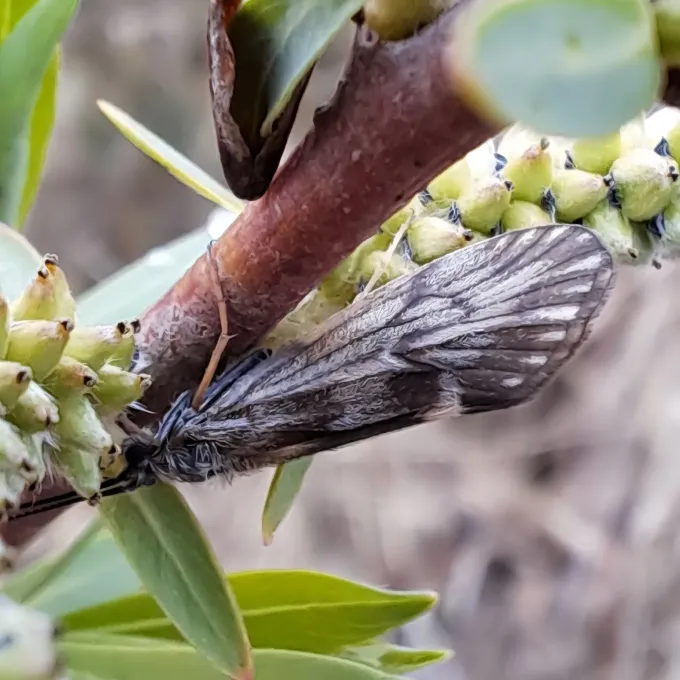
Description
How to identify
Brachycentrus is a genus of caddisflies belonging to the order Trichoptera and the family Brachycentridae. Adult insects have two pairs of wings covered with fine, hair-like structures.
The larvae of this genus are distinct due to their unique cases, which are constructed from plant debris and shaped like a four-sided prism. This architecture provides excellent camouflage in aquatic environments.
Physically, the larvae have a compact body with heavily sclerotized thoracic segments. A dark-colored head is a common diagnostic feature used by entomologists to identify this specific family.
Their life cycle involves complete metamorphosis: egg, larva, pupa, and adult. In most habitats, the life cycle spans one year, though it may vary depending on water temperatures and latitude.
Adults are typically seen during dusk and evening hours. Their resting posture, with wings folded tent-like over the abdomen, makes them distinguishable from other small insects.
What it damages
Although Brachycentrus primarily inhabits aquatic ecosystems, they can cause damage to crops grown on irrigated lands or in riparian zones adjacent to streams and rivers.
The larvae feed on soft plant tissues that may overhang into the water or fall into irrigation channels. This feeding behavior can lead to significant localized destruction of vegetation.
Primary damage involves the consumption of young shoots and foliage of crops located near the water line. Severe infestations can significantly reduce plant stand density.
The pest favors succulent plant tissues, leading to deformity and necrosis of the foliage as the larvae scrape away layers of the leaf structure.
While often considered minor pests, they can cause measurable economic losses in specific horticultural crops cultivated in high-moisture or flooded field conditions.
When it appears
Adult Brachycentrus activity usually peaks during spring and early summer, corresponding with mass emergence events from their aquatic habitats.
The larval stage is the longest part of the life cycle, occupying most of the active growing season for typical agricultural crops.
Population density often reaches its peak in mid-summer when optimal water temperatures accelerate larval metabolism and increase their feeding activity.
In the autumn, larvae enter the pupal stage, sealing their cases with silk to survive the winter months protected within their structures.
Springtime warming triggers the emergence of adults, which is a critical time for monitoring potential colonization of nearby vegetation and crop fields.
Signs of infestation
The presence of Brachycentrus is most easily identified by observing their characteristic four-sided cases attached to submerged plant stems or debris.
Leaves of agricultural crops may show evidence of surface feeding, where larvae have scraped away plant tissue while leaving the vascular veins intact.
Damage observed on the lower portions of stems that are partially submerged or located in saturated soils is a clear indicator of larval activity.
Accumulation of granular frass (insect excrement) near the point of damage is another reliable sign that larvae are currently feeding in the area.
Gradual wilting of individual plant stems near water sources often serves as a signal to perform a detailed entomological inspection for these insects.
Control measures
The primary control method involves excluding larvae from crop areas by installing fine-mesh screens or filtration systems in irrigation channels.
Effective cultural management includes regular clearing of vegetation from canal banks, which removes the necessary substrate for larval development and feeding.
Adjusting irrigation schedules or managing water flow in fields can help decrease local populations, as the insects are highly dependent on specific water conditions.
Biological control using entomopathogenic agents applied to the water can be considered if population numbers exceed the economic injury threshold.
Chemical control must be applied with extreme caution to ensure that pesticides do not contaminate open water bodies, protecting beneficial aquatic organisms.
Taxonomy
- Latin name
- Brachycentrus
- Family
- Brachycentridae
- EPPO code
- BRCSSP
Discussion
No discussions yet — be the first.