
Wide-eyed flounder
Bothus podas
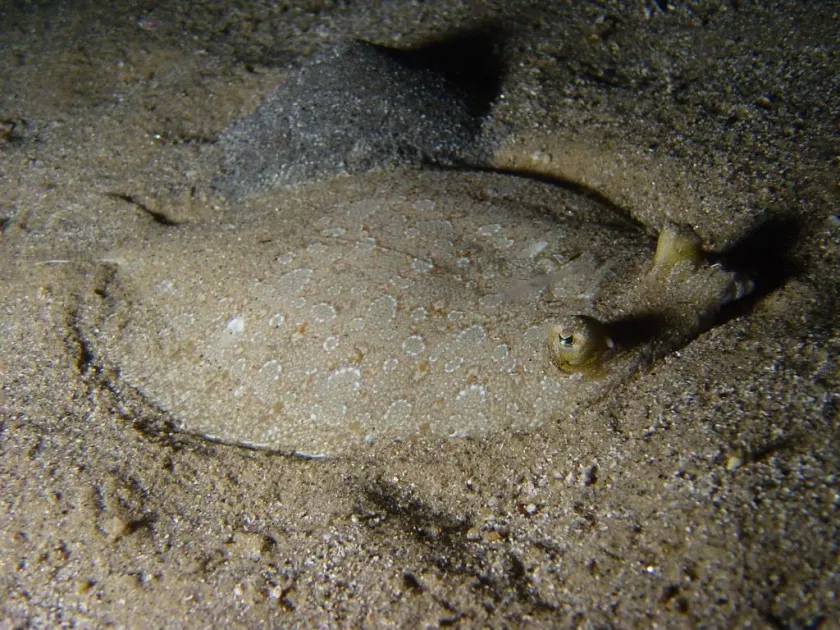
Description
How to identify
The Wide-eyed flounder (Bothus podas) is a species of fish belonging to the family Bothidae within the order Pleuronectiformes, characterized by a distinct flattened, asymmetrical body shape.
These fish reside on the sandy and muddy bottoms of the Mediterranean Sea and the Eastern Atlantic, where they utilize their camouflage capabilities to blend into the environment.
A key biological feature is the presence of both eyes on the left side of the head, which is a structural adaptation for their specialized bottom-dwelling lifestyle.
Males are generally larger than females and are notable for having wider set eyes and prominent bony structures on their heads during the mating season.
As a purely marine organism, this species does not interact with terrestrial environments or agricultural habitats in any capacity.
What it damages
The Wide-eyed flounder does not cause damage to agricultural crops, including cereals, vegetables, or orchards, as it is strictly restricted to saltwater ecosystems.
It functions as a secondary consumer in the marine food chain, feeding on small crustaceans and other benthic invertebrates rather than plant matter.
There is no mechanism by which this fish could act as a pest, as it lacks the physiological traits required to survive or feed on dry land.
The confusion regarding its status as a "pest" is unfounded in agronomic science, as the species poses zero threat to food production or forestry.
No agricultural control measures, pesticides, or biological interventions are required or recommended for this species, as it is a natural part of oceanic biodiversity.
Taxonomy
- Latin name
- Bothus podas
- Family
- Bothidae
- EPPO code
- BTHSPO
Discussion
No discussions yet — be the first.