
Arnoglossus rueppelli
Arnoglossus rueppelli
Description
How to identify
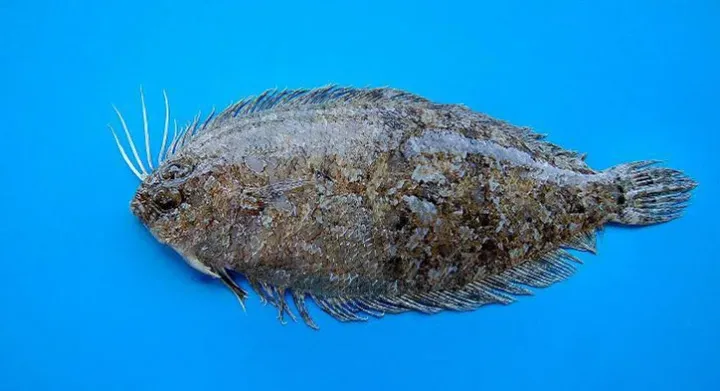
Arnoglossus rueppelli is a species of lefteye flounder belonging to the family Bothidae. Like all members of this family, it is characterized by a laterally compressed, asymmetrical body with both eyes located on the left side of the head.
The coloration of this fish typically ranges from grey to brownish, allowing it to blend seamlessly into sandy or muddy sea floors. Adults are relatively small, usually reaching lengths between 15 and 20 centimeters.
Morphological identification is based on fin ray counts and the specific pattern of scale coverage. Specialists use these anatomical features to distinguish this species from other closely related flatfish.
It is a sedentary bottom-dweller, often remaining partially buried in the substrate to evade predators and ambush prey. This behavior makes it a specialized inhabitant of coastal environments.
While not a threat to terrestrial agriculture, understanding this species is essential for marine ecological studies and sustainable coastal management practices.
What it damages
Arnoglossus rueppelli is not an agricultural pest and does not harm crops. However, it can influence aquaculture operations located in coastal waters where it resides.
The primary concern regarding this fish in aquaculture is resource competition. As a predator of small invertebrates and crustaceans, it can compete with commercial species for food sources.
In highly managed aquatic environments, its presence may require monitoring to ensure that it does not negatively affect the growth of cultivated shellfish or smaller aquaculture stocks.
The economic impact of this fish is minimal but should be considered in the context of ecosystem-based fisheries management and offshore farming.
Scientific data indicates that the species is a natural component of the marine food web rather than a destructive invasive force in most temperate regions.
When it appears
The life cycle and activity of Arnoglossus rueppelli are heavily influenced by water temperature fluctuations, which dictate their spawning and feeding rhythms.
Peak activity generally occurs during the spring and summer months when water temperatures are higher, promoting the abundance of planktonic prey and bottom-dwelling invertebrates.
As water temperatures drop during autumn and winter, the species tends to migrate toward deeper waters where temperatures are more consistent and favorable for survival.
The larval phase is pelagic, allowing the species to utilize ocean currents for dispersal, which explains its distribution pattern across various coastal areas.
Understanding these seasonal patterns helps researchers and aquaculturists predict population density changes throughout the calendar year.
Signs of infestation
Visual identification is challenging due to the fish's exceptional camouflage. Signs of its presence are usually limited to subtle sand disturbances on the seabed.
In research settings, professional monitoring involves the use of high-resolution underwater cameras and benthic trawls to assess population numbers accurately.
Data from environmental DNA (eDNA) sampling can also provide evidence of the species' presence in a particular water column without the need for physical capture.
Experienced marine biologists look for specific indicators of bottom-dwelling predators when conducting environmental impact assessments for aquaculture sites.
Consistent monitoring and data collection are key to distinguishing between normal population levels and unusual spikes in presence.
Control measures
Control measures in aquaculture focus on exclusion and site management rather than active eradication of the species.
Physical barriers, such as specialized netting, are employed to prevent unwanted fish species from entering high-value culture zones.
Effective waste management and feeding protocols prevent the attraction of opportunistic bottom feeders, helping maintain a healthy environment for the cultured species.
Ecological approaches, such as promoting healthy predator-prey dynamics, are the most sustainable methods for controlling the population within the farm's vicinity.
- Installation of exclusion netting.
- Optimization of feed distribution.
- Regular ecological monitoring.
Taxonomy
- Latin name
- Arnoglossus rueppelli
- Family
- Bothidae
- EPPO code
- ARNORU
Discussion
No discussions yet — be the first.