
Waxwing
Bombycilla garrulus
Description
How to identify
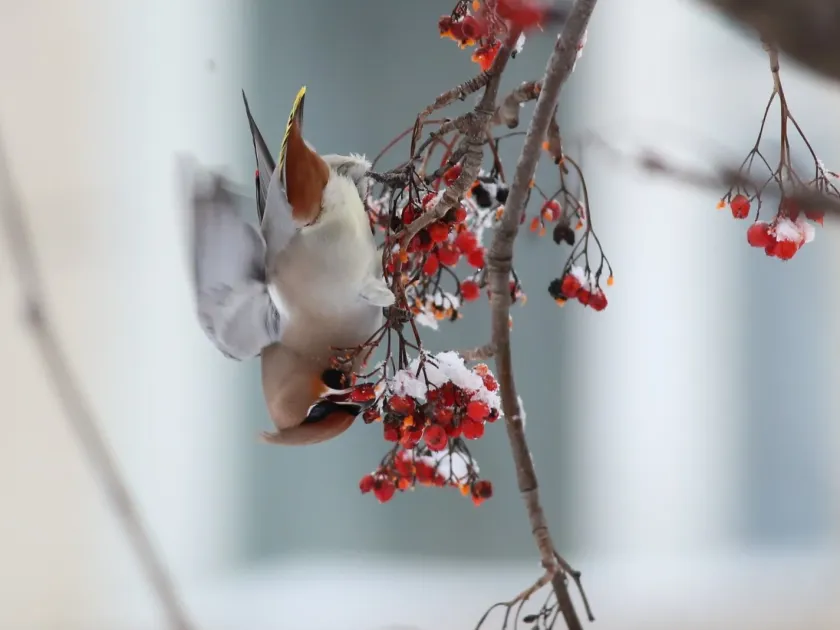
The Bohemian Waxwing (Bombycilla garrulus) is a member of the family Bombycillidae, easily recognized by its prominent crest and sleek, grayish-brown plumage.
Adults possess unique yellow and red waxy tips on their wing feathers, which give the species its common name and serve as a diagnostic feature.
These birds are highly social and are typically observed in large flocks that move through the landscape in search of winter food sources.
Their flight is direct and swift, and they often communicate with a high-pitched, trilling call that sounds similar to a flute or whistle.
Despite their elegant appearance, their tendency to congregate in large numbers in garden trees makes them a significant factor in winter garden management.
What it damages
Waxwings primarily damage garden crops during the late winter and early spring when they feed on lingering berries and succulent fruits.
They are known to consume large quantities of rowan, hawthorn, dogwood, viburnum, and sea buckthorn berries, often stripping branches clean.
In addition to consuming ripe fruit, they may damage tree buds during their feeding frenzy, which can negatively affect the tree's health and yield for the next season.
The sheer number of birds in a single flock means that they can strip a productive tree or decorative shrub of its fruit in a very short time.
Their droppings, scattered widely during feeding, can spread the seeds of invasive weeds or parasitic plants across the garden area.
When it appears
Waxwings are typically winter visitors, appearing in gardens when food supplies in their natural forest habitats become scarce.
Depending on the severity of the winter and the abundance of natural berries, these birds may arrive in orchards as early as December or as late as March.
They are most active during daylight hours, moving between trees to forage, and they remain in the vicinity as long as food is available.
Once spring temperatures begin to rise and natural food sources or migration patterns change, the flocks depart for their northern breeding grounds.
Foraging activity is most intense during the early morning and late afternoon as the birds manage their metabolic needs to survive the cold.
Signs of infestation
A primary indicator of waxwing presence is the arrival of a noisy, gregarious flock that fills the canopy of a fruit-bearing tree.
Ground-level evidence includes concentrated amounts of bird droppings, often stained with the pigments of the berries they have been consuming.
Fragments of fruit skins, stems, and uneaten pulp littering the area beneath the trees are clear signs of aggressive feeding activity.
Rapid disappearance of berries from ornamental shrubs or trees that are intended to retain their fruit throughout winter suggests waxwing intervention.
Physical damage to the terminal branches and knocked-off buds are frequently observed after a flock has moved through a garden.
Control measures
Mechanical exclusion methods, such as netting placed over valuable trees or shrubs, provide the most reliable protection against waxwings.
Visual deterrents, including reflective tape, holographic disks, or predator decoys, can be used to discourage birds from landing in the trees.
- Deploying ultrasonic bird repellent devices.
- Using bio-acoustic systems that mimic the calls of raptors.
- Removing remaining fruit crops promptly before winter sets in.
Installing a bird feeder with non-commercial grains in a remote area of the property can successfully distract the flock from valuable berry crops.
A combination of varied deterrent strategies is recommended, as the birds can become accustomed to static visual threats over time.
Taxonomy
- Latin name
- Bombycilla garrulus
- Family
- Bombycillidae
- EPPO code
- BMBYGA
Discussion
No discussions yet — be the first.