
Yellow-bellied toad
Bombina variegata
Description
How to identify
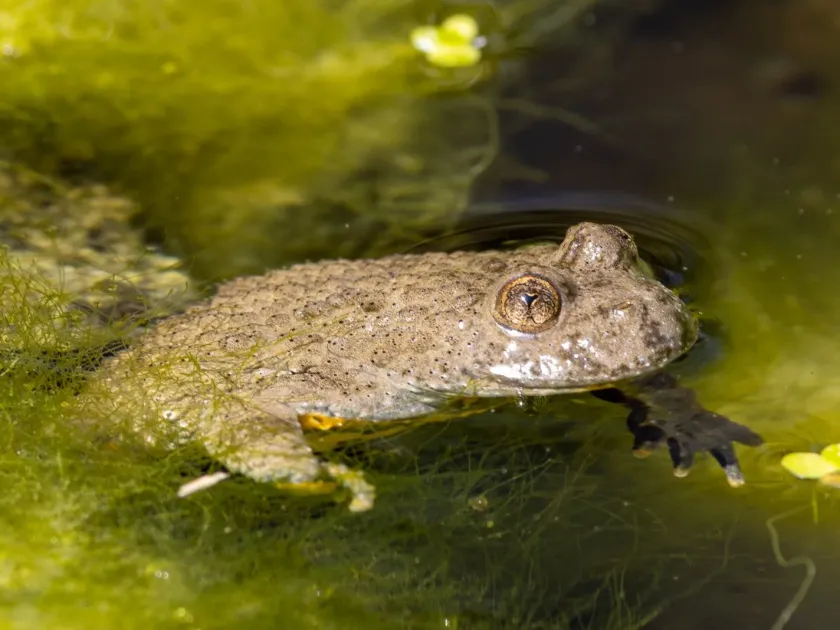
The yellow-bellied toad (Bombina variegata) is a small, semi-aquatic amphibian belonging to the family Bombinatoridae. It is easily recognized by its warty, grey-brown upper surface and its striking, bright yellow or orange-spotted underbelly.
Adult individuals typically grow to a length of about 4 to 5 centimeters. This species is known for its "unkenreflex" (startle reflex), where it arches its body to display its vibrant yellow pattern to warn potential predators of its toxic skin secretions.
They prefer small, shallow bodies of water, including muddy puddles, drainage ditches, and forest pools. They are well-adapted to environments that are often temporary but receive plenty of direct sunlight.
The yellow-bellied toad is a resilient species that relies on its camouflage to hide among foliage and soil near water edges. It is a strictly carnivorous animal, lacking any physical capability to consume or damage plants.
Observation of this species in an agricultural landscape often indicates a healthy, unpolluted environment, as these toads are highly sensitive to chemical runoff and agricultural toxins.
What it damages
It is important to clarify that the yellow-bellied toad is not an agricultural pest. There is no evidence that this animal damages any crops, fruits, or vegetables as it does not possess the biology to consume plant tissue.
The diet of the yellow-bellied toad consists entirely of invertebrates, such as beetles, flies, spiders, and earthworms. Because of this, it is considered beneficial rather than harmful, helping to keep insect pest populations in check.
The damage often attributed to animals in gardens, such as chewed leaves or stems, is strictly the work of insects, rodents, or gastropods. Amphibians like this toad are completely neutral to the vegetation on your land.
In fact, their presence should be welcomed by farmers as they contribute to the natural suppression of agricultural pests. They act as a natural check within the ecosystem, feeding on various ground-dwelling insects.
Categorizing the yellow-bellied toad as a pest is a common misconception. Their ecological role is focused on the water-land interface, and they avoid all contact with crop tissue during their foraging activities.
Control measures
No control measures are necessary for the yellow-bellied toad, as it is a beneficial organism. In many jurisdictions, this species is protected by law, and harming it is both unnecessary and illegal.
If you find their presence problematic in certain high-traffic areas, the best approach is to manage the water environment. Filling in or draining temporary puddles will encourage them to move to more suitable, natural habitats.
Avoid using pesticides or synthetic fertilizers near water sources, as these are harmful to amphibians. Maintaining a balanced environment ensures that beneficial wildlife remains present to provide natural pest control.
Efforts to eradicate these toads through chemicals will likely cause more damage to your local farm ecosystem than the toads themselves ever could. Integrated pest management relies on encouraging such natural predators.
Focus on maintaining healthy soil and clean water practices to preserve biodiversity. Embracing the yellow-bellied toad as part of your farm's ecosystem helps maintain a natural equilibrium without the need for human intervention.
Taxonomy
- Latin name
- Bombina variegata
- Family
- Bombinatoridae
- EPPO code
- BMBAVA
Discussion
No discussions yet — be the first.