
Fire-bellied toad
Bombina
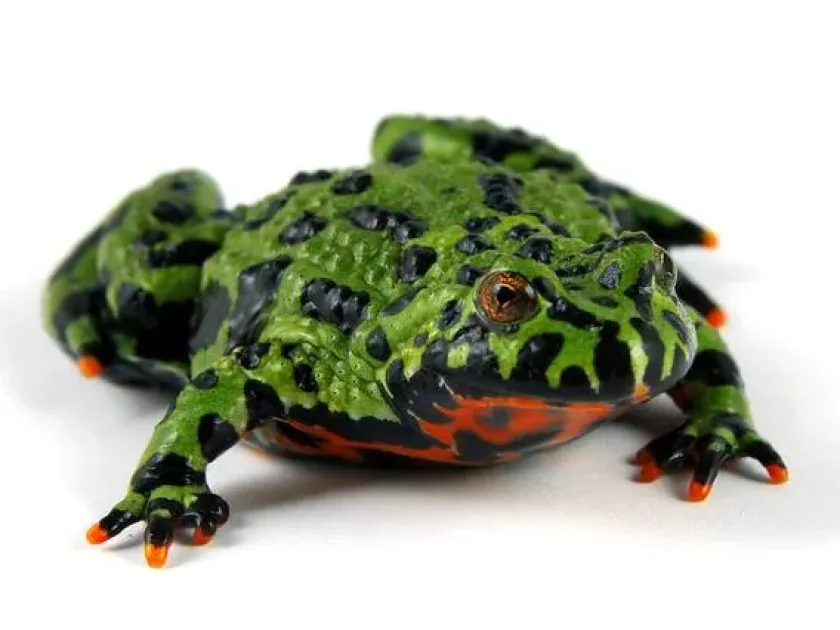
Description
How to identify
The fire-bellied toad (genus Bombina) belongs to the family Bombinatoridae and is strictly an amphibian, not a plant pest.
These animals are easily identified by their bright orange or red belly patterns with black markings, which serve as a warning to potential predators.
The skin on their back is typically dark, olive-grey, or brown with various tubercles, providing excellent camouflage against soil and pond bottoms.
They are relatively small, usually measuring between 4 to 7 centimeters in length, depending on the specific species and environmental conditions.
Being amphibians, they rely on moisture and are typically found near ponds, marshes, or damp areas of agricultural land.
What it damages
The fire-bellied toad causes zero damage to agricultural crops, as it has no herbivorous habits or mouthparts for plant grazing.
These amphibians are actually beneficial to the farm environment because they prey on insects that often damage vegetable crops.
They consume slugs, mosquitoes, beetles, and other small invertebrates, functioning as a natural biological control agent.
The presence of these toads indicates a healthy environment with low usage of harmful chemical pesticides or synthetic fertilizers.
Gardeners should not fear these creatures, as they do not chew leaves, bore into stems, or damage root systems of any plants.
When it appears
Fire-bellied toads become active in early spring when the air and water temperatures rise, signalling the start of their breeding season.
Throughout the summer months, they forage in humid areas, often inhabiting garden beds or thick grass near moisture sources.
Their activity level depends heavily on environmental humidity; they are most noticeable during rainy weather or during cool evenings.
As autumn approaches and temperatures drop, they begin their transition to terrestrial wintering sites to survive the cold season.
They hibernate in soil, under leaf litter, or in rodent burrows, where they enter a state of dormancy until the following spring.
Signs of infestation
A primary sign of their presence is the distinct, low-pitched, flute-like call produced by males during the mating season in spring.
Visual spotting often occurs near water features, irrigation barrels, or damp shaded areas within a garden or orchard.
Since they do not cause plant damage, there are no characteristic lesions, missing foliage, or symptoms of infestation to report.
Their presence is a positive biological indicator of soil health and a lack of toxic chemicals in the local garden ecosystem.
No scouting protocols are necessary for these amphibians, as they play no role in pest outbreaks or crop yield reduction.
Control measures
There is no need for control measures against the fire-bellied toad, as they are harmless and ecologically beneficial organisms.
If their presence is undesired, simply modifying the habitat by improving drainage or removing standing water will naturally reduce their numbers.
Chemical control is strongly discouraged, as such substances harm beneficial biodiversity and disrupt the ecological balance of the soil.
Encouraging their presence can actually aid in the suppression of slugs and other pests, reducing the need for chemical interventions.
Maintaining a balanced approach to the ecosystem allows these amphibians to serve as natural assistants in modern agriculture.
Taxonomy
- Latin name
- Bombina
- Family
- Bombinatoridae
- EPPO code
- BMBASP
Discussion
No discussions yet — be the first.