
Fire-bellied toad
Bombina bombina
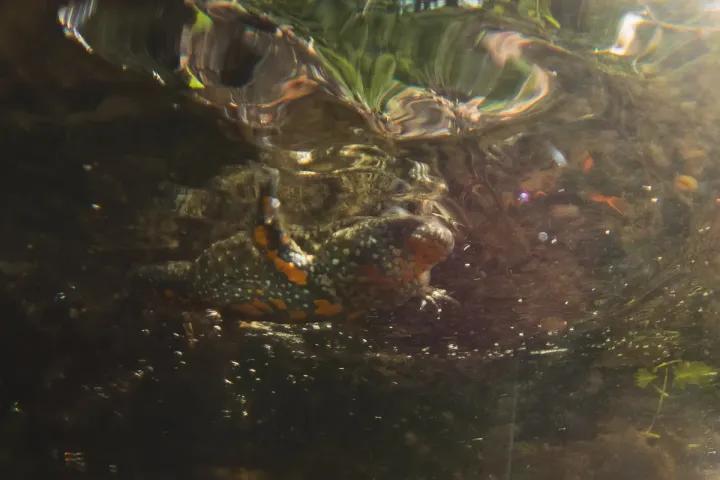
Description
How to identify
The fire-bellied toad (Bombina bombina) is a species of the order Anura, belonging to the family Bombinatoridae.
This small amphibian reaches a length of about 60 mm and has a dark, greyish-brown dorsal side which serves as perfect camouflage.
The ventral side features a brilliant orange or red pattern with black spots, acting as a warning signal to potential predators.
The skin of the toad is covered in small warts, which produce a toxic secretion known as phrynolysin for defense against threats.
In agricultural landscapes, they prefer shallow water bodies, irrigation ditches, and damp areas with abundant vegetation.
What it damages
It is important to clarify that the fire-bellied toad is not a crop pest, as its diet consists entirely of animal matter.
These amphibians feed on various invertebrates, including insects, snails, and small crustaceans found near the water.
By consuming these invertebrates, the toad acts as a biological regulator, reducing the number of harmful pests in the area.
There is zero recorded damage caused by these amphibians to field crops, orchards, or vegetable gardens under any circumstances.
Their presence is a positive sign of ecological health, supporting natural balance and biodiversity within your farmland.
When it appears
The activity of these toads begins in spring when the water temperature reaches at least 10-12 degrees Celsius.
During the warmer months, they are highly active, focusing on hunting near the water's edge and engaging in mating rituals.
The mating season can extend through the middle of summer, characterized by the low-frequency calls of the males.
As autumn temperatures drop, the fire-bellied toads begin their migration to terrestrial overwintering sites.
They spend the winter in deep soil, under rock piles, or within leaf litter, remaining dormant until the return of spring.
Control measures
No control measures are necessary, as the fire-bellied toad is a beneficial member of the local agricultural ecosystem.
In many regions, the species is protected and should be encouraged as it helps maintain the natural population of insect pests.
To avoid harm to this species, it is recommended to minimize the use of pesticides and synthetic chemicals near water sources.
Maintaining clean water and natural riparian vegetation will help preserve these amphibians and enhance natural pest management.
Sustainable agricultural practices focus on coexisting with such beneficial species rather than attempting to eradicate them from the land.
Taxonomy
- Latin name
- Bombina bombina
- Family
- Bombinatoridae
- EPPO code
- BMBABO
Discussion
No discussions yet — be the first.