
Frosted chafer
Autoserica pruinosa
Description
How to identify
The frosted chafer (Autoserica pruinosa) is a member of the Scarabaeidae family, characterized by its distinct appearance and soil-dwelling life stage of its larvae.
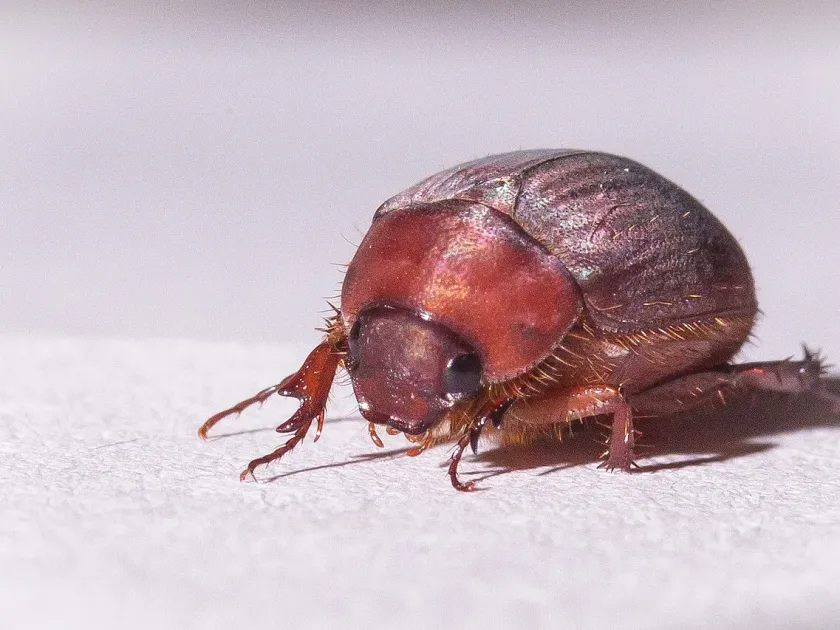
Adult beetles are relatively small and feature a dull, pruinose (frosted) coating on their elytra, which provides camouflage within their environment.
The larvae, often referred to as grubs, are white to cream-colored with brown, hardened head capsules and three pairs of well-developed thoracic legs for digging.
These insects undergo complete metamorphosis, with the larval stage living exclusively underground, where they develop through several instars before pupation.
The species relies on specific soil moisture and temperature conditions to complete its life cycle, which usually spans one or two years depending on the region.
What it damages
The primary damage is caused by the larval stage, which feeds voraciously on the roots of various grasses, cereals, and young seedlings.
Extensive root feeding disrupts the plant's ability to uptake water and nutrients, leading to stunted growth, wilting, and often plant mortality.
Crops such as maize, potatoes, and young nursery trees are particularly susceptible to heavy infestations, which can lead to significant yield losses in affected fields.
Adult beetles may also feed on the foliage of various trees and shrubs, though this activity is generally secondary compared to the subterranean destruction caused by grubs.
Severe infestations result in uneven crop stands, with visible gaps in fields where the larvae have decimated the root systems of young plants.
When it appears
Adults are typically active during late spring and early summer, taking flight in the evenings to mate and locate suitable egg-laying sites in the soil.
Larval activity is closely linked to soil temperature; they migrate towards the upper layers of the soil in spring when the ground begins to warm up.
Summer and early autumn are periods of intense feeding for the larvae as they build up energy reserves before the onset of winter.
As soil temperatures drop in the late autumn, the larvae retreat deeper into the soil profile to avoid freezing conditions and successfully overwinter.
The developmental period is sensitive to environmental factors, and favorable warm springs can accelerate the emergence of adults and the activity of larvae.
Signs of infestation
Early warning signs include patches of yellowing or wilting plants in an otherwise healthy field, which often indicate localized larval feeding clusters.
Root system inspection of such plants typically reveals chewed or severed roots, confirming the presence of subterranean pests.
Digging soil samples is the most reliable method for detecting the density of the grub population during the active feeding stages.
Observation of adult beetles near light sources at night provides an indicator of the pest's presence in the surrounding area and potential egg-laying activity.
Reduced plant vigor and poor response to irrigation are common symptoms in infested fields that should trigger further diagnostic investigations.
Control measures
Integrated Pest Management (IPM) is essential for controlling the frosted chafer, focusing on reducing larval numbers through multiple tactics.
- Tillage practices, such as autumn plowing, help expose larvae to predators and desiccation.
- Crop rotation, by alternating susceptible plants with less attractive crops, can significantly lower population density.
- Seed treatments with systemic insecticides protect the critical initial growth stages of plants from subterranean attack.
- Biological control using entomopathogenic fungi or parasitic nematodes offers an environmentally friendly alternative to chemical pesticides.
- Monitoring soil density levels before planting ensures timely and accurate decision-making for protective treatments.
Taxonomy
- Latin name
- Autoserica pruinosa
- Order
- Coleoptera (beetles)
- Family
- Scarabaeidae
- EPPO code
- AUTSPR
Discussion
No discussions yet — be the first.