
Aulonium
Aulonium
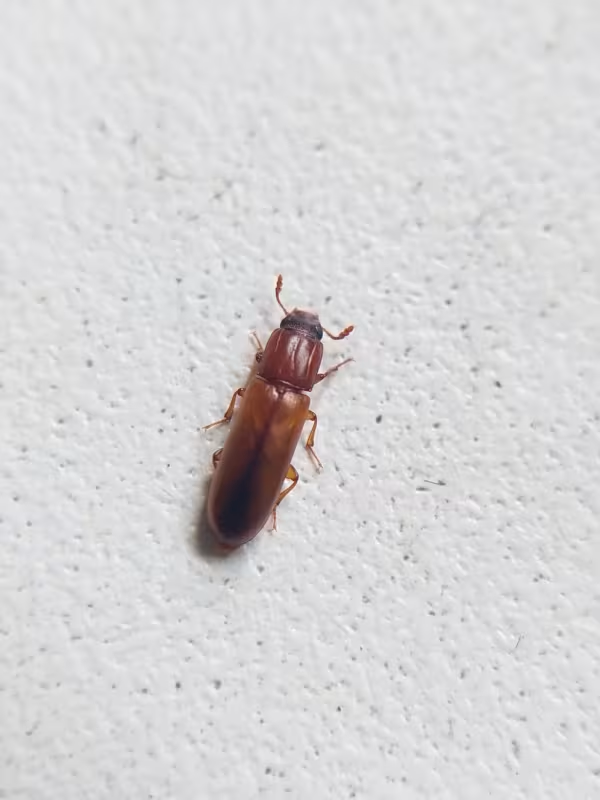
Description
How to identify
Aulonium is a genus of beetles belonging to the family Zopheridae (formerly part of the Colydiidae family). These insects are typically small, flattened, and elongated, specifically adapted to navigate through tight spaces beneath the bark of various trees.
Adult beetles are generally dark brown or black. Their morphology includes a robust head with powerful mandibles and a pronotum that features distinct longitudinal grooves or striations, which serves as a key identifying trait for taxonomists.
The larvae are typically soft-bodied, cream-colored, and equipped with functional thoracic legs. They spend their entire development cycle in hidden, protected environments within the inner bark or cambium layers of the tree.
The life cycle of Aulonium is intrinsically linked to the health status of the host tree. They are not usually primary colonizers; instead, they prefer to inhabit trees that have already been stressed or infested by other wood-boring pests.
These insects thrive in environments with moderate to high humidity levels under the bark, which provides the necessary conditions for their larvae to develop without exposure to external predators or environmental fluctuations.
What it damages
Aulonium beetles primarily infest hardwood species, including oak, ash, and elm. They target trees that are suffering from disease, drought, or attacks by primary pests, contributing to the further decline of the host tree.
The damage caused by Aulonium involves the expansion and deepening of existing galleries under the bark. This activity disrupts the transport of nutrients and water within the tree, exacerbating the physiological stress already present.
By creating additional tunnels, Aulonium facilitates the penetration of moisture and various wood-decaying fungi into the heartwood. These secondary infections often prove more lethal to the tree than the insect feeding itself.
In cases of heavy infestation, the cumulative damage leads to the separation of the bark from the trunk, which can cause partial or total necrosis of the tree, significantly reducing its lifespan and structural integrity.
While often viewed as secondary pests, their presence serves as a clear warning sign of a compromised forest ecosystem, necessitating a professional evaluation of the stand's overall health and vitality.
Signs of infestation
One of the most noticeable signs of an infestation is the accumulation of frass (fine wood dust) near the base of the tree or within the crevices of the bark. The appearance of this dust varies depending on the tree species.
Manual inspection of the bark surface can reveal exit holes or tunnels if the bark has begun to peel. Underneath, characteristic flattened galleries, often filled with sawdust and excrement, will be clearly visible.
Dark, moist patches on the outer bark often indicate the internal presence of these beetles. These patches are usually a byproduct of fungus development, which the beetles inadvertently transport and nurture within their galleries.
The crown of the tree may exhibit signs of stress, such as leaf discoloration or the premature drying of individual branches. These symptoms are typically secondary to the extensive damage being inflicted on the tree's vascular system.
If a tree is found with large patches of bark that can be easily pulled away by hand, it is an advanced sign of infestation where the cambium layer has been severely compromised by several generations of borers.
Control measures
The primary control strategy is the sanitation of the forest area. Removing and properly disposing of heavily infested or dead trees is essential to break the life cycle of the pest and prevent it from migrating to healthy trees.
Maintaining high forest hygiene, which includes the rapid removal of freshly fallen logs or slash, is crucial. Such material often serves as an ideal breeding ground for Aulonium populations to build up before attacking living trees.
Biological control involves enhancing the natural predator populations within the forest. Encouraging bird species and predatory insects that feed on larvae can significantly keep pest numbers below the economic injury level.
In high-value ornamental or park trees, systemic insecticides may be applied. However, this is an intensive approach that should be managed by arborists to ensure minimal environmental impact and maximum efficiency.
- Regular forest health surveys.
- Sanitation harvesting of weakened trees.
- Maintaining biodiversity to support natural predators.
- Proper waste wood management and removal.
Taxonomy
- Latin name
- Aulonium
- Order
- Coleoptera (beetles)
- Family
- Colydiidae
- EPPO code
- AULOSP
Discussion
No discussions yet — be the first.