
Red pumpkin beetle
Aulacophora foveicollis
Description
How to identify
The Red pumpkin beetle (Aulacophora foveicollis) belongs to the Chrysomelidae family, order Coleoptera. Adult beetles are characterized by a vibrant orange or reddish-yellow color and measure approximately 6–8 mm in length.
The body is elongated and oval, with smooth, shiny head and pronotum. A distinctive feature is their long, filiform antennae. The larvae have a pale, cylindrical body and a well-developed mouthpart adapted for feeding on plant roots.
These beetles are highly mobile and are strong fliers, which enables them to spread rapidly throughout fields. Depending on climatic conditions, several generations can develop within a single growing season.
Adults overwinter in the soil, under plant debris, or in other protected spots. As temperatures rise, they emerge from hibernation to feed on host plants and begin laying eggs in the soil near the root zone.
Females lay eggs in small clusters near the base of the plant stem. A single female can produce several hundred eggs during her lifespan, which can lead to a rapid increase in the local pest population if left unchecked.
What it damages
The primary hosts of the Red pumpkin beetle are plants within the Cucurbitaceae family, including melons, watermelons, cucumbers, and squashes. Both adults and larvae are destructive to these crops.
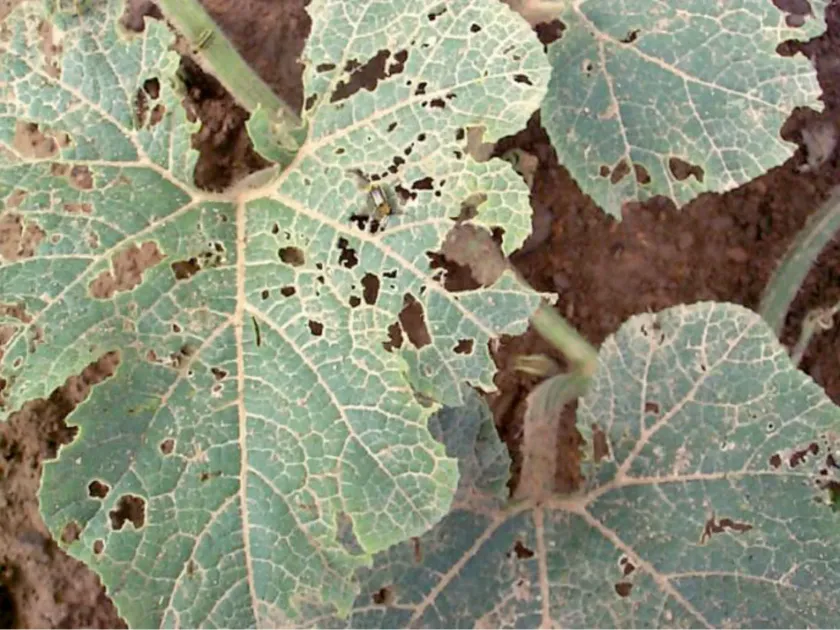
Adult beetles feed on leaves, creating irregular holes that interfere with photosynthesis. Severe infestations can cause complete defoliation, which severely hampers the plant's growth and eventual fruit production.
Larvae living in the soil are equally damaging, as they attack the root system. They consume fine rootlets and bore into the main taproot, which disrupts the plant's nutrient and water uptake mechanisms.
Young seedlings are particularly vulnerable, as even minor root damage can cause permanent wilting or death. This results in poor crop stand and significantly reduces the overall harvest density in commercial fields.
The wounds caused by feeding serve as entry points for various soil-borne pathogens. This leads to fungal and bacterial infections that further weaken the plants and can cause rapid collapse of entire patches of crops.
Signs of infestation
The first signs of infestation are small, irregular holes in the cotyledons and leaves. A careful inspection of the lower leaf surface usually reveals the bright orange adults resting or feeding.
Plant wilting, particularly during hot daylight hours, is a clear sign of root system damage. Digging carefully around the base of the plant may reveal the presence of small, whitish, grub-like larvae feeding on the roots.
Damage to flowers is another indicator, as beetles feed on petals and floral parts. This often leads to flower abortion, preventing fruit set and significantly lowering the total yield of the cucurbit crop.
Stem damage near the soil surface is also common. Feeding marks here can girdle the plant, cutting off the transport of water and nutrients, which eventually leads to the plant's drying out and death.
A combination of foliage holes, midday wilting, and flower loss provides strong evidence of Red pumpkin beetle presence, signaling that immediate pest management actions must be implemented to save the crop.
Control measures
Effective management of the Red pumpkin beetle requires an integrated approach that combines cultural, biological, and chemical control measures.
- Rotating crops to non-cucurbit families every 2-3 years.
- Deep plowing in autumn to expose overwintering beetles to cold.
- Keeping fields free of weeds that serve as alternative hosts.
- Applying systemic insecticides when pest numbers exceed the economic threshold.
- Using row covers (mesh) to protect young seedlings from initial colonization.
Chemical applications should be timed carefully, focusing on the underside of leaves and the soil around the base of the plants. It is crucial to respect pre-harvest intervals to ensure fruit safety.
Biological control, such as using entomopathogenic fungi, is a viable strategy, especially during flowering stages when protecting pollinators like bees is of paramount importance for the crop.
Proactive monitoring is essential for success. Early detection allows for spot-treatment of infested areas, which is more cost-effective and environmentally friendly than attempting to manage a field-wide infestation.
Taxonomy
- Latin name
- Aulacophora foveicollis
- Order
- Coleoptera (beetles)
- Family
- Chrysomelidae
- EPPO code
- AUACFO
Discussion
No discussions yet — be the first.