
Mediterranean sand smelt
Atherina presbyter
Description
How to identify
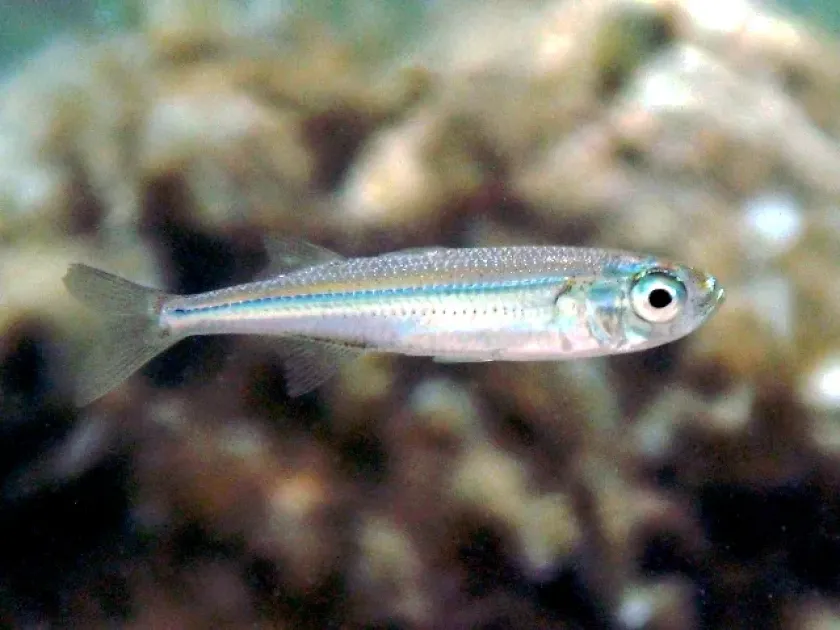
The Mediterranean sand smelt (Atherina presbyter) belongs to the Atheriniformes order and the Atherinidae family. It is a small marine fish characterized by an elongated, slender body.
The species features two widely separated dorsal fins and a distinct silvery longitudinal stripe running along the side, which is its most recognizable trait.
Adult individuals typically grow to lengths between 10 and 15 centimeters, making them agile swimmers in coastal environments and estuaries.
Their coloration is generally greenish-grey to translucent on the back, allowing them to blend effectively into the water column to avoid predators.
As a schooling fish, they are often observed in large, cohesive groups, which is a key factor in identifying their presence in specific water bodies.
What it damages
While not a pest in traditional crop farming, the Mediterranean sand smelt is considered a nuisance in aquaculture due to its competitive nature.
The primary concern is food competition, as they consume zooplankton and larvae, which are essential nutrients for the fry of farmed fish species.
Significant populations of sand smelt can reduce the growth rates and survival of farmed fish, leading to economic losses for commercial aquaculture operations.
Furthermore, they can serve as intermediate hosts for various parasites that may potentially impact the health of the cultivated fish stocks.
The presence of large shoals creates an additional biological load on the ecosystem, especially in confined or cage-based farming systems.
When it appears
The most active period for the Mediterranean sand smelt occurs during the spring and summer months when water temperatures promote reproduction.
Spawning is fractionated, ensuring that new generations enter the coastal zones continuously over several months of favorable weather.
As water temperatures drop in the autumn, the fish migrate to deeper, warmer layers, significantly reducing their impact on surface water ecosystems.
The highest intensity of interference with aquaculture occurs during the peak summer period when the metabolic requirements of the fish are at their highest.
Winter months represent a period of reduced activity and dispersal, during which the impact on commercial fish farming sites is largely minimized.
Signs of infestation
The most obvious sign of their presence is the visual observation of silver-colored schools gathering near the surface of the water around cages.
Quantitative assessments using small-mesh nets in water samples provide accurate data on the population density of the species in the area.
A decrease in natural zooplankton levels, coupled with stunted growth of farmed fry, serves as a strong indirect indicator of significant competition.
Physical obstruction of net cages, caused by small fish entering or attempting to pass through the mesh, is a clear sign of high activity.
Changes in the behavior of farmed stock, such as reduced feeding activity or signs of stress, may indicate the presence of large external fish populations.
Control measures
Effective control measures include the use of fine-mesh screening systems designed to physically block the entry of smelts into farming cages.
Optimizing feeding schedules is a common technique to ensure that artificial feed is consumed quickly and is not available to attract wild fish populations.
Acoustic deterrents or light-based repellents can be deployed to discourage schools from congregating near sensitive production areas.
Selective fishing using calibrated nets is sometimes employed to manage and reduce the density of the population within the farm's perimeter.
Regular maintenance of all submerged gear and thorough environmental monitoring help identify and mitigate conditions that favor smelt aggregation.
Taxonomy
- Latin name
- Atherina presbyter
- Family
- Atherinidae
- EPPO code
- ATHNPR
Discussion
No discussions yet — be the first.