
Athalia glabricollis
Athalia glabricollis
Description
How to identify
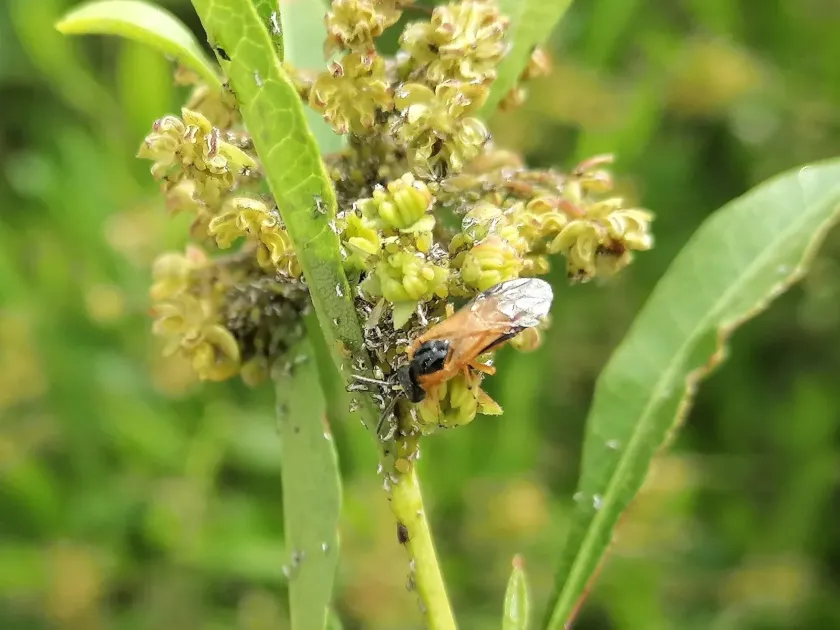
Athalia glabricollis, commonly known as a type of turnip sawfly, is a significant pest belonging to the Tenthredinidae family. Adults are typically 6–8 mm long, featuring a bright orange-yellow body with a distinct black head and dark markings on the thorax.
The larvae, often referred to as false caterpillars, are the primary damaging stage. They measure up to 25 mm when fully grown and exhibit a greyish-green color with lateral stripes. Their dark heads and specific larval markings are key diagnostic features for field identification.
The species is distinguished by its smooth pronotum, which lacks the complex sculpture seen in other sawfly species. This characteristic is vital for accurate identification by agronomists during scouting operations.
Adults are active during the day, feeding on nectar from various flowering plants. They are attracted to yellow colors, making yellow sticky traps an essential tool for monitoring population density and timing chemical interventions.
The life cycle involves overwintering in the soil as larvae within sturdy cocoons. Pupation occurs in the spring, leading to the emergence of the first generation of adults as temperatures begin to rise.
What it damages
This pest exclusively targets plants in the Brassicaceae (cruciferous) family. Major crops such as rapeseed, mustard, radish, and various cabbage types are at high risk, often suffering severe economic damage if left unchecked.
Larval feeding starts with small holes in the leaves but rapidly progresses to total skeletonization. Young larvae feed in groups, while older larvae disperse, consuming entire leaf tissues and leaving only the toughest veins behind.
In cases of high infestation, the larvae can consume young shoots, terminal buds, and flowers. This reduces the plant's photosynthetic capacity, causing stunted growth and poor crop establishment.
Infestations at the early seedling stage are the most dangerous, as the loss of cotyledons and primary leaves can lead to the total destruction of the stand, necessitating expensive replanting measures.
Besides direct yield loss, the damage weakens the plant, making it more susceptible to environmental stress and secondary infections, such as fungal pathogens that enter through feeding wounds.
When it appears
The turnip sawfly typically completes 2–3 generations per year, depending on the climatic region. The first generation emerges in late spring, coinciding with the early growth stages of spring rapeseed.
Females insert eggs into leaf tissue using their saw-like ovipositors, creating small incisions. The incubation period is temperature-dependent, usually lasting around one to two weeks under favorable conditions.
The peak feeding activity of the larvae often occurs in early summer. If environmental conditions are favorable—moderate temperatures and sufficient humidity—larval populations can explode, causing rapid and widespread crop damage.
As the season progresses toward autumn, the larvae enter the soil to form cocoons and enter diapause. This dormant stage allows the species to survive harsh winter conditions in the field.
Knowledge of these seasonal patterns allows for effective timing of insecticide applications. Targeting early larval stages is crucial, as they are significantly more vulnerable than late-stage larvae or protected pupae.
Signs of infestation
One of the earliest signs of an infestation is the presence of yellow adults buzzing around flowering plants on field edges. Early scouting should focus on these hotspots to detect the onset of egg-laying.
Damage is characterized by 'shot holes' or completely skeletonized leaves. Larvae are easily spotted when inspecting the underside of leaves or the growing points of the plants during the early morning.
The presence of larval frass (droppings) on the leaves and soil surface is a clear indicator of active feeding. These small, dark pellets often accumulate beneath plants with high levels of infestation.
When disturbed, the larvae exhibit a protective response by curling into a C-shape and dropping to the ground. This behavior makes them easy to identify during routine field inspections.
In severely affected fields, patches of wilting or defoliated plants become clearly visible. These gaps in the canopy are a strong warning sign that immediate control action is required to prevent further spread.
Control measures
Cultural control practices, such as deep plowing in autumn, are highly effective in disrupting the pupal stage. By burying the cocoons, these insects are exposed to frost and natural soil predators, reducing the next year's population.
Chemical control is the primary method for managing outbreaks. Selective insecticides, including pyrethroids or neonicotinoids, should be applied when thresholds are reached, ensuring application during the early larval stages.
Integrated Pest Management (IPM) incorporates the use of natural enemies, such as parasitic wasps, which can help maintain population levels below economic damage thresholds in sustainable farming systems.
- Crop rotation with non-brassica species.
- Elimination of volunteer cruciferous weeds.
- Monitoring with yellow traps.
- Proper timing of insecticide applications.
- Scouting field edges to detect early migration.
Maintaining a proactive approach is key. By monitoring field edges and implementing timely control measures, farmers can significantly reduce the impact of this pest and protect their yield potential effectively.
Taxonomy
- Latin name
- Athalia glabricollis
- Order
- Hymenoptera
- Family
- Tenthredinidae
- EPPO code
- ATALGL
Discussion
No discussions yet — be the first.