
Mulberry gall midge
Asphondylia morivorella
Description
How to identify
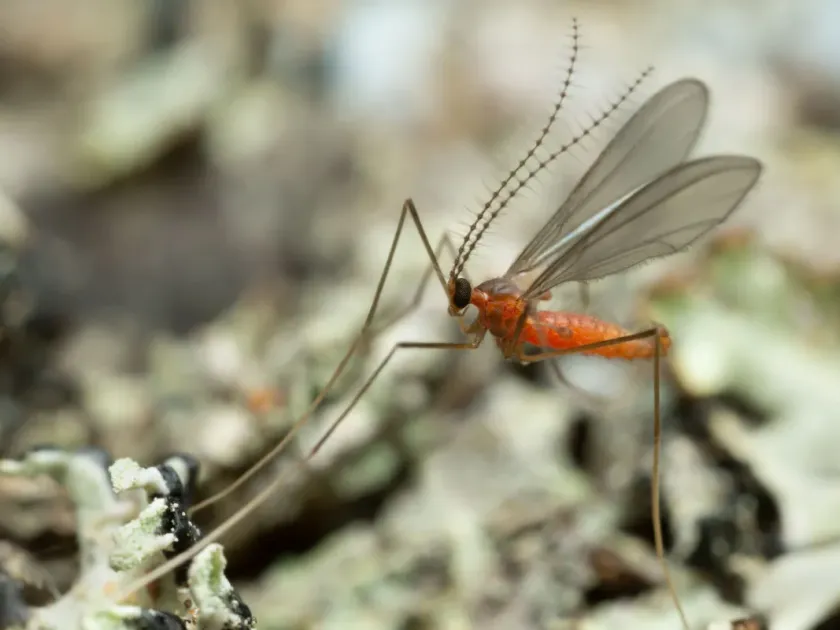
The Mulberry gall midge (lat. Asphondylia morivorella) belongs to the order Diptera and the family Cecidomyiidae. These are minute insects, often resembling tiny mosquitoes, which makes them difficult to spot during routine garden inspections due to their small size and cryptic behavior.
The primary concern is the larval stage, which develops inside plant tissues. The insect's life cycle is tightly synchronized with the phenology of the mulberry tree, allowing the pest to maximize its impact during the active growth period of the host plant.
Females possess a specialized ovipositor designed to penetrate young buds or developing fruit to lay eggs. This behavior effectively protects the offspring from external threats, including predators and many standard insecticide applications that lack systemic properties.
The larvae develop within galls, which are pathological outgrowths of plant tissue. These galls provide both a protected microhabitat and a constant supply of nutrients, facilitating the growth of the larvae until they pupate.
Adult midges live for a very short duration, focusing entirely on mating and egg-laying. Understanding the timing of their emergence is critical for agricultural experts who use traps to monitor populations and determine the optimal window for intervention.
What it damages
This pest is highly host-specific, primarily affecting trees within the Morus (mulberry) genus. It is particularly problematic in sericulture, as the infestation directly degrades the quantity and quality of mulberry leaves used for feeding silkworms.
The larvae cause significant damage by feeding on the internal tissues of buds, which disrupts the normal development of shoots. This leads to stunted growth, reduced foliage production, and a decrease in the overall health of the mulberry trees.
Beyond vegetative damage, the gall midge can attack reproductive organs. Infestation of developing fruit leads to deformation and premature abscission, which is a major concern for both commercial fruit orchards and home gardeners.
Heavily infested trees show reduced vigor and can become susceptible to secondary infections by fungi or bacteria entering through the sites where the midges emerged or where tissue integrity was compromised by gall formation.
In intensive farming, the cumulative effect of gall midge activity results in significant economic losses. The need for specialized monitoring and targeted control measures adds to the operational costs for mulberry plantation owners.
Signs of infestation
The most distinctive symptom of a Mulberry gall midge infestation is the appearance of galls — abnormal swellings, lumps, or nodules on buds, leaves, or young twigs. These structures significantly distort the plant's natural morphology.
Infected buds often appear larger than normal and may develop an irregular, lumpy shape. When opened, these buds typically reveal the presence of larvae feeding inside, which causes the bud to fail to open properly or to die prematurely.
Leaves affected by the larvae may exhibit signs of chlorosis or wilting. Deformation of the leaf lamina is a common secondary symptom, as the presence of galls disrupts the flow of nutrients and moisture to the leaf blade.
- Development of irregular swellings and nodules on twigs and buds.
- Stunted development, death, or premature drop of infested buds.
- Visible curling or distortion of young leaves in affected areas.
- Small exit holes in the plant tissue after the emergence of adult insects.
- Reduced overall biomass of leaves available for harvesting.
Diagnostic accuracy is improved by dissecting the galls. Inside, larvae can usually be found; their presence confirms the infestation. Monitoring for the first signs of gall formation early in the season is vital for assessing pest pressure.
Control measures
Effective management of the Mulberry gall midge requires an integrated approach. The most critical cultural practice is the regular pruning and immediate destruction of infested plant parts to remove the larvae from the environment.
Chemical control is only effective during the short adult flight window, before eggs are deposited deep into plant tissues. Once the gall is formed, the larvae are largely protected from standard contact insecticides.
Systemic insecticides are the preferred choice for intervention, as they can be transported within the plant's vascular system to reach larvae hidden inside the galls. This application must be timed carefully based on monitoring data.
Biological control involves conserving and promoting natural enemies, such as parasitoid wasps, which prey on gall midge larvae. Minimizing the use of broad-spectrum pesticides helps maintain these beneficial insect populations in the orchard.
Agronomic practices, including balanced fertilization and proper irrigation, boost tree resilience. Healthy trees are better equipped to tolerate or compensate for the damage caused by the pest, reducing the overall impact on yield.
Taxonomy
- Latin name
- Asphondylia morivorella
- Order
- Diptera (flies)
- Family
- Cecidomyiidae
- EPPO code
- DIPOMV
Discussion
No discussions yet — be the first.