
Alfalfa gall midge
Asphondylia miki
Description
How to identify
The alfalfa gall midge (Asphondylia miki) is a small insect belonging to the order Diptera and the family Cecidomyiidae. Adult midges are delicate creatures with reduced mouthparts, primarily focused on mating and egg-laying during their short life span.
The larvae are internal feeders and are typically legless, with a spindle-shaped body. They are pale in color and spend their entire developmental period hidden within the plant tissues of the host, which makes them difficult to spot during routine field inspections.
Pupation occurs within the specialized structures called galls, which the larvae induce on the host plant. Once the development is complete, the adult midge emerges by chewing an exit hole in the gall wall, ready to restart the life cycle.
This species is a specialized phytophagous insect that relies heavily on the reproductive parts of the alfalfa plant. The population density is significantly influenced by seasonal weather patterns and the availability of blossoming alfalfa during the egg-laying phase.
Dispersal is primarily achieved by adult flight, though accidental movement of contaminated plant material during harvesting operations can contribute to the spread of the pest within or between agricultural fields.
What it damages
The primary host for Asphondylia miki is alfalfa (Medicago sativa). The pest specifically attacks the reproductive organs, including buds and flower ovaries, causing significant yield losses in seed-producing crops.
As the larvae feed, they trigger the plant to form galls, which are pathological swellings. These structures provide the larvae with a protected environment against external environmental stressors and natural predators, but they effectively render the flower sterile.
Damage results in the failure of buds to open and flowers to develop into seeds. In years of high infestation, this can lead to a drastic reduction in seed harvest, negatively impacting the profitability of alfalfa seed production.
Furthermore, the physical damage and the presence of larvae facilitate the secondary infection of the plant tissues by various pathogens, such as fungi or bacteria, which can cause the affected buds to rot and drop prematurely.
The intensity of the damage depends on the timing of the infestation; early colonization of the plant's racemes often leads to total crop failure for those specific reproductive structures.
When it appears
The life cycle of the alfalfa gall midge is synchronized with the phenology of its host plant. Adult activity typically commences in late spring as temperatures rise, signaling the beginning of the emergence period.
Multiple generations occur within a single growing season. The rate of development is highly temperature-dependent, meaning that warmer seasons often result in a greater number of generations and, consequently, higher infestation levels.
Peak population activity usually aligns with the primary blooming period of the alfalfa crop, providing the insects with an abundance of suitable sites for oviposition. This is when the most critical monitoring efforts should be concentrated.
Overwintering occurs primarily in the larval stage, protected within the hardened, dried galls left on the plant stems or fallen to the ground. This survival strategy ensures the continuation of the species through harsh winter conditions.
Early-season alfalfa growth can attract the first generation of midges, making it essential for farmers to monitor fields starting from the bud stage to prevent early establishment of the pest.
Signs of infestation
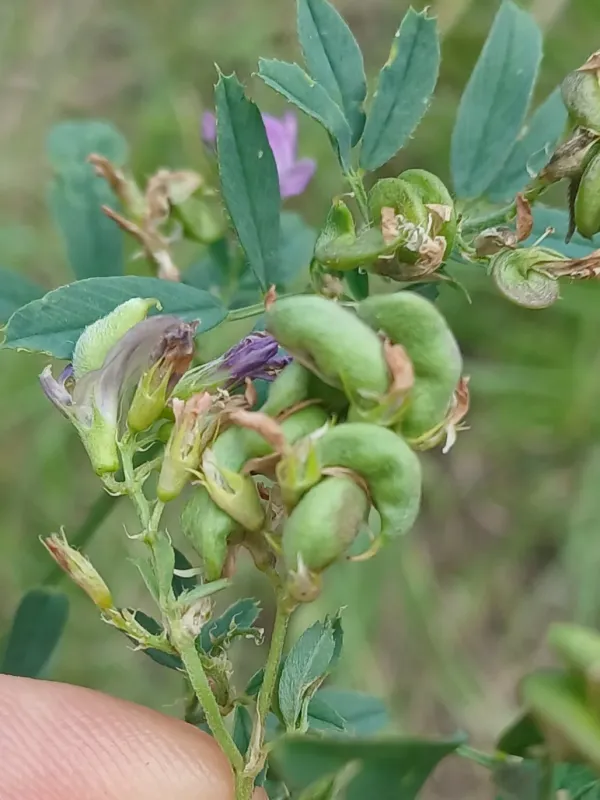
The most diagnostic sign of an Asphondylia miki infestation is the presence of enlarged, deformed, and swollen buds. These galls vary in appearance but are easily distinguished from healthy buds by their irregular shape and firmer texture.
Affected buds often fail to bloom, remaining closed and stunted. Over time, the color of these galls may change to a yellowish-brown or brown hue as they age, and upon close inspection, small exit holes from emerged adults may be visible.
- Swollen and deformed alfalfa flower buds.
- Failure of infested racemes to produce flowers and seed pods.
- Discoloration of affected reproductive parts to brown or tan.
- Discovery of spindle-shaped larvae upon opening the suspected galls.
- Premature shedding of damaged buds and flower structures.
To confirm the diagnosis, field scouts should examine flower racemes for abnormal swellings. Dissecting a few galls to locate the larvae provides definitive proof of presence, which is necessary before applying any control measures.
Control measures
Cultural control is the most effective way to manage Asphondylia miki. A well-planned crop rotation strategy, where alfalfa is not replanted on the same field for at least 4-5 years, effectively disrupts the midge's life cycle.
Early harvesting of alfalfa for hay, specifically before the bloom stage, is a powerful technique. This removes the reproductive structures housing the larvae, effectively killing them before they can mature and disperse to other parts of the field.
Maintaining clean field borders and controlling weeds, particularly those in the legume family, is crucial as these plants can serve as reservoirs for the pest when the main crop is absent.
Chemical control using systemic insecticides may be considered only if economic thresholds are exceeded during the peak adult flight period. Once the larvae are safely tucked inside the galls, insecticide applications are largely ineffective.
Biological control through the conservation of natural enemies, such as parasitic wasps that prey on the gall midge larvae, should be encouraged. Minimizing the use of broad-spectrum insecticides helps preserve these beneficial insects, promoting long-term pest regulation.
Taxonomy
- Latin name
- Asphondylia miki
- Order
- Diptera (flies)
- Family
- Cecidomyiidae
- EPPO code
- ASPHMI
Discussion
No discussions yet — be the first.