
Mint gall midge
Asphondylia menthae
Description
How to identify
The mint gall midge (Asphondylia menthae) is a small dipteran insect belonging to the Cecidomyiidae family. Adults are delicate, gnat-like insects that are rarely seen by farmers due to their small size and nocturnal behavior.
This pest is easily identified by the formation of galls — abnormal growths or swellings on the stem or leaf buds of the host plant, which serve as protective habitats for the larvae.
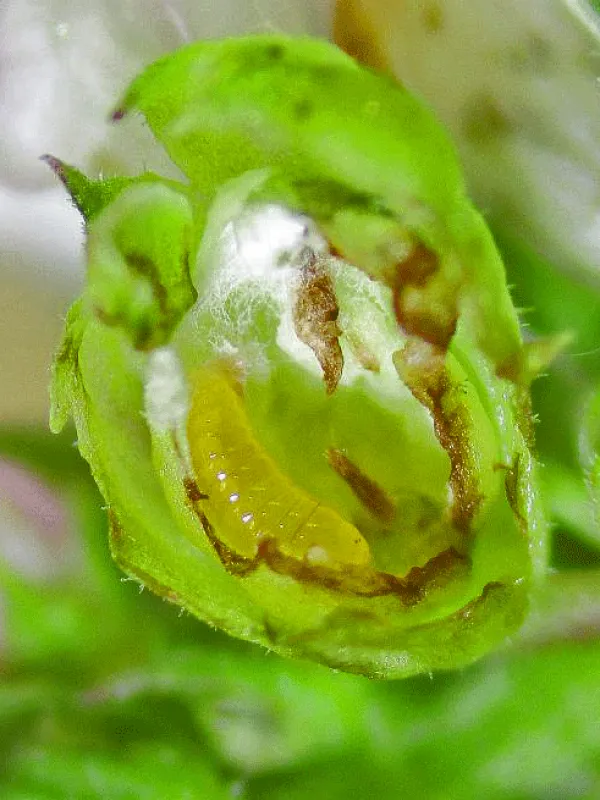
The larvae are typically legless, yellow or orange, and live in colonies inside these galls. Their presence within the plant tissues allows them to feed undisturbed while protected from the environment.
Development involves a complete metamorphosis: egg, larva, pupa, and adult. The lifecycle is highly synchronized with the growth stages of the host plant to ensure optimal survival.
Overwintering usually occurs in the pupal or larval stage, hidden within crop debris or the top layer of soil, making sanitation practices vital for successful control.
What it damages
Asphondylia menthae specifically targets mint species. The formation of galls disrupts the apical dominance of the plant, often causing terminal buds to fail or become severely deformed.
This damage negatively impacts the plant's ability to grow, leading to reduced foliage production and a significant loss in total biomass during harvest time.
Beyond physical deformity, the pest can reduce the concentration of essential oils in the affected plant tissues, lowering the commercial value of the herbal crop.
High infestation rates can lead to stunted growth and reduced vigor across the entire plantation, which is particularly detrimental for commercial mint production.
Weakened plants are often more susceptible to secondary infections, such as fungal pathogens, which can exacerbate the total damage to the crop.
Signs of infestation
The most reliable sign of an infestation is the appearance of distinct, hard swellings (galls) on the stems, particularly at the tips or leaf axils.
Affected plants may exhibit twisted, gnarled growth patterns at their terminal ends, making the crop appear unhealthy and preventing uniform plant development.
When a suspected gall is opened, the presence of small yellow larvae inside confirms the infestation by this specific midge species.
General yellowing of the foliage and a marked decrease in growth rate compared to healthy areas of the field are strong indicators of the pest's presence.
- visible galls or swellings on mint stems;
- deformed or twisted apical shoots;
- stunted plant growth;
- presence of larvae inside plant tissue cavities.
Control measures
Cultural control is the most effective approach; this includes the removal and destruction of crop residues post-harvest to eliminate overwintering pupae.
Crop rotation is essential to prevent the accumulation of the pest population in the soil, ensuring that new mint plantings are placed away from previously infested fields.
Chemical control must be timed precisely with the emergence of adult midges or early larval stage before galls fully form. Once the gall is developed, larvae become highly resistant to contact insecticides.
Biological control, such as encouraging natural predators or utilizing specific biopesticides, can help manage population levels in integrated pest management (IPM) systems.
Consistent field scouting during the peak growth season allows for early detection, enabling farmers to prune and dispose of localized infestations before they spread across the field.
Taxonomy
- Latin name
- Asphondylia menthae
- Order
- Diptera (flies)
- Family
- Cecidomyiidae
- EPPO code
- ASPHME
Discussion
No discussions yet — be the first.