
Holly gall midge
Asphondylia ilicicola
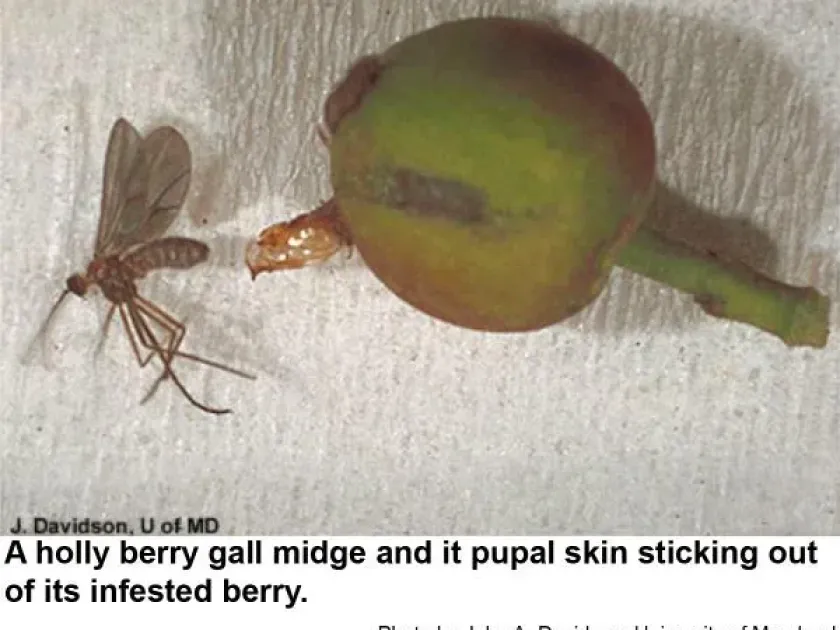
Description
How to identify
The holly gall midge (Asphondylia ilicicola) is a small dipteran insect belonging to the family Cecidomyiidae. Adult midges are tiny, fragile-looking flies that are often overlooked in the landscape due to their small size and elusive behavior during the day.
The larvae of this pest are legless, cream-colored, and develop within the leaf tissue of their host plants. Their life cycle is uniquely adapted to form galls, providing them with a specialized environment that protects them from predators and extreme weather conditions.
Identification is primarily based on the presence of the distinct galls they create rather than spotting the insects themselves. Professional arborists and gardeners rely on these diagnostic symptoms to confirm the presence of the infestation in holly trees.
The insect undergoes complete metamorphosis, including egg, larval, pupal, and adult stages. The pupation process typically takes place within the gall itself, allowing the insect to emerge as an adult only when the conditions are perfect for the next cycle.
Monitoring for this pest involves inspecting new vegetative growth in early spring. Yellow sticky cards or sweep netting during the morning hours can help detect the activity of adult midges and allow for timely intervention before significant damage occurs.
What it damages
The primary host for this midge is the European holly (Ilex aquifolium) and several related species. While it is rarely fatal to the plant, the aesthetic damage caused by the galls can be significant, especially in high-value ornamental gardens.
Larval feeding induces the formation of galls, which are abnormal growths on the leaf surface. These galls interfere with the normal photosynthetic processes of the leaf, potentially leading to reduced plant vigor and stunted growth of new foliage.
In addition to the physical deformation, the galls can become sites for secondary infections by fungi or bacteria. This may lead to localized leaf necrosis, causing the affected foliage to drop prematurely, which ruins the dense, green appearance of the holly bush.
Nursery stock is particularly susceptible to damage, where the presence of galls can result in rejected plants and significant economic losses for growers. The loss of foliage quality is a major concern for those producing holly for commercial sales.
The overall impact depends heavily on the population density of the midge. While a few galls are usually cosmetic, heavy infestations can cause extensive leaf distortion and significantly affect the ornamental value of the shrub over several growing seasons.
When it appears
Adult midges typically emerge in the spring, coinciding with the development of new holly leaves. During this short window, females lay their eggs into the young tissue, ensuring that the larvae have an immediate food source as they begin to develop.
The development of the gall occurs gradually throughout the summer. As the larvae grow inside the leaf tissue, the gall increases in size, becoming more noticeable by late summer and autumn as the host tissue reacts to the presence of the midge.
Overwintering occurs either in the larval or pupal stage inside the mature gall. This provides a safe, insulated environment during the winter months, allowing the species to survive even in regions with harsh, cold climates.
The emergence of the next generation in the following spring is tightly linked to the phenological development of the holly. Warm temperatures in early spring accelerate the life cycle and dictate the timing for potential control measures.
Understanding this seasonal timing is vital for effective management. Protective measures must be applied before the adult midges deposit their eggs to ensure that the infestation does not take root in the developing foliage.
Signs of infestation
The most visible sign of infestation is the formation of rounded, bumpy galls on the surface of the leaves. These structures can vary in color and texture, often appearing as raised protrusions that are distinct from the surrounding healthy leaf tissue.
If you inspect the underside of an affected leaf, you may notice swelling corresponding to the gall on the upper side. These galls are firm and can be distinguished from fungal spots because they create a clear, three-dimensional change in the leaf structure.
- Development of raised, gall-like swellings on the leaves.
- Distortion or curling of the leaf blade as it grows.
- Visible exit holes after the adult midge has emerged.
- Premature yellowing and drop of infested leaves during the growing season.
Carefully opening a fresh gall during the summer will usually reveal the presence of a tiny, whitish midge larva. This is the definitive diagnostic feature that confirms a gall midge infestation versus other types of plant stress or diseases.
In severe cases, the entire canopy of the holly may look unhealthy, with brittle and discolored leaves. Identifying these early signs allows for quicker action, preventing the pest from spreading throughout the entire shrub or to adjacent plants.
Control measures
Cultural control is the most effective approach for residential gardens. This includes the regular pruning and destruction of infested leaves before the adult midges emerge in the spring, which significantly reduces the local population of the pest.
Systemic insecticides may be used in commercial nursery settings to protect high-value stock. These treatments must be applied strategically, timed specifically to coincide with the adult flight period and the egg-laying phase to prevent gall formation.
Biological control options involve encouraging natural predators such as parasitic wasps that target gall midges. Maintaining a healthy garden environment helps keep midge populations in check without relying on heavy chemical interventions.
Quarantine measures are essential when sourcing new plants. Always inspect holly bushes for signs of existing galls before bringing them into your landscape to avoid introducing the pest to your garden.
An integrated pest management (IPM) strategy, combining careful monitoring, sanitation through pruning, and targeted chemical use when necessary, provides the best long-term control of the holly gall midge in both public and private spaces.
Taxonomy
- Latin name
- Asphondylia ilicicola
- Order
- Diptera (flies)
- Family
- Cecidomyiidae
- EPPO code
- ASPHIL
Discussion
No discussions yet — be the first.