
Lentil gall midge
Asphondylia ervi
Description
How to identify
The lentil gall midge, Asphondylia ervi, is a small dipteran insect belonging to the Cecidomyiidae family. Adult individuals are very fragile, reaching a length of approximately 2-3 mm, with long legs and characteristic wing venation typical for the family.
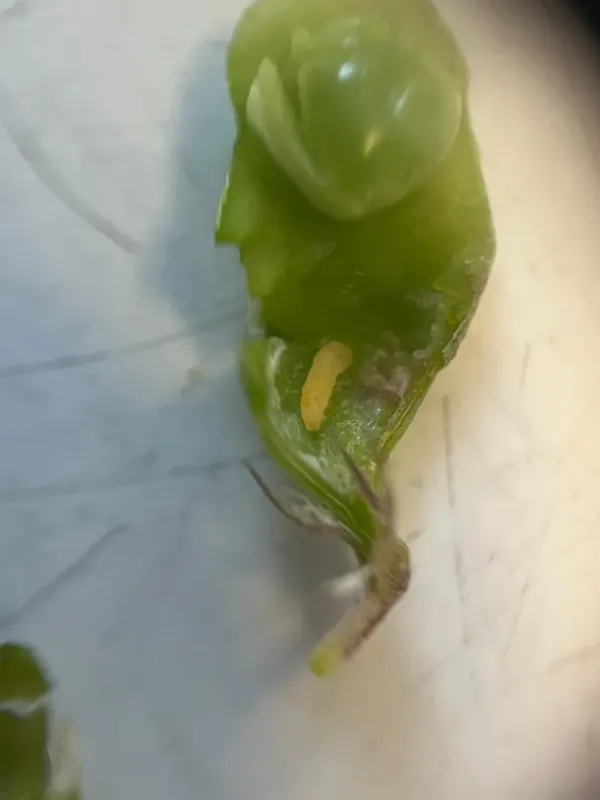
The larvae are legless, usually cylindrical or spindle-shaped, and appear white to yellowish in color. They reside exclusively inside the plant tissues, which makes them difficult to spot during routine field inspections.
Adult midges are primarily active during twilight hours, making them difficult to detect for agronomists during the day. Their presence is usually signaled by specific plant deformations rather than direct sightings of the insects themselves.
The life cycle is closely synchronized with the phenological development of the lentil plant. The female uses its ovipositor to insert eggs directly into the flower buds or young lentil pods.
Pupation occurs inside the galls, which the plant forms in reaction to the larvae's activity. Once the metamorphosis is complete, the adult emerges through an exit hole, which serves as a vital diagnostic marker.
What it damages
Lentil crops (Lens culinaris) are the primary host for this pest. The midge can cause significant economic losses by feeding on the reproductive organs of the plant, which directly impacts the potential yield.
The pest attacks buds, flowers, and young pods. By feeding on the internal fluids of the plant tissues, the larvae disrupt normal development, often leading to the death of the budding fruit.
Infested plant organs deform and develop into galls. Inside these pathological growths, the larvae remain shielded from most contact-based pesticides, complicating chemical control strategies.
The severity of the damage lies in the reduction of seed set and quality. In cases of mass outbreaks, the loss of pods can be substantial, making this midge a serious threat to pulse production.
Besides direct yield loss, the feeding sites created by the larvae can serve as entry points for secondary fungal infections, further stressing the plant and reducing its overall health.
When it appears
The lentil gall midge is most active during the budding and flowering stages of the lentil crop. This window is critical as it coincides with the oviposition phase and the colonization of the fields.
Depending on the climatic conditions, the pest can undergo multiple generations per season. Warm, humid weather is generally favorable for their development and can lead to rapid population growth.
The pest overwinters as a larva or pupa in soil debris or dormant plant material. This survival strategy ensures that the population can quickly recover and restart its cycle when spring temperatures rise.
Monitoring for adults using sticky yellow traps should begin before the flowering stage to allow for timely interventions based on population density thresholds.
The peak larval activity usually occurs during the early pod-filling stage, which is the most sensitive period for the crop regarding its reproductive integrity.
Signs of infestation
The most prominent sign of infestation is the appearance of galls—pathological growths on buds or pods. These galls appear as abnormal, swollen structures on the developing plant parts.
Early-stage infestations often result in premature yellowing and dropping of flower buds. Dissecting these buds reveals small cavities containing the midge larvae.
During the pod formation phase, the pods may show localized deformations or hardened surfaces in the areas where larvae are feeding. Frequently, these pods fail to develop normally.
Adult presence can be confirmed during evening field observations, as the midges are often seen flying near the top of the canopy during their active mating and egg-laying phase.
Visible, small circular holes on the surface of the pods or buds indicate that the next generation of midges has emerged and left their chambers to spread across the field.
Control measures
- Crop rotation: Avoid planting lentils in the same field for at least 3-4 years to break the lifecycle.
- Deep plowing: Burying crop residues helps destroy overwintering larvae and pupae.
- Spatial isolation: Keep new lentil fields away from previous years' legume plantings.
- Chemical control: Apply systemic insecticides before the egg-laying phase begins.
- Weed management: Control legume-related weeds that act as alternative hosts for the midge.
Chemical control is only highly effective when timed to target adults before they lay eggs or before larvae create protective galls. Once the larvae are inside the galls, they are largely resistant to treatment.
Agricultural management practices are essential to lower the overall pest pressure. Good sanitation and the removal of infested crop debris are crucial components of an integrated pest management plan.
Monitoring thresholds must be strictly followed to ensure that insecticide applications are economically justified and environmentally responsible.
Research into biological control agents and natural enemies is ongoing, but current field-level management still relies heavily on preventative cultural practices and strategic insecticide use.
Taxonomy
- Latin name
- Asphondylia ervi
- Order
- Diptera (flies)
- Family
- Cecidomyiidae
- EPPO code
- ASPHER
Discussion
No discussions yet — be the first.