

Description
How to identify
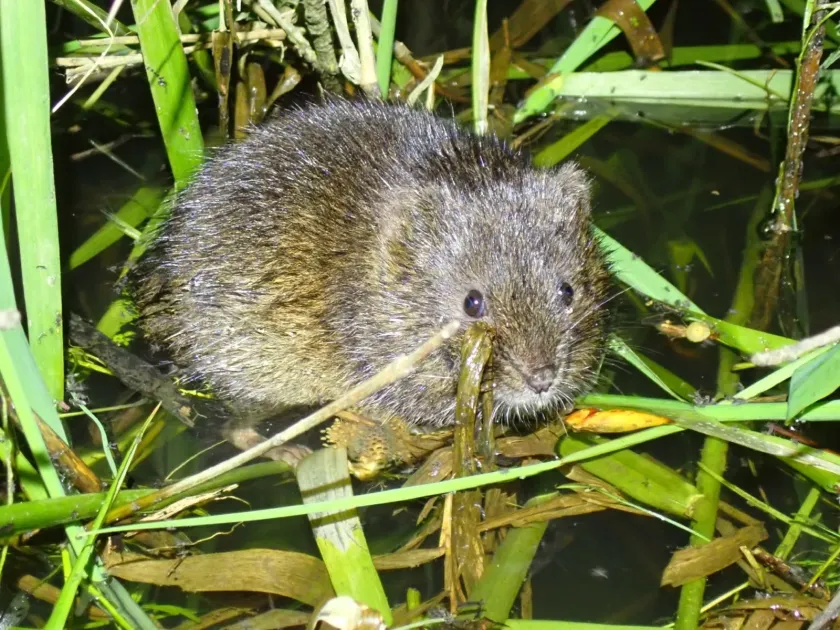
The European water vole (lat. Arvicola amphibius) is a rodent belonging to the Cricetidae family. It is a robust animal with a body length of up to 22 cm, covered in dense, dark brown or greyish-brown fur.
The species has a blunt muzzle, small ears hidden by fur, and a hairy tail. Despite the name, this vole is equally at home in moist soil near water bodies as it is in dry meadows and gardens.
These rodents are extremely prolific breeders. A female can produce multiple litters per season, with each litter consisting of several offspring, leading to rapid population growth in favorable conditions.
Water voles are semi-aquatic but often establish extensive burrow systems in vegetable gardens and orchards. They remain active year-round and do not hibernate, relying on food caches and available vegetation during winter.
They are primarily nocturnal, although they can be active during the day. Because they live largely underground or in thick vegetation, they often go unnoticed until significant damage to plants has occurred.
What it damages
The European water vole is a notorious agricultural pest, primarily known for destroying the root systems of trees and shrubs. Young fruit trees are particularly vulnerable, as voles can consume all their roots, leading to immediate death.
In vegetable gardens, they cause severe damage by eating root vegetables like carrots, potatoes, and beets. They often hollow out the vegetables from below ground, leaving only the outer skin behind.
Bulbous flowering plants such as tulips and lilies are also favorite food sources for these rodents. A single water vole can decimate a collection of bulbs in a very short amount of time during the dormant season.
Beyond root destruction, they can strip the bark from the base of trunks and shrubs, which interferes with nutrient transport and weakens the plant's structural integrity.
Their burrowing activities disrupt soil structure, creating channels that can lead to drying out of plant roots and soil erosion in garden beds and pond banks.
Signs of infestation
The presence of water voles is indicated by burrow entrances, usually 5–8 cm in diameter, often accompanied by mounds of excavated soil. These holes are typically found in mulched areas or near the base of affected plants.
Sudden wilting of plants that look healthy otherwise is a major indicator of root damage. If you tug on the plant and it comes out of the soil with no roots attached, it is almost certainly a sign of vole activity.
Hollowed-out vegetables found in the soil are a definitive sign of an active infestation. In late winter or early spring, you may see fresh gnaw marks on the roots of young trees exposed by melting snow.
Visual observation of small, well-trodden paths in the grass or near the edges of garden beds suggests the routes taken by the voles between their burrow systems and food sources.
Predator activity, such as increased visits by owls, hawks, or small carnivores like weasels to your garden, often mirrors an increase in the local vole population.
Control measures
The most effective strategy starts with habitat modification. Clearing brush, tall weeds, and debris from around the garden removes the cover and protection these rodents need to thrive.
Physical barriers are highly recommended for new plantings. Enclosing the root balls of young trees in wire mesh cages prevents voles from reaching the roots while allowing the tree to grow normally.
Trapping and the use of sonic repellent devices can help deter voles from staying on your property. Ultrasonic units that emit vibrations may disrupt their burrowing and cause them to relocate to quieter areas.
When populations reach damaging levels, targeted use of rodenticides placed deep inside the burrows is an option. Always use tamper-resistant bait stations to prevent accidental poisoning of pets or wildlife.
Encouraging natural predators such as owls by providing nesting boxes or hunting perches is a sustainable, long-term approach to controlling vole populations in large orchards or gardens.
Content graph
Connections · European water vole
Most often together:
Marketplace
Products · 2

Biology
Taxonomy
- Latin name
- Arvicola
- Order
- Rodents
- Family
- Muridae
- EPPO code
- ARVCSP
Community
Discussion
No discussions yet — be the first.