
Oak leaf midge
Arnoldiola quercus
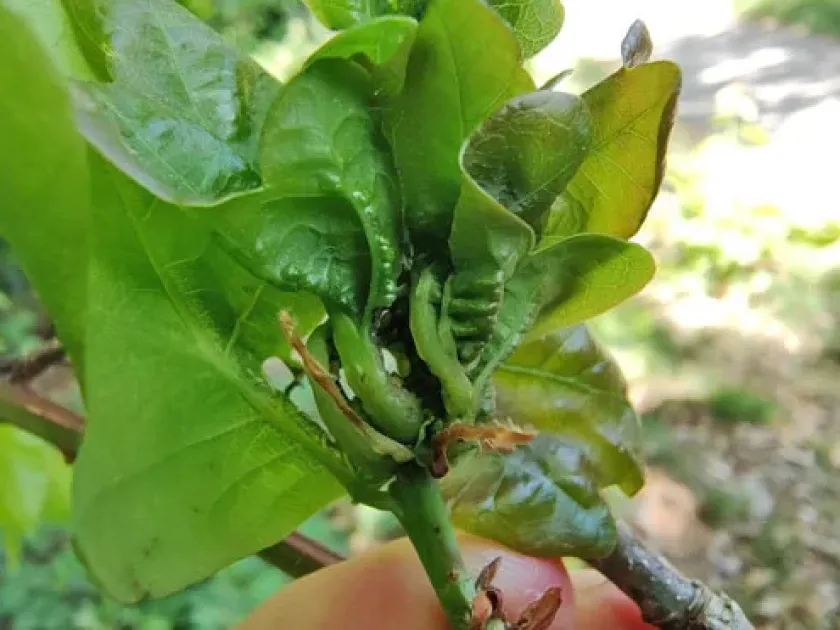
Description
How to identify
The oak leaf midge (Arnoldiola quercus) belongs to the order Diptera and the family Cecidomyiidae. It is a highly specialized insect that completes its life cycle in association with oak species.
Adult midges are small, delicate flies that are rarely noticed in the field. Their primary function is reproduction, and they do not feed on the leaves themselves, unlike their larvae.
The species is primarily identified by the characteristic galls it induces on oak leaves. These galls represent abnormal growth of plant tissue, stimulated by the larvae to create a safe feeding environment.
Systematically, Arnoldiola quercus is part of a complex group of gall-inducing insects. Identification is based on the specific shape and position of the galls on the host tree's leaf lamina.
Its distribution is strictly tied to the presence of oak trees, and the insect's population density fluctuates depending on environmental conditions and the availability of young foliage.
What it damages
The primary host for this pest is the English oak (Quercus robur) and related species. The larvae feed on the parenchyma of the leaves, causing local irritation and tissue growth.
The damage manifests as numerous small galls scattered across the leaf. These galls disrupt the internal vascular structure of the leaf, hindering the normal distribution of water and nutrients.
Severe infestations reduce the photosynthetic capacity of the tree, leading to premature leaf drop and a decrease in the overall growth rate. The tree becomes stressed and less vigorous.
While a single infestation may not be fatal to an adult tree, repeated annual attacks can significantly weaken the host, making it prone to opportunistic pests and fungal diseases.
In nurseries and young plantations, the damage can be more acute, potentially stunting the growth of seedlings and decreasing the quality of the forest stand.
When it appears
The life cycle is closely linked to the phenology of the oak tree. Adults emerge in spring, coinciding with the budburst phase, which provides fresh tissue for egg-laying.
Eggs are deposited into the developing leaf tissues. The larvae hatch and immediately begin to induce gall formation as they feed, which continues through the early and mid-summer period.
Typically, the insect completes one generation per year. Development is synchronized with the seasonal availability of nutrients within the oak leaves.
By late summer, the mature larvae exit the galls, drop to the forest floor, and pupate in the soil or leaf litter to survive the winter months.
Environmental conditions such as temperature and humidity play a critical role in the synchrony of adult emergence. Adverse weather during this window can significantly reduce population levels.
Signs of infestation
The most visible signs of infestation are small, spherical or blister-like galls on the leaves. These structures often start as pale green spots and may develop reddish tints as the season progresses.
Leaves may show signs of deformation or curling in areas where the gall density is high. In severe cases, the leaf lamina becomes uneven and chlorotic.
In late summer, the presence of tiny exit holes on the galls indicates that the larvae have finished their development and have exited the leaf to pupate.
A reduction in overall canopy density and premature leaf yellowing or fall are secondary symptoms that become apparent during summer months.
Close observation of the leaf surface with a magnifying lens often reveals the precise location of the larvae, as they form specific chambers within the leaf tissue.
Control measures
In natural forest environments, direct control is rarely feasible or necessary. Healthy, mature oak stands usually possess enough resilience to tolerate moderate levels of midge activity.
In nurseries, parks, or ornamental plantings, management involves the use of systemic insecticides applied shortly before or during the adult flight period to prevent colonization.
Natural biological control by parasitic wasps is a significant factor in limiting midge populations. Maintaining ecological diversity in the forest helps sustain these natural predators.
Sanitation practices, such as clearing leaf litter in contained areas, may help reduce the overwintering pupae population, though this is rarely effective on a large scale.
- Enhancing tree vigor through proper irrigation and soil management.
- Monitoring gall development during early summer for early detection.
- Encouraging natural predator populations (birds and parasitic insects).
Taxonomy
- Latin name
- Arnoldiola quercus
- Order
- Diptera (flies)
- Family
- Cecidomyiidae
- EPPO code
- ARNLQU
Discussion
No discussions yet — be the first.