
Argna
Argna
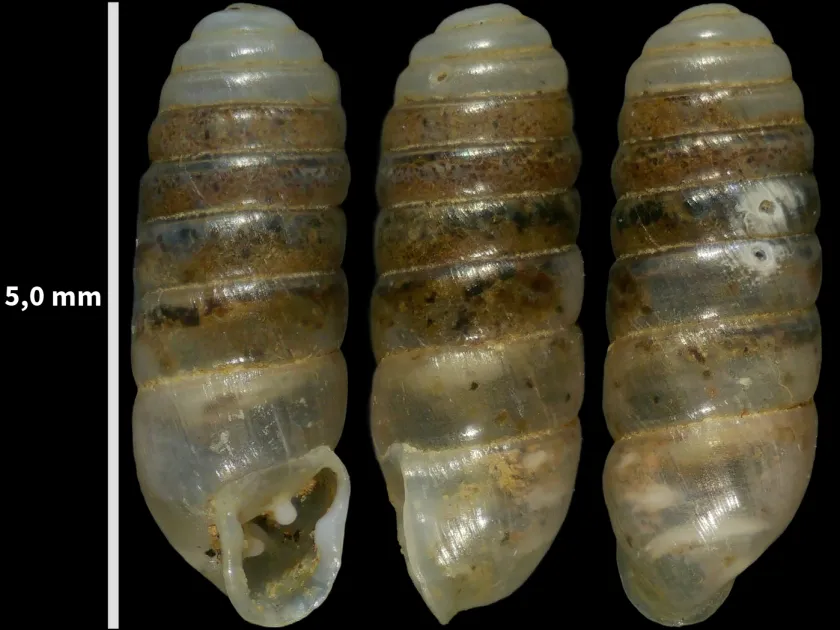
Description
How to identify
The genus Argna belongs to the family Argnidae, within the suborder of terrestrial pulmonate gastropods. These are small land snails characterized by a cylindrical or spindle-shaped shell, often displaying a distinct ribbed sculpture.
Physically, these gastropods are small in size, allowing them to easily conceal themselves within dense vegetation or soil litter. Their body typically features a greyish or brownish hue, providing camouflage against the backdrop of moist soil and organic debris.
The life cycle is closely linked to high humidity levels, as their skin is highly sensitive to desiccation. They are primarily nocturnal, becoming active during twilight hours and in rainy weather.
Reproduction occurs through the laying of eggs in moist substrates rich in organic matter. Upon hatching, juveniles immediately begin to feed, progressing through several growth stages until reaching sexual maturity.
The distribution of this genus is limited by microclimatic conditions; they prefer calcareous soils and shaded, sheltered locations where a stable water balance is maintained throughout the season.
What it damages
This pest poses a threat to a wide range of vegetable and ornamental crops, particularly in greenhouse environments. These gastropods cause damage to young seedlings, leaves, and tender shoots.
The most significant damage occurs during early vegetative stages when plants are most vulnerable. Argna can completely destroy seedlings, leading to reduced stand density and lower overall crop yields.
By feeding on soft plant tissues, they create irregular holes in leaf blades. During mass outbreaks, damage may extend to stems and growth points, resulting in deformation and plant mortality.
Beyond direct mechanical injury, the pest leaves slime trails on the surface of plant organs. This not only diminishes the aesthetic and commercial value of the product but also promotes secondary infection by pathogenic fungi and bacteria.
They are particularly hazardous in gardens with an accumulation of plant debris, which serves as both food and a breeding ground for these harmful gastropods throughout the growing season.
Signs of infestation
The primary sign of an Argna infestation is the presence of characteristic holes on the edges and centers of leaves. While edges of such damage are typically smooth, they may deform as the leaf grows further.
Silvery, dried mucus trails on leaves and stems are the most visible indicator that gastropods are active in the area. These traces are especially noticeable during morning hours before the dew evaporates.
Finding the individuals themselves under mulch, boards, stones, or inside clumps of moist soil confirms an infestation. During the day, they seek out dark, damp crevices, making the inspection of such shelters a key diagnostic method.
Gradual wilting of seedlings without apparent root system damage can indicate that gastropods have chewed on the stem base at ground level, which often leads to rapid plant collapse and death.
The appearance of damaged seeds and emerging sprouts in greenhouses during prolonged wet periods is almost always associated with the activity of this family, which thrives in high-moisture environments.
Control measures
Effective management begins with agrotechnical measures, such as regular soil cultivation. This disrupts the gastropods' tunnels and destroys their eggs, significantly reducing the population density in the field.
An essential practice is the timely removal of weeds and plant debris from garden beds. Eliminating potential hiding spots makes the environment less suitable for the survival and reproduction of this pest.
Applying barrier methods, such as spreading lime, superphosphate, or wood ash between rows, creates an unfavorable environment for movement due to the irritating effect these substances have on their sensitive skin.
- Setting up trap boards or burlap covers as gathering points.
- Manual collection of pests during the evening hours.
- Installation of baited traps using fermented products.
- Encouraging natural predators such as hedgehogs or predatory ground beetles.
In cases of high infestation levels, the use of specialized molluscicides is permitted. When employing chemical agents, it is crucial to strictly follow dosage instructions and pre-harvest intervals to ensure safety.
Taxonomy
- Latin name
- Argna
- Order
- Molluscs
- Family
- Argnidae
- EPPO code
- AGNASP
Discussion
No discussions yet — be the first.