
Gooseberry aphid
Aphis schneideri
Description
How to identify
The gooseberry aphid (Aphis schneideri) is a small sap-sucking insect belonging to the order Hemiptera. These pests typically appear in green or olive-brown colors, allowing them to blend into the foliage of their host plants.
The life cycle begins with overwintering eggs deposited on the bark of young shoots, typically near the buds. As spring temperatures rise, these eggs hatch into stem mothers that initiate the colony formation.
Throughout the growing season, multiple generations are produced via parthenogenesis, leading to rapid population growth. Both winged and wingless forms exist, enabling the colonization of new bushes nearby.
Their development is highly influenced by ambient temperature and humidity. Warm, dry spring conditions are particularly conducive to explosive population outbreaks, making monitoring essential during early growth stages.
The aphid maintains a mutualistic relationship with ants. Ants protect the aphid colonies from natural predators such as ladybirds and lacewings in exchange for the sugary honeydew the aphids excrete.
What it damages
This species specifically targets gooseberry and sometimes currant bushes. The damage is primarily localized on the tender young shoots and the undersides of developing leaves.
By extracting plant sap, the aphids disrupt the nutrient flow to the growing points of the branches. This results in the stunted growth of the affected shoots, which stop elongating properly.
The feeding process leads to the characteristic curling and deformation of leaves. This structural change compromises the leaf's surface area, significantly reducing the plant's photosynthetic capacity.
The honeydew excretion serves as a substrate for sooty mold, a black fungus that covers leaves and stems. This further stresses the plant, blocking sunlight and hindering the gas exchange of the foliage.
Heavy infestations reduce the overall vigor of the bush, leading to lower fruit yields and poor quality berries. If left untreated, the plant may struggle to harden off properly before the winter season.
Signs of infestation
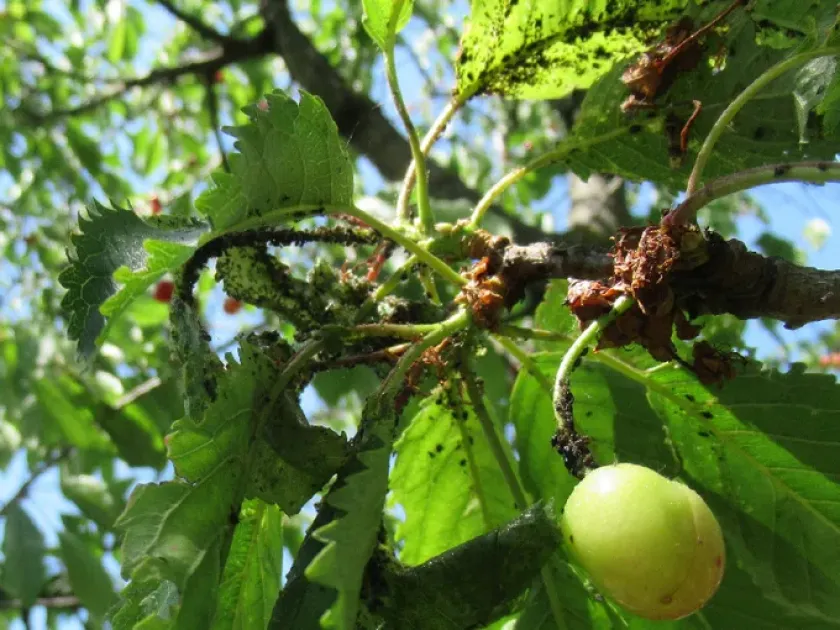
The most noticeable sign of an Aphis schneideri infestation is the tight curling and reddening of apical leaves. These malformed leaves often cluster at the tips of shoots.
Sticky, shiny residue on the leaves indicates the presence of honeydew. This substance is often accompanied by a distinct sweet smell, which attracts ants and other sugar-seeking insects.
The presence of sooty mold, appearing as a black, dust-like coating on leaves and stems, is a secondary sign that the infestation has reached a significant level of severity.
Increased ant activity around the bushes is a reliable indicator of aphid presence. Ants will often be seen traveling in lines up and down the stems, actively tending to the aphid colonies.
Close inspection of the undersides of curled leaves will reveal densely packed groups of aphids. Additionally, the presence of white, papery exuviae (cast skins) is a clear sign of recent molting.
Control measures
Effective management begins with dormant season pruning, which removes the wood containing overwintering eggs. This simple step significantly reduces the pressure of the first spring generation.
Natural predators play a crucial role in suppression. Encouraging ladybird beetles, hoverflies, and lacewings by planting nectar-rich flowers nearby can provide a sustainable form of biological control.
Early intervention using horticultural soaps or neem-based oils can be highly effective. These products work through contact and are safer for beneficial insects when applied early in the morning or late evening.
In cases of severe infestation, systemic insecticides labeled for use on fruit bushes may be necessary. Always adhere to the required pre-harvest interval to ensure the safety of the fruit.
Manual removal of heavily infested tips can physically reduce the aphid population. This is a practical and useful strategy for home gardeners with a limited number of bushes to maintain.
Taxonomy
- Latin name
- Aphis schneideri
- Order
- Hemiptera (bugs, aphids, leafhoppers)
- Family
- Aphididae
- EPPO code
- APHISC
Discussion
No discussions yet — be the first.