
Fir gall midge
Aphidoletes abietis
Description
How to identify
The fir gall midge (Aphidoletes abietis) is a member of the Diptera order and the Cecidomyiidae family. Adults are delicate, mosquito-like insects that lead a cryptic lifestyle, often going unnoticed by the untrained eye.
The larvae are typically elongated and legless, with a color palette ranging from yellowish-orange to reddish. They develop inside the needle tissues, making them extremely difficult to detect without careful inspection of the shoots.
This species is specifically associated with coniferous trees. Adult midges do not feed, as their primary biological objective is to locate a suitable host plant for oviposition during the growing season.
The life cycle encompasses egg, larval, pupal, and adult stages. The pest typically overwinters in the pupal stage within the soil or the forest floor litter beneath the canopy of infested trees.
Reproduction is highly dependent on temperature and humidity levels. The peak emergence of adults coincides with the tree's budding phase and the development of new, succulent terminal growth.
What it damages
The primary hosts are the Siberian fir, European fir, and other species of the genus Abies. In some instances, it may also infest Norway spruce, where it can induce the formation of characteristic tissue deformations.
Damage is caused by the larvae, which induce the formation of pathological growths known as galls. This process is triggered by the larva's salivary secretions containing biological compounds that alter the plant's growth pattern.
Infested needles stop growing, become distorted, and lose their natural aesthetic form. The interior of the gall provides the larva with essential protection from the elements and a constant supply of nutrients.
Severe infestations lead to premature needle drop, significantly weakening the tree. This chronic stress results in diminished vigor, slower annual growth, and reduced ornamental value of the conifers.
Young trees and seedlings in nurseries are at particular risk. Heavily infested trees are more susceptible to secondary attacks by other forest pests, such as bark beetles and borers.
When it appears
Adult emergence typically occurs in spring, usually between May and early June, coinciding with stable warm weather. During this time, eggs are deposited at the base of young, developing needles.
The larval development stage within the galls lasts throughout the summer months. By late summer or early autumn, the larvae finish feeding and drop into the soil to pupate for the winter.
Weather patterns significantly influence population dynamics. Excessive rainfall or extreme drought during the egg-laying period can greatly reduce the survival rate of the larval population.
Monitoring for the presence of the midge is conducted using pheromone traps or by manually inspecting young shoots for the presence of deformed needles in June.
Autumn soil sampling under the canopy can help estimate the population size for the following season, which is critical for planning targeted mitigation efforts.
Signs of infestation
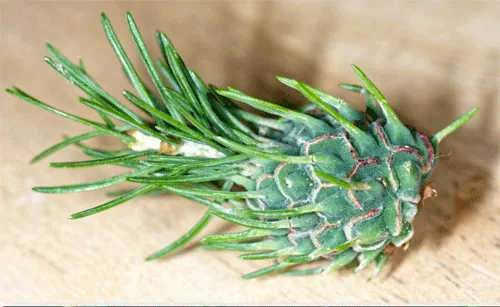
The primary sign of infestation is the presence of dense, rounded, or oval swellings on the young needles of the fir tree. These galls often display a light green or yellowish hue, contrasting with the healthy foliage.
Upon dissecting a gall, one can observe the larva inside the central cavity. The presence of these formations confirms that the tree has been successfully colonized by the pest.
- Distortion of young shoots.
- Yellowing of needles at the sites of gall formation.
- Premature needle abscission during mid-summer.
- Stunted growth of young, developing trees.
In cases of heavy infestation, the foliage may appear sparse or "tufted" due to extreme deformation, giving the tree a sickly, unkempt appearance.
Control measures
Effective management begins with cultural practices, such as clearing fallen needles and debris from under the trees, where pupae overwinter, to reduce the local pest reservoir.
In nursery settings, it is recommended to prune and destroy infested shoots before the larvae exit the galls to prevent further dispersal across the site.
Chemical control is most effective when applied during the period of adult flight, before the larvae migrate into the needle tissues. Systemic insecticides are generally preferred for this purpose.
Biological control methods involve promoting natural enemies, such as parasitic wasps that prey upon the larvae. Maintaining a healthy forest ecosystem is vital to keeping pest populations below economic thresholds.
Proactive monitoring and preventative sprays in early spring can help protect valuable ornamental plantings from significant damage caused by this midge.
Taxonomy
- Latin name
- Aphidoletes abietis
- Order
- Diptera (flies)
- Family
- Cecidomyiidae
- EPPO code
- APHLAB
Discussion
No discussions yet — be the first.