
Aphidoletes
Aphidoletes
Description
How to identify
Aphidoletes aphidimyza is a predatory midge belonging to the Cecidomyiidae family of the order Diptera. It is crucial to clarify that this organism is not a plant pest, but rather a highly beneficial entomophagous insect widely used in biological pest control.
Adult midges are small, measuring about 2-3 mm, with long, delicate legs and antennae. They are nocturnal by nature, spending their days hiding in dense foliage or within the upper layers of the soil to escape daylight and predation.
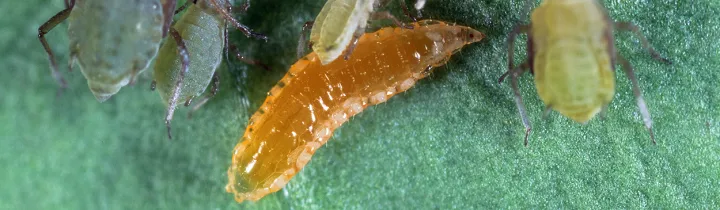
The larvae are the primary predatory stage. They appear as small, legless, orange-red maggots, approximately 3 mm in length. Despite their simple appearance, they are voracious hunters capable of tracking down aphid colonies on leaves.
The lifecycle of this insect is heavily influenced by ambient temperature and photoperiod. Under optimal conditions (20-25 °C), the development from egg to adult takes approximately 3 to 4 weeks, allowing for rapid population growth in infested areas.
In modern agricultural practices, Aphidoletes is mass-reared in specialized facilities and released into greenhouses and gardens as a key component of Integrated Pest Management (IPM) to control aphid outbreaks.
What it damages
Aphidoletes does not damage crops, fruits, or flowers. In fact, it is a specialized predator that feeds exclusively on various species of aphids, including the cotton aphid, the peach aphid, and the potato aphid, covering over 60 different host species.
A single larva can consume between 10 to 50 aphids throughout its developmental cycle. The larva injects a paralyzing toxin into the aphid's leg joints, after which it extracts the inner fluids of the prey, causing the aphid to collapse and die almost instantly.
Their high predatory capacity makes them an essential tool for greenhouse growers of cucumbers, peppers, tomatoes, and ornamental plants. When aphid densities are high, these larvae can significantly reduce pest populations in a very short timeframe.
Since the insect is a natural predator, it poses no risk to plant health or consumer safety. It is an environmentally friendly alternative to chemical pesticides, contributing to sustainable and organic farming practices.
Because they are highly effective at finding scattered aphid colonies, they are often considered superior to some parasitic wasps that may require higher pest densities to be efficient, thus offering a more comprehensive protective shield.
Control measures
As Aphidoletes is a beneficial organism, "control" in this context refers to conservation and population management. To keep them thriving, avoid the use of broad-spectrum insecticides that are toxic to both pests and beneficial insects.
Maintaining a humidity level of 70-80% in the greenhouse is vital for their survival. Since the pupal stage occurs in the soil, it is essential to prevent the growing medium from drying out completely during the development phase.
The ideal temperature range for their activity is between 20 °C and 28 °C. Growers should be aware that shorter daylight hours or lower temperatures may trigger diapause, potentially reducing the midge's activity levels during late autumn or winter.
When chemical intervention is required to manage other pests, prioritize the use of selective pesticides or biopesticides known to be "soft" or compatible with Aphidoletes populations to minimize collateral damage.
A successful strategy involves implementing early release programs and using banker plants. Integrating Aphidoletes with other natural enemies, such as Aphidius wasps, creates a robust defense system that provides long-term control against aphid infestations.
Taxonomy
- Latin name
- Aphidoletes
- Order
- Diptera (flies)
- Family
- Cecidomyiidae
- EPPO code
- APHLSP
Discussion
No discussions yet — be the first.