
Anoplognathus porosus
Anoplognathus porosus
Description
How to identify
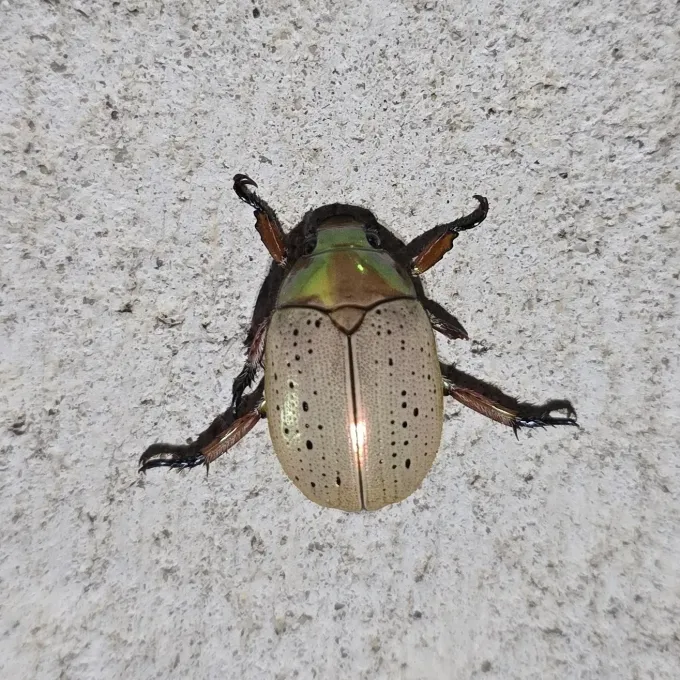
Anoplognathus porosus is a member of the Scarabaeidae family, commonly known as a type of Christmas beetle in its native Australian range.
The adult beetle typically measures between 15 and 20 mm in length and features a robust, oval-shaped body with a distinct metallic or brownish sheen.
Its elytra are covered in small, dense punctures, which serve as the primary diagnostic feature for separating it from other species in the genus Anoplognathus.
The larvae are typical scarabaeiform grubs, characterized by a C-shaped white body, a dark head capsule, and three pairs of well-developed thoracic legs.
Precise identification of this species often requires professional entomological examination of morphological structures to distinguish it from look-alike species.
What it damages
Adult Anoplognathus porosus beetles are primarily folivorous, causing significant damage by consuming the leaves of various eucalyptus species.
During outbreak years, these beetles can cause extensive defoliation, which severely stresses the host trees and reduces their overall vigor.
While larvae primarily feed on decaying organic matter in the soil, they can occasionally feed on the roots of agricultural crops or nursery seedlings when organic food is scarce.
Severe defoliation impacts the plant's ability to photosynthesize, leading to reduced wood quality and increased susceptibility to secondary pests and diseases.
In nursery environments, even moderate populations can stunt the growth of young saplings, leading to economic losses due to plant replacement costs.
When it appears
Adult emergence is strictly seasonal, occurring during the warmer months of the year when conditions are optimal for mating and oviposition.
The life cycle is long-lived, with the larval stage spending one to two years underground, developing through several instars before pupation.
Emergence often coincides with the flush of new foliage on host trees, ensuring that adults have access to high-quality food immediately upon reaching the surface.
Temperature and soil moisture are the critical factors influencing the duration of the development cycle and the timing of the annual emergence.
Pupation occurs in a soil chamber, where the adult beetle remains until conditions are right for it to emerge and begin the reproductive phase.
Signs of infestation
The most visible sign of infestation is the skeletonization of leaves, where only the hard veins remain, giving the canopy a tattered appearance.
Clusters of beetles found on the branches of eucalyptus trees during evening hours are a strong indicator of an active population in the area.
Root damage caused by grubs can be identified by sudden yellowing, wilting, or stunted growth of seedlings despite adequate watering.
Accumulation of beetle frass beneath the canopy is a frequent sign of high adult activity during the peak feeding season.
Premature leaf drop in healthy-looking trees can also point to high feeding pressure from adult beetles concentrated in the upper canopy.
Control measures
Light traps are highly effective for monitoring and managing adult populations, as the beetles are strongly attracted to artificial light at night.
Chemical control using systemic or contact insecticides can be applied to the canopy when feeding activity is at its highest to mitigate immediate damage.
Biological control methods, such as the use of entomopathogenic nematodes or fungi, are effective for targeting soil-dwelling larvae.
Maintaining healthy soil conditions and removing excessive leaf litter can sometimes help reduce the suitability of the area for larval development.
- Use protective mesh nets for young nursery plants during peak flight seasons.
- Regularly monitor canopy foliage to catch early signs of infestation.
- Encourage natural predators such as birds and predatory beetles in the local ecosystem.
Taxonomy
- Latin name
- Anoplognathus porosus
- Order
- Coleoptera (beetles)
- Family
- Scarabaeidae
- EPPO code
- ANOGPO
Discussion
No discussions yet — be the first.