
Anoplognathus
Anoplognathus analis
Description
How to identify
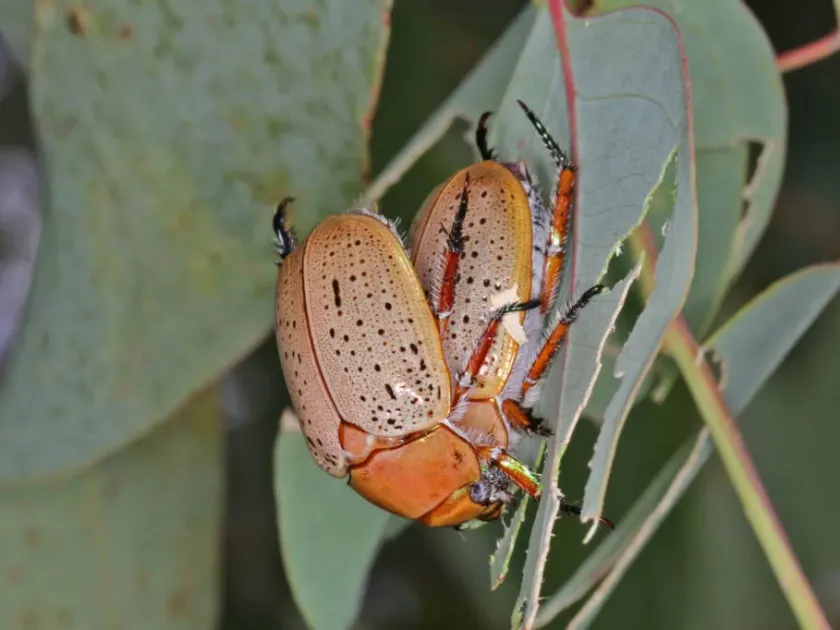
Anoplognathus analis is a species of beetle belonging to the family Scarabaeidae. Known as part of the group commonly referred to as Christmas beetles, these insects are characterized by their robust bodies and hard, often metallic or iridescent elytra.
Adult beetles typically measure between 20 and 25 mm in length. Their morphology includes a thickened head and pronotum, and antennae that end in a characteristic fan-like structure used for sensory perception.
The larval stage is a typical white grub, C-shaped, living underground. It possesses a well-developed head capsule with strong mandibles for feeding on roots, and three pairs of legs, which are specialized for locomotion through soil layers.
The life cycle involves complete metamorphosis, consisting of the egg, larval (three instars), pupal, and adult stages. The majority of the life span is spent underground as a larva, which allows the insect to survive adverse surface conditions.
As a member of the Scarabaeidae family, the species is well-adapted to its ecological niche, with specific host preferences that make it a notable pest in regions where its preferred host plants are cultivated for forestry or landscaping.
What it damages
Adult Anoplognathus beetles are primary defoliators. They feed on the foliage of trees, particularly Eucalyptus species, often causing extensive leaf damage by skeletonizing or consuming the entire leaf blade, leaving only the primary veins.
Larvae are root-feeders and cause significant damage to the root systems of various plants. By feeding on fine roots, they disrupt the plant's ability to take up water and essential nutrients, which can lead to wilting and stunted growth.
Severe infestations by adults can lead to complete defoliation of trees, which puts the plant under significant physiological stress. This reduces the tree's vigor and makes it more susceptible to secondary pests and fungal infections.
In nursery environments, larval feeding on roots can be fatal for young saplings. Since the root system is compromised, the trees often fail to establish properly and can be easily pulled from the ground by hand.
The economic impact of this pest is most pronounced in forestry plantations and urban landscapes, where heavy damage necessitates consistent monitoring and preventative measures to maintain the health of the tree canopy.
Signs of infestation
Visible defoliation is the most obvious sign of an adult Anoplognathus infestation. If you observe trees losing their leaves rapidly and finding only main veins remaining, it is a clear indicator of the presence of these beetles.
Underground activity of larvae is indicated by the yellowing or sudden wilting of grass or young trees. Often, the soil around the base of the plant may feel loose, and the plant itself may appear unstable due to severe root pruning.
At night, adult beetles are frequently attracted to artificial lights. Seeing large numbers of shiny beetles near light sources during the summer months is a reliable indicator that an adult population is active in the nearby area.
Digging in the soil near the root zone during the peak larval season often reveals the presence of C-shaped grubs. They are typically found in the upper 5–20 cm of soil, particularly near actively growing root tips.
Increased presence of insectivorous birds, such as magpies or currawongs, probing the soil in lawns or plantations can be a sign that a high density of grubs is present just beneath the surface.
Control measures
Effective management begins with soil cultivation. Regular turning of the soil can disrupt larval habitats, killing many grubs or exposing them to predators like birds, which significantly reduces the surviving population.
Chemical control involving soil-applied insecticides is effective against larvae. Using systemic treatments in the root zone can protect young plants from damage, provided these treatments are applied at the correct time during the larval growth phase.
Foliar spraying with systemic insecticides targeting the adults can prevent them from laying eggs, thus breaking the life cycle. These treatments are best applied in the evening when the beetles are most actively feeding on the foliage.
- Utilizing light traps to monitor and suppress adult beetle populations.
- Applying biological control agents, such as entomopathogenic nematodes or fungi.
- Maintaining healthy soil moisture levels to make the environment less favorable for grubs.
Integrated Pest Management (IPM) is essential for long-term control. By combining monitoring, cultural practices, and targeted pesticide use, land managers can minimize the damage while protecting the surrounding ecosystem.
Taxonomy
- Latin name
- Anoplognathus analis
- Order
- Coleoptera (beetles)
- Family
- Scarabaeidae
- EPPO code
- ANOGAN
Discussion
No discussions yet — be the first.