
Anoplognathus
Anoplognathus
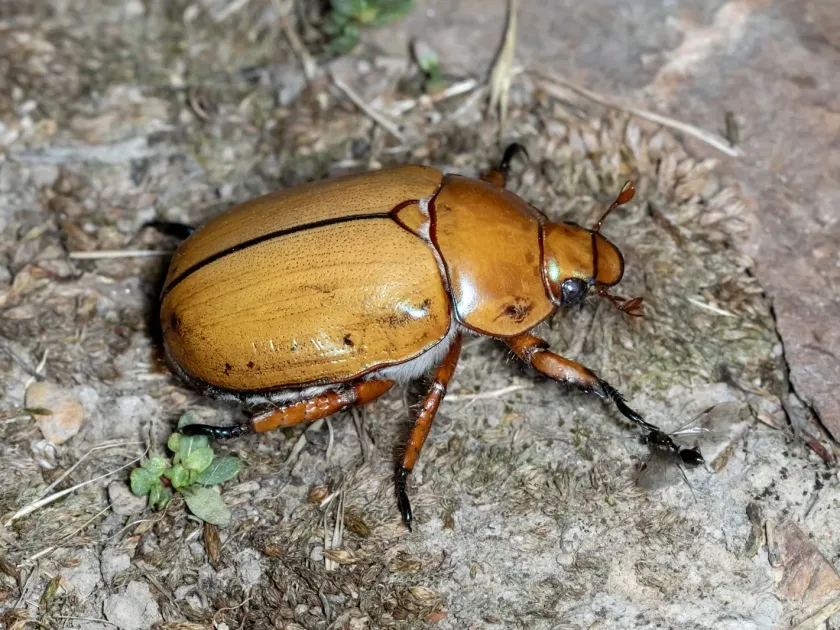
Description
How to identify
Anoplognathus, commonly known as Christmas beetles, belongs to the family Scarabaeidae and subfamily Rutelinae. Adult beetles are characterized by a robust, oval-shaped body and often exhibit a brilliant metallic coloration.
These insects undergo a complete metamorphosis: egg, larva (grub), pupa, and adult. The larval stage is typically C-shaped with a white, soft body, a hardened brown head, and well-developed thoracic legs.
Adult beetles are active flyers and are often found in large numbers on host plants during the summer months. Their size and vibrant metallic appearance distinguish them from other scarab species.
The life cycle length varies depending on the specific species and environmental conditions, typically ranging from one to two years, with the majority of this time spent underground in the larval stage.
Adults are nocturnal, often aggregating on leaves to feed and mate, while larvae reside exclusively in the soil, where they play a complex role in nutrient cycling before becoming pests.
What it damages
Anoplognathus species are known to cause significant damage to foliage. Adult beetles feed heavily on leaves, often leading to total defoliation of host trees such as eucalyptus and other hardwoods.
The larvae, or grubs, live in the soil and feed on the roots of grasses, seedlings, and young trees. This root pruning reduces the plant's ability to absorb water and nutrients, leading to stunted growth.
Severe infestations of grubs can cause mass mortality in nurseries and plantations. Young plants, lacking sufficient root structure, become highly susceptible to drought and wind-throw.
Repeated adult defoliation weakens trees over time, making them vulnerable to secondary pests and various fungal diseases that thrive in stressed vegetation.
In agricultural settings, the economic impact is most severe when large populations of larvae destroy the root systems of crops or when adult beetles consume the leaves of high-value timber species.
When it appears
Adults typically emerge in the early summer, often synchronized with specific weather patterns like the onset of warmer temperatures. This period marks the peak of their mating and feeding activity.
After mating, females lay eggs into the soil. The larvae then hatch and proceed through three larval stages (instars) as they feed and grow beneath the surface of the soil.
Pupation occurs in the soil, where the larva creates a protected chamber. This stage is relatively brief but is critical for the transformation into the adult beetle.
Activity levels are heavily influenced by seasonal moisture; drought can push larvae deeper into the soil, while adequate rainfall often brings them closer to the root zone.
Managing the timing of control efforts is crucial, as the most effective treatments target the larvae when they are feeding actively in the upper soil horizons.
Signs of infestation
The most visible sign of an adult infestation is the presence of skeletonized leaves on host trees, where only the major veins remain after the leaf tissue has been consumed.
Wilting and browning of foliage in otherwise healthy-looking plants often indicate a compromised root system caused by underground grub feeding.
When investigating, pulling on young seedlings may reveal a missing or severely chewed root system, which is a definitive indicator of larval presence.
Audible activity is common, as large swarms of adult beetles can create a distinct buzzing sound when feeding in the canopy of trees at night.
Soil surface disturbances or small mounds of soil near the base of plants can sometimes indicate the presence of larvae actively moving and feeding in the root zone.
Control measures
Soil-applied systemic insecticides are the most common and effective method for controlling grubs in high-value plantations or nurseries, preventing damage to the roots.
Biological control methods, including the use of entomopathogenic nematodes or fungi like Beauveria bassiana, offer environmentally friendly alternatives for managing larval populations.
Cultural practices, such as maintaining healthy soil moisture and reducing vegetation cover during peak egg-laying times, can help decrease the suitability of the area for larvae.
Light traps are used to monitor adult populations and can help reduce the number of adults in specific areas if implemented correctly at the beginning of the emergence season.
- Regular inspection of roots during planting and throughout the growth cycle.
- Avoid planting susceptible species in areas with a history of infestation.
- Encouraging natural predators, such as birds, to forage in treated areas.
Taxonomy
- Latin name
- Anoplognathus
- Order
- Coleoptera (beetles)
- Family
- Scarabaeidae
- EPPO code
- ANOGSP
Discussion
No discussions yet — be the first.