
Anomala xanthopleura
Anomala xanthopleura
Description
How to identify
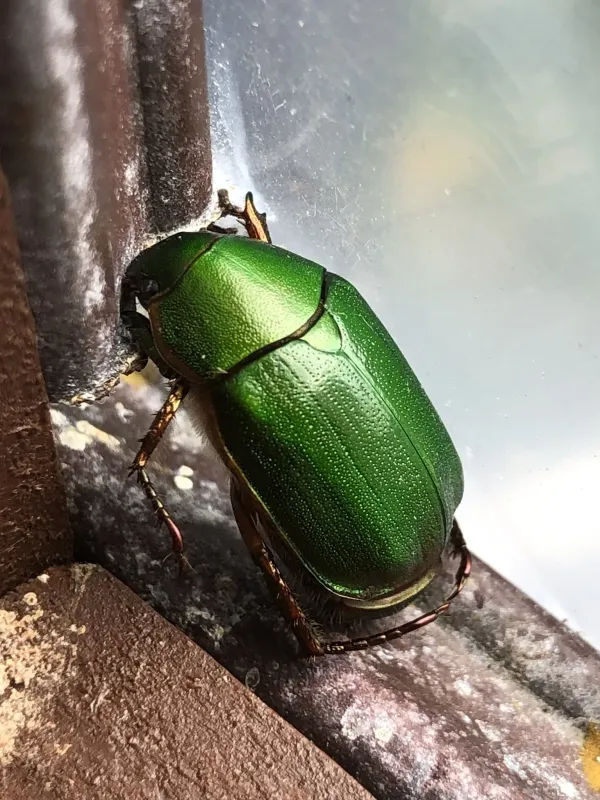
Anomala xanthopleura is a beetle belonging to the family Scarabaeidae, order Coleoptera. Adult specimens are typically oval-shaped, measuring between 15 to 20 millimeters in length.
The coloration ranges from yellowish-brown to dark brown, often displaying a metallic sheen on the elytra. A key diagnostic feature is the presence of distinct dark markings on the sides of the pronotum.
The larvae are typical of scarab beetles, exhibiting a C-shaped body with a creamy-white color and a well-developed head with strong mandibles. They inhabit the soil, feeding on organic matter and plant roots.
Adult beetles are nocturnal and are known for their strong flying capabilities, allowing them to disperse over significant distances to locate host plants and suitable egg-laying sites.
Morphological differences between sexes, such as variations in the club of the antennae, are used by entomologists to distinguish between males and females during population surveys.
What it damages
Anomala xanthopleura is a polyphagous pest, meaning it attacks a wide variety of agricultural, fruit-bearing, and ornamental plants. Both adults and larvae contribute to significant crop losses.
Adults cause damage by feeding on foliage, flower buds, and blossoms. They are capable of skeletonizing leaves, leaving only the veins behind, which severely impairs the plant's photosynthetic capacity.
Larvae pose a threat by feeding on the root systems of crops, which leads to stunted growth, wilting, and in severe cases, the death of the plant, especially in young nursery stock.
The mechanical damage caused by this pest facilitates the entry of secondary pathogens, including various fungal and bacterial infections that further degrade plant health.
In high-density infestations, the cumulative damage from both leaf consumption and root destruction can lead to significant economic losses for farmers and orchardists.
When it appears
The life cycle of Anomala xanthopleura is closely tied to soil temperatures and seasonal weather changes. Adult emergence typically occurs in late spring or early summer.
The peak period of adult activity, including feeding and reproduction, spans through June and July, which is when plants are most vulnerable to foliage damage.
Following mating, females deposit eggs in the soil, particularly in areas rich in organic matter. The larvae then undergo development in the soil over the warmer months of the year.
Larvae generally overwinter deeper in the soil profile to avoid freezing temperatures, resuming activity once the soil warms up the following spring.
Pupation takes place in the soil, usually in the spring, marking the final stage before the new generation of adults emerges to repeat the cycle.
Signs of infestation
The primary sign of an infestation is the presence of heavily chewed leaves and damaged blossoms on host plants. This often resembles the damage caused by other leaf-eating beetles.
Sudden wilting of plants during the daytime, even when moisture levels are sufficient, strongly indicates that larvae are actively damaging the root system below the soil surface.
Nighttime monitoring using light traps is a highly effective way to detect the presence of adult beetles, as they are strongly attracted to light sources.
Visual inspection of the soil in the root zone during spring can reveal the presence of larvae, which is essential for determining the scope of the infestation.
The accumulation of adult beetle frass on leaves and damaged flower parts serves as an indirect indicator of high pest pressure within the garden or field.
Control measures
Managing Anomala xanthopleura requires a combination of cultural, biological, and chemical methods to effectively reduce pest populations to non-damaging levels.
Cultural practices include deep soil cultivation during the pupation stage, which physically destroys pupae and reduces the number of adults emerging in the spring.
Chemical control involves the application of appropriate insecticides during the adult emergence phase; however, it is critical to avoid spraying during flowering to protect pollinators.
Biological control options include the use of entomopathogenic nematodes or fungal-based biopesticides, which target larvae in the soil with minimal environmental impact.
- Conduct regular monitoring with pheromone or light traps.
- Maintain weed-free environments to reduce hiding spots.
- Apply targeted, systemic insecticides when populations exceed economic thresholds.
Taxonomy
- Latin name
- Anomala xanthopleura
- Order
- Coleoptera (beetles)
- Family
- Scarabaeidae
- EPPO code
- ANMLXA
Discussion
No discussions yet — be the first.