
Anomala varians
Anomala varians
Description
How to identify
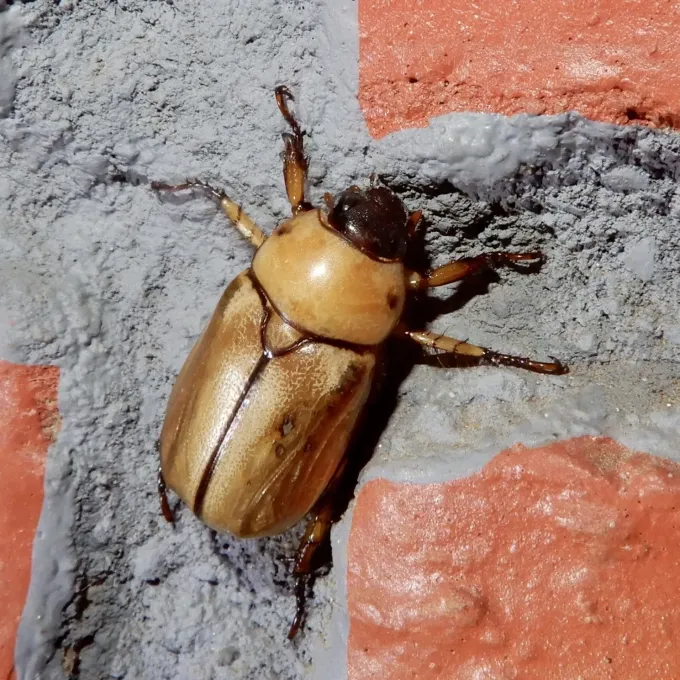
The beetle known scientifically as Anomala varians is a member of the Scarabaeidae family, within the order Coleoptera. It is a medium-sized insect often referred to in agricultural contexts due to its variable body coloration.
The adult beetle exhibits a spectrum of colors, ranging from yellowish-brown to a metallic green hue, which helps it blend into its environment. They possess the sturdy legs typical of the Scarab beetle group, which are adapted for climbing plant stalks.
Larvae are soil-dwelling, C-shaped grubs with a creamy white body and a well-developed, hardened head capsule. They are specialized for a subterranean life, feeding on organic matter and living roots of various plants.
The developmental cycle of Anomala varians typically spans one to two years, depending heavily on the regional climatic conditions. Pupation occurs within earthen cells, from which the adults emerge during the warmer months.
As adults, these beetles are strong fliers. They are particularly active on sunny, warm days, allowing them to traverse agricultural fields efficiently in search of suitable host plants for feeding and mating.
What it damages
Damage is caused by both adults and larvae, though the nature of the destruction varies significantly. Adults primarily target the above-ground generative parts of cereal crops, including wheat, barley, and rye.
During the milk and dough stages of grain development, adult beetles consume the kernels. This feeding activity results in empty husks or damaged grains, drastically reducing the crop yield and quality.
Larval damage occurs below the soil surface, where they feed on the root systems of young cereal plants. This can lead to stunted growth, yellowing of leaves, and, in severe cases, the death of the entire plant.
High population densities of this pest can lead to patches of dead or weak plants in the field. This uneven crop stand makes it difficult for farmers to manage fields and can significantly lower harvest efficiency.
Furthermore, the physical damage to roots makes plants more susceptible to secondary infections and environmental stresses, compounding the negative impact on the overall crop health.
When it appears
The peak activity period for adult Anomala varians is typically during the early to mid-summer months, specifically June and July. This coincides with the most sensitive growth stages of cereal crops.
Temperature is a key driver for their activity. While adults prefer warm, sunny conditions to feed and fly, the larvae remain active in the soil from early spring until the late autumn, depending on soil warmth.
In autumn, as temperatures drop, the larvae move deeper into the soil profile to overwinter, staying below the frost line to survive the winter. They resurface in the spring as soon as the soil starts to warm up.
Understanding this seasonal rhythm is essential for agricultural management. The timing of insecticide applications or field cultivations must be synchronized with these stages to achieve maximum pest control results.
Regular field scouting during the critical pre-harvest window is vital to detect the emergence of adults and prevent widespread damage before the infestation escalates into a major economic loss.
Signs of infestation
The primary visual indication of an adult infestation is the presence of damaged or empty ears of grain. Careful observation of these ears during early morning or evening hours often reveals the beetles resting on the plants.
Below-ground, the presence of larvae is signaled by patchy yellowing and wilting of the crop. Affected plants may be easily pulled out of the soil due to the extensive destruction of their root system.
Farmers may also notice increased activity of birds in the field following tillage operations, as birds often forage for larvae that have been brought to the surface by agricultural machinery.
Soil sampling is the most reliable method for detecting larval populations. By excavating small soil plots, agronomists can count the larvae per square meter and assess whether intervention is economically justified.
Monitoring the flight activity of adult beetles using light traps or pheromone traps can provide early warning signals, allowing for more precise timing of chemical or biological control interventions.
Control measures
Integrated pest management strategies are crucial for controlling Anomala varians. A robust crop rotation plan, avoiding the sequence of cereal crops after perennial grasses, significantly reduces the pest pressure.
Deep plowing in the autumn is a highly effective cultural control method. This practice exposes larvae to harsh winter conditions and avian predators, significantly reducing the population that will emerge in the following season.
Chemical control is most effective when targeted at adults during the peak flight season. Application should be timed carefully to protect the grain during its most vulnerable growth stages while minimizing impact on non-target species.
Maintaining clean field borders by controlling weeds helps to eliminate alternative food sources and breeding sites for the beetles, thereby reducing the number of pests migrating into the primary crop areas.
- Regular soil monitoring to determine population thresholds.
- Judicious use of seed dressings to protect young seedlings from larvae.
- Utilization of biological agents such as specific entomopathogenic fungi.
Taxonomy
- Latin name
- Anomala varians
- Order
- Coleoptera (beetles)
- Family
- Scarabaeidae
- EPPO code
- ANMLVA
Discussion
No discussions yet — be the first.