
Anomala polita
Anomala polita
Description
How to identify
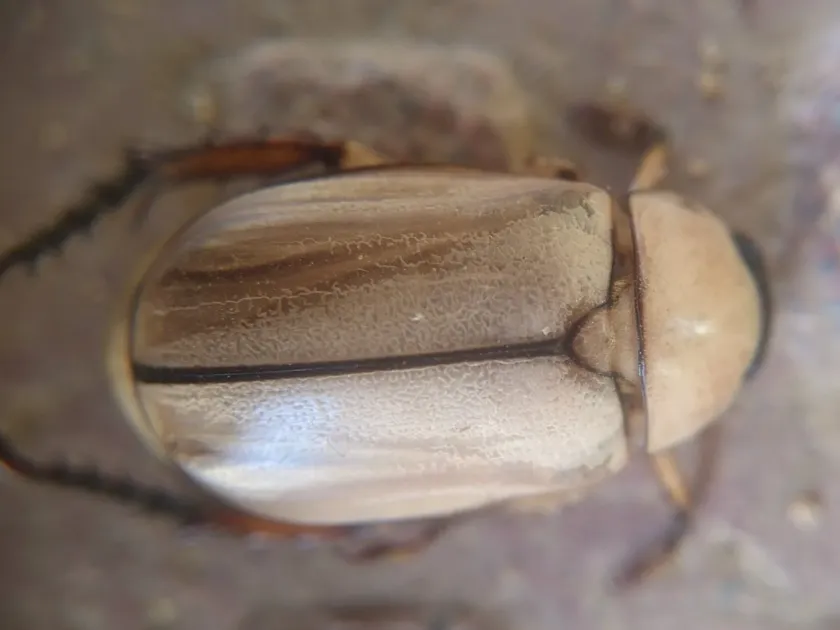
Anomala polita is a member of the Scarabaeidae family, commonly known as a type of scarab or leaf beetle. Adult beetles are recognizable by their oval, convex shape and shiny, metallic exoskeleton, which often appears green, bronze, or reddish-brown.
The antennae of these beetles are a key diagnostic feature, ending in a distinct club shape typical for the subfamily Rutelinae. The size varies slightly depending on the population, but they generally fit within the medium-sized range for scarab beetles.
The larvae, often referred to as white grubs, possess a characteristic C-shaped body with a distinct, sclerotized head capsule and three pairs of well-developed thoracic legs. They spend their entire developmental period residing within the soil substrate.
Adult beetles are most active during the day, particularly on bright, sunny days, which allows them to feed and mate efficiently. Their behavior often involves congregation on host plants, making them relatively easy to spot during foliage inspections.
Identification often requires careful examination of the insect's dorsal structure and, in some cases, the male genitalia, as many species within the Anomala genus share similar external characteristics, potentially leading to misidentification in the field.
What it damages
The damage caused by Anomala polita occurs at both the larval and adult life stages. Adult beetles feed on the leaves of a wide range of host plants, including fruit trees and various field crops, often leaving leaves shredded or skeletonized.
In cases of severe infestation, the adult beetles can defoliate entire branches, significantly reducing the plant's ability to photosynthesize. This stress often leads to stunted growth and poor fruit quality in commercial orchards and home gardens alike.
Larvae primarily cause damage below ground by feeding on the root systems of crops. By consuming fine root hairs and main roots, they disrupt the plant's ability to absorb water and essential nutrients, leading to yellowing, wilting, and potential plant death.
The feeding holes created by adults on leaves and soft stems also serve as entry points for various pathogens, including fungi and bacteria. This secondary damage can sometimes be more detrimental to the plant's long-term health than the primary herbivory.
Due to their polyphagous nature, these beetles can shift their feeding preferences based on seasonal availability, making them persistent pests in environments where diverse vegetation is cultivated in close proximity to one another.
When it appears
The life cycle of Anomala polita is highly dependent on environmental cues such as soil temperature and moisture. Adults typically emerge in late spring or early summer, following the warming of the upper soil layers after the winter dormant period.
The peak emergence period is when mating occurs, and females begin searching for suitable oviposition sites. Rich, organic soil is preferred for egg-laying, as it provides the necessary nutrients for the newly hatched larvae.
Larval development generally lasts through the warmer months, during which time the grubs feed and molt multiple times. As autumn approaches, they migrate deeper into the soil profile to avoid the cold, overwintering in a stage of low metabolic activity.
Fluctuations in climate, particularly heavy rainfall followed by drought, can affect population dynamics. While some moisture is required for emergence, saturated soil conditions can sometimes limit adult activity during critical mating windows.
Monitoring for the presence of adult beetles is essential for timing interventions. Using pheromone traps or light traps during the peak emergence season helps agronomists estimate population levels and decide if chemical or biological control is required.
Control measures
Managing Anomala polita requires an integrated pest management (IPM) approach. Cultivation practices, such as deep plowing during late autumn, are effective as they expose soil-dwelling larvae to predators and unfavorable winter temperatures.
Chemical control focuses on applying insecticides during the peak activity period of adult beetles. Systemic insecticides are often preferred for protecting the plant's foliage from further damage during the main growing season.
For larval control, soil-applied insecticides or seed treatments can protect vulnerable root systems of young plants during the establishment phase. These treatments provide a protective zone that minimizes root feeding by developing grubs.
Biological control options, such as the application of entomopathogenic nematodes or fungi like Beauveria bassiana, are gaining popularity as sustainable alternatives that specifically target the pest while preserving beneficial insect populations.
- Implementation of crop rotation.
- Manual removal of beetles in small-scale gardens.
- Use of biological control agents in soil.
- Targeted application of approved insecticides.
Taxonomy
- Latin name
- Anomala polita
- Order
- Coleoptera (beetles)
- Family
- Scarabaeidae
- EPPO code
- ANMLPO
Discussion
No discussions yet — be the first.