
Anomala flavipennis
Anomala flavipennis
Description
How to identify
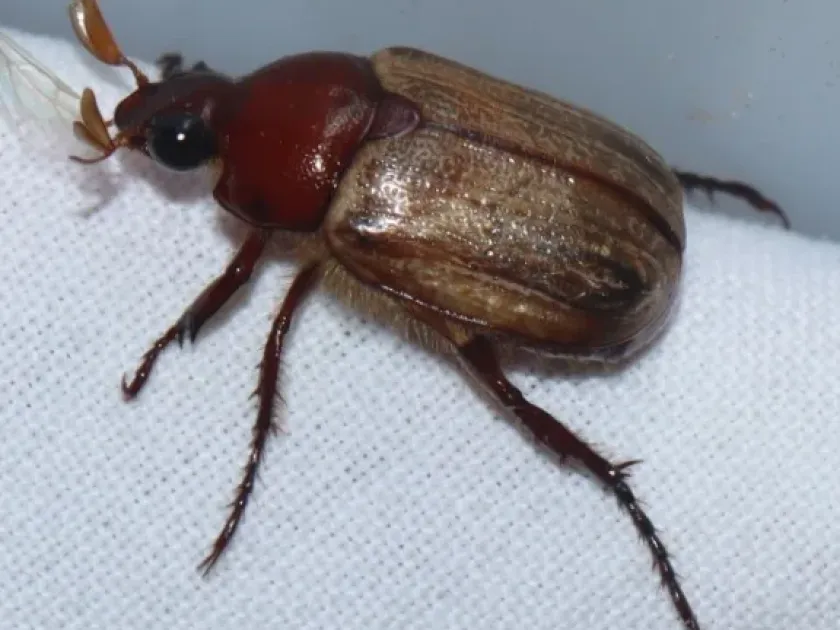
Anomala flavipennis is a beetle species belonging to the family Scarabaeidae (order Coleoptera), commonly characterized by a robust, oval-shaped body with a shiny, yellowish-brown appearance.
The adult beetles feature distinctive clubbed antennae, which are a hallmark of the scarab family, allowing for relatively easy identification in the field by trained agronomists.
The larval stage, or grub, typically exhibits a creamy-white C-shaped body with a hardened brownish head capsule and three pairs of well-developed thoracic legs.
Development involves a complete metamorphosis including eggs, larvae, pupae, and adults, with the larvae living underground and feeding on organic matter and plant roots.
Adults are primarily active during daylight hours, preferring sunny weather, which makes them highly visible when they aggregate on foliage to feed and mate.
What it damages
Adult beetles cause significant damage to a variety of plants, including fruit trees, grapevines, and various broad-leaved crops, by skeletonizing the leaf blades.
By consuming the soft tissues between the veins, the beetles reduce the plant's photosynthetic capacity, leading to weakened growth and reduced fruit yield.
The larvae are subterranean root-feeders, causing damage by severing the root systems of young plants, which often results in wilting and sudden plant mortality.
Severe infestations can lead to massive defoliation, leaving trees vulnerable to subsequent environmental stressors such as drought and winter cold.
Continuous feeding by both larvae and adults stresses the plants, making them more susceptible to secondary fungal or bacterial pathogens that infiltrate damaged tissues.
When it appears
Adult emergence typically occurs during the first half of the summer, peaking from late May through July, aligning with the plant's active vegetative growth phase.
Temperature plays a crucial role in beetle activity; higher temperatures generally lead to increased feeding rates and accelerated reproductive cycles for the population.
Overwintering occurs deep within the soil profile, where the larvae remain in a dormant state until soil temperatures rise sufficiently during the following spring.
As spring progresses, larvae migrate toward the surface layers of the soil to feed and eventually enter the pupal stage within protective earthen cells.
Environmental factors, particularly soil moisture levels, significantly influence the success of larval development and the timing of adult emergence in any given year.
Signs of infestation
The primary symptom of an infestation is the presence of lace-like leaves, where the soft tissue has been consumed, leaving only the veins behind.
Observing large numbers of beetles on leaves or flowers during the day is a clear indicator that the population density has reached an actionable level.
Sudden wilting or stunted growth in young saplings or vegetable beds often indicates root damage caused by larvae hidden beneath the soil surface.
During soil preparation or tilling, the presence of C-shaped white grubs in the topsoil is a definitive sign of an active Anomala flavipennis population.
Increased activity of birds, such as crows or starlings, digging in the soil often points to a high concentration of larvae near the surface.
Control measures
Effective control starts with deep autumn plowing or soil cultivation, which disrupts larval habitat and exposes them to natural predators and freezing conditions.
Application of systemic insecticides during the peak adult flight period can significantly suppress the beetle population and protect the foliage from damage.
For root protection, soil-applied insecticides or entomopathogenic nematodes can be utilized to manage larval populations within the rhizosphere.
Integrated pest management should include monitoring with light traps and maintaining healthy soil conditions to foster plant resilience against root-feeding pests.
- Regular inspection of foliage for skeletonized leaves.
- Implementation of crop rotation to break the beetle's life cycle.
- Manual collection of beetles in small-scale garden settings.
- Encouraging natural bird predators to hunt on agricultural plots.
Taxonomy
- Latin name
- Anomala flavipennis
- Order
- Coleoptera (beetles)
- Family
- Scarabaeidae
- EPPO code
- ANMLFL
Discussion
No discussions yet — be the first.