
Anomala dubia
Anomala dubia
Description
How to identify
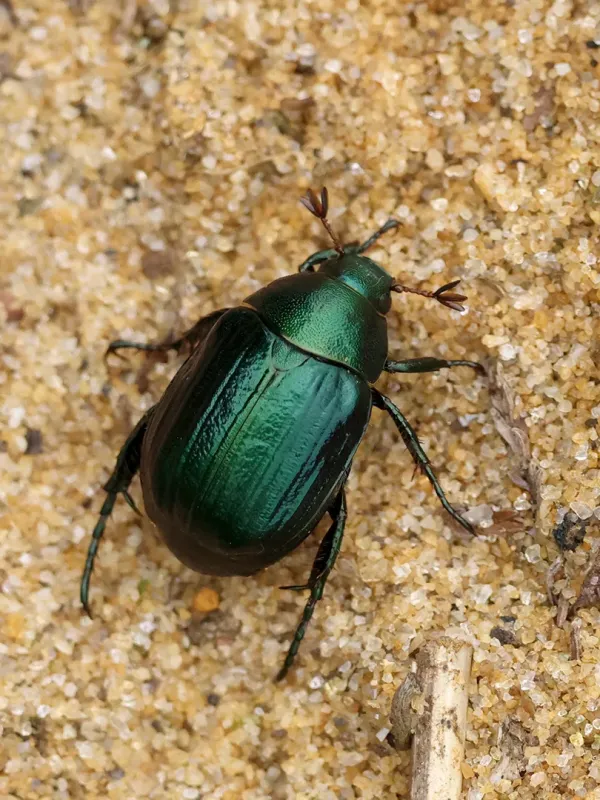
Anomala dubia is a member of the Scarabaeidae family, commonly known as a type of leaf chafer beetle. Adults measure between 12 and 15 mm in length.
The beetle is characterized by its oval-shaped body, which displays a metallic green, bronze, or brownish coloration that is quite distinctive in sunlight.
The larvae, often referred to as white grubs, possess a C-shaped body with a soft, whitish abdomen and a hard, brown head equipped with strong mandibles.
The life cycle of this beetle typically spans one to two years, during which the larvae live underground, feeding on decaying organic matter and living roots.
Adult beetles are diurnal, often found on the foliage of trees and shrubs during warm, sunny days where they feed on leaves.
What it damages
Adult beetles feed primarily on the leaves of various plants, including fruit trees, roses, and other ornamental species, leaving characteristic irregular holes.
The larvae are the most destructive stage, causing significant damage by feeding on the root systems of various herbaceous plants, grasses, and seedlings.
Severe infestations can lead to stunted growth, yellowing of foliage, and the eventual death of affected plants due to the loss of their primary nutrient supply.
In nursery environments, the destruction of root systems by larvae can result in poor survival rates of young plants and significant economic losses.
Fields with sandy soil textures are particularly susceptible to higher populations, as these conditions are ideal for larval development and movement.
When it appears
The adult emergence period usually occurs from late May through July, aligning with the primary growth stage of most garden and orchard crops.
During this window, mating occurs, and females burrow into the soil to deposit their eggs in areas rich in root resources for the developing larvae.
Larval activity is highest during the warmer months, when they are actively feeding in the upper layers of the soil near the root zones of host plants.
As autumn approaches and soil temperatures drop, larvae retreat to deeper soil strata to avoid freezing conditions and successfully hibernate.
Monitoring for adults during the early summer months is crucial for predicting potential larval pressure for the following season.
Signs of infestation
Visible defoliation or skeletonized leaves on susceptible host plants are clear indicators of adult beetle presence in the immediate vicinity.
Plants that appear wilted despite sufficient soil moisture often indicate root damage, which should be verified by inspecting the soil for the presence of grubs.
A loose, easily uprooted plant is a classic sign of severe root loss caused by the feeding activity of the C-shaped larvae underground.
The accumulation of bird activity, such as birds pecking at the soil surface, can frequently indicate a subterranean infestation of larvae.
During soil cultivation or digging, the discovery of white, curled grubs is the most direct sign of a current infestation that requires attention.
Control measures
Cultural control methods such as regular soil tilling help to disrupt larval habitats and mechanically destroy the grubs within the topsoil layer.
Applying autumn plowing practices exposes the larvae to predators like birds and environmental extremes, effectively reducing overwintering populations.
For adult beetle control, hand-picking or shaking them off branches onto collection sheets during the cool morning hours is effective for small gardens.
In cases of heavy infestation, soil-applied insecticides can be used according to local agricultural regulations to protect root systems during vulnerable stages.
Biological control options, including the application of beneficial nematodes or entomopathogenic fungi, offer a targeted and eco-friendly management approach.
Taxonomy
- Latin name
- Anomala dubia
- Order
- Coleoptera (beetles)
- Family
- Scarabaeidae
- EPPO code
- ANMLAE
Discussion
No discussions yet — be the first.