
Anomala daimiana
Anomala daimiana
Description
How to identify
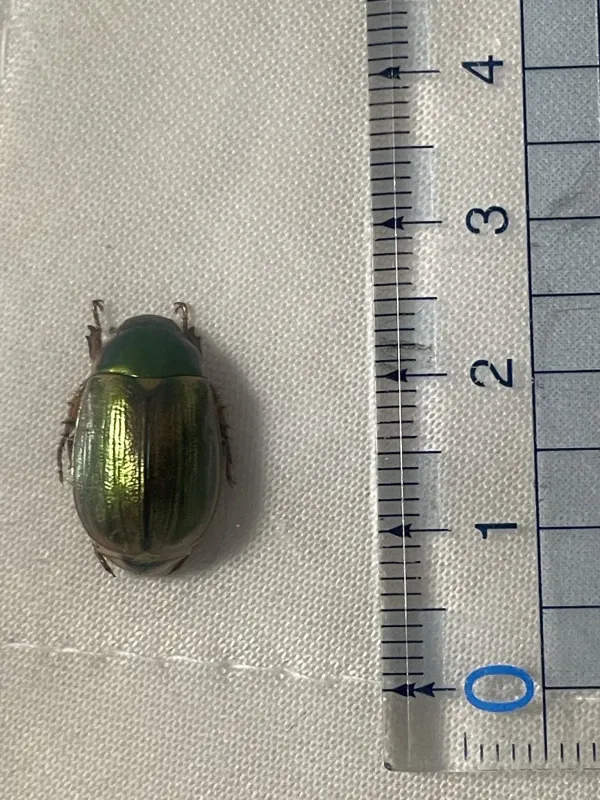
Anomala daimiana belongs to the Scarabaeidae family, within the order Coleoptera. Adult beetles are characterized by a robust, oval-shaped body, typical of leaf chafers, with a hard, often metallic or brownish shell.
The adult beetles are known for their strong flight and activity during evening hours. They possess specialized mouthparts for foliage consumption and are often attracted to artificial light sources.
The larvae, which live underground, are C-shaped grubs with a soft, whitish body and a darker, sclerotized head capsule, which is a diagnostic feature used in entomological identification.
These larvae have well-developed legs and powerful mandibles, allowing them to move through soil and feed efficiently on plant roots, often causing severe subterranean damage.
The life cycle encompasses multiple larval stages in the soil, followed by pupation, with the adult stage emerging to feed on leaves and complete the reproductive cycle.
What it damages
This beetle is a significant polyphagous pest that affects a diverse range of agricultural, horticultural, and ornamental plant species throughout its geographical range.
Adult beetles primarily target the foliage of deciduous trees and shrubs, often performing extensive skeletonization, which reduces the plant's overall vigor and photosynthetic capability.
The larval stage is particularly destructive to the root systems of vegetable crops, grass, and young trees, leading to stunted growth, nutrient deficiencies, and reduced water uptake.
Severe infestations can lead to the total death of plants due to the destruction of root structures, which leaves the plant prone to lodging and secondary fungal infections.
In nurseries and forest plantations, the activity of these grubs can result in significant economic losses by compromising the health of young seedlings that are unable to recover from root loss.
When it appears
The seasonal activity of Anomala daimiana is heavily dependent on regional climate factors, particularly soil temperature and moisture levels during the spring and summer months.
Adult emergence and the peak flight period usually occur in early summer, coinciding with the rapid vegetative growth phase of host plants, which provides ample food sources.
Following mating, female beetles deposit eggs in the soil, where the larvae develop over several months, often spending the winter in deeper soil layers to avoid frost.
As spring temperatures rise, the larvae migrate back to the upper soil profile to resume feeding on roots before reaching the prepupal stage and eventual metamorphosis.
The duration of the life cycle can vary based on local conditions, making continuous monitoring throughout the growing season essential for effective population control.
Signs of infestation
Above-ground symptoms of infestation include heavily damaged foliage with irregular, ragged edges or a skeletonized appearance where only the primary veins remain intact.
Subterranean activity is often indicated by the sudden yellowing, wilting, or death of healthy-looking plants, especially during hot and dry weather when root capacity is critical.
When pulling on affected plants, they may come out of the soil very easily due to the destruction of the root structure, revealing the presence of C-shaped grubs in the soil.
The presence of adult beetles in large numbers around outdoor lighting at night serves as an early warning for potential foliage damage in the immediate vicinity.
- Skeletonized leaves and shredded foliage.
- Plants wilting without obvious cause.
- Presence of C-shaped white grubs in root zones.
Control measures
Effective management of Anomala daimiana requires an integrated approach that targets both the soil-dwelling larvae and the adult beetle population in the canopy.
Cultural practices, such as deep tilling of the soil during the fall, can help expose larvae to predators and unfavorable weather, significantly reducing their survival rate.
Chemical control, utilizing soil-applied insecticides, is often necessary for high-density infestations to protect the root systems of vulnerable crops or nursery stocks.
Foliar sprays during the peak adult flight period can reduce the number of beetles laying eggs, thereby curbing the next generation of soil-borne larvae.
Biological control agents, including entomopathogenic nematodes and specialized microbial fungi, offer an environmentally friendly alternative to chemical pesticides for managing larval populations.
Taxonomy
- Latin name
- Anomala daimiana
- Order
- Coleoptera (beetles)
- Family
- Scarabaeidae
- EPPO code
- ANMLDA
Discussion
No discussions yet — be the first.