
Anomala antiqua
Anomala antiqua
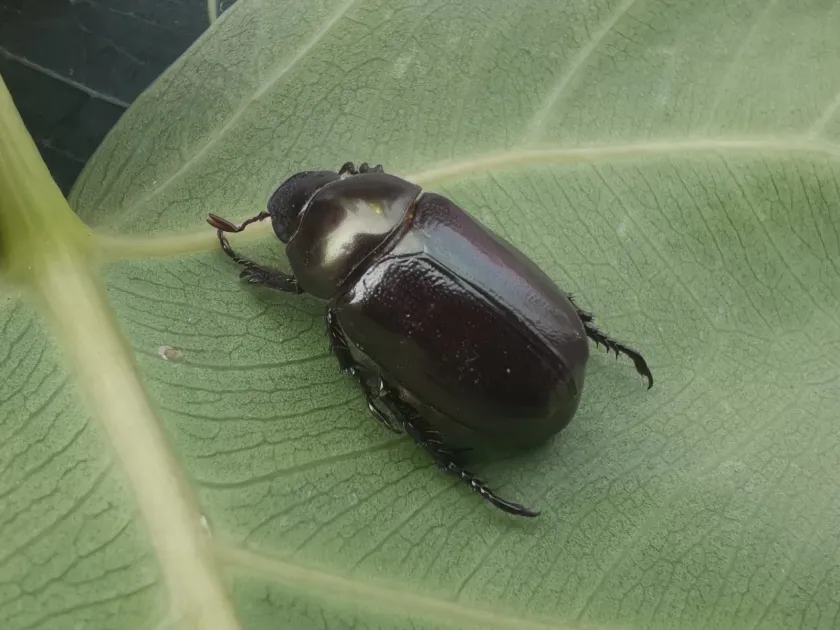
Description
How to identify
Anomala antiqua is a species belonging to the family Scarabaeidae within the order Coleoptera. Adult beetles are typically oval in shape with a brownish or yellowish-tan coloration.
The beetle exhibits structural characteristics common to the subfamily Rutelinae, including a well-defined head and pronotum, which are sometimes darker than the elytra.
The larvae, known as grubs, live in the soil. They are characteristically C-shaped, with a pale white body, a distinct brown head, and three pairs of well-developed thoracic legs.
The life cycle involves a multi-year development period for the larvae in the soil, transitioning through several instars before pupating into adult beetles.
Adult beetles are most active during the warmer months, often emerging from the soil in early summer to feed and reproduce, completing the species' annual cycle.
What it damages
The primary damage is caused by the larvae, which reside underground and feed aggressively on the root systems of various agricultural, horticultural, and decorative plants.
Adult beetles also cause damage by feeding on the foliage of trees and shrubs, creating irregular holes in the leaves, which reduces the plant's photosynthetic capacity.
Seedlings and young plants are particularly susceptible to root damage. Severe infestation can lead to the total destruction of the root structure, causing the plant to wither and eventually die.
Heavy feeding by grubs results in stunted growth, yellowing foliage, and a general lack of vigor, making the plants more susceptible to secondary stressors like drought or disease.
Economic losses are often significant in plant nurseries, where root damage directly affects the marketability and survival rate of young tree and shrub stock.
When it appears
The emergence of adult beetles typically occurs in late spring or early summer, depending on regional climatic conditions and soil temperatures.
Larvae remain active in the soil throughout the growing season, feeding on organic matter and living roots as the soil temperature remains suitable for their metabolic activity.
During the winter, larvae migrate deeper into the soil profile to avoid freezing temperatures, entering a state of dormancy until conditions improve in the following spring.
The peak period for larval root feeding usually aligns with the mid-summer months when soil moisture and temperature are optimal for rapid growth.
Adults are observed flying during evening hours in summer, which is the prime period for monitoring and applying light traps to prevent mass oviposition in the soil.
Signs of infestation
Sudden wilting of plants during daylight hours, despite sufficient soil moisture, is a primary indicator of significant root system damage by larval feeding.
Examining the root zone of affected plants often reveals the presence of C-shaped grubs and severed or heavily pruned root structures near the plant base.
Foliage damage characterized by irregular holes and notched leaf margins indicates the presence of adult beetles feeding in the canopy during the night.
Patches of stunted or chlorotic plants within a field or garden often correlate with high densities of soil-dwelling larvae beneath the affected areas.
The observation of beetles around light sources in the evenings can serve as an early warning sign for potential future infestations in the vicinity.
Control measures
Deep cultivation and plowing of the soil are effective mechanical control measures that expose larvae to predators and unfavorable surface conditions.
Biological control agents, such as entomopathogenic nematodes and fungi, can be applied to the soil to reduce grub populations with minimal impact on the environment.
Light traps deployed during the adult flight period can significantly reduce the number of breeding adults, thereby preventing the infestation of the soil by the next generation.
Implementing crop rotation and maintaining soil health through organic practices can make the environment less favorable for the survival and multiplication of this beetle.
- Application of targeted insecticides to the soil when larval activity is high.
- Monitoring soil health and larval population density before planting susceptible crops.
- Maintaining proper irrigation to help plants recover from light root feeding.
Taxonomy
- Latin name
- Anomala antiqua
- Order
- Coleoptera (beetles)
- Family
- Scarabaeidae
- EPPO code
- ANMLAN
Discussion
No discussions yet — be the first.